Scorned Influencer Nima Yamini Wants to Make Things Right | JFEED EXCLUSIVE
Nima Yamini infuriated his Jewish audience, essentially burning the bridge he worked so hard to build. Now he wants to rebuild It.
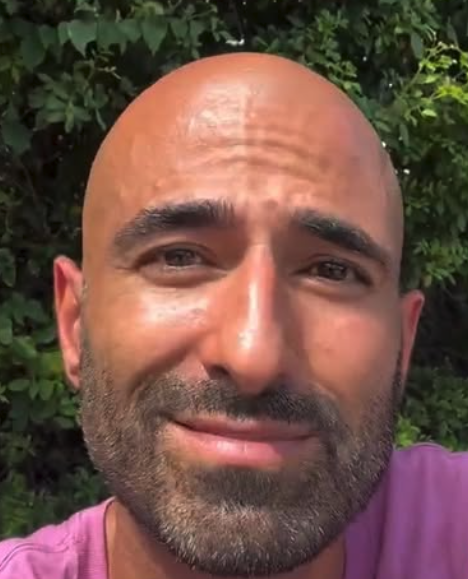
Nima Yamini has spent years doing something genuinely rare and genuinely valuable. As an Iranian-Jewish American content creator fluent in Farsi, steeped in the ancient history connecting Persians and Jews, and unafraid to take that message directly into spaces where it isn't always welcome, he has built something that most Jewish advocates can only dream of: a real bridge. Not a metaphorical one. An actual, functioning connection between two peoples whose governments are at war but whose histories are intertwined going back to Cyrus the Great and the liberation of the Jews from Babylonian exile.
That is no small thing. And it is worth saying clearly before anything else.
Which makes what happened in November 2025 all the more painful, and all the more bewildering.
In a series of posts on X, Yamini turned his fire inward. He criticized what he described as Ashkenazi dominance in Israeli leadership, American Jewish media, and advocacy circles. He argued that Mizrahi Jews, who make up somewhere between 40 and 50 percent of Israel's Jewish population, have been systematically sidelined, that no Mizrahi Prime Minister has ever led the Jewish state, and that the absence of "dark Jewish" voices like his from mainstream American Jewish media represented a strategic failure for the broader pro-Israel coalition.
He wasn't entirely wrong about the underlying reality. The socioeconomic and representation gaps between Ashkenazi and Mizrahi communities in Israel are historically documented and genuinely felt. The pain behind his words was real. The frustration of a man who has volunteered in Israel, built a following of nearly 80,000, spoken at events, and pushed back against Iranian regime propaganda for years, only to feel invisible to the very institutions he has been fighting for, that frustration is understandable.
But the framing was a disaster.
In reaching for the language of grievance, Yamini handed ammunition to exactly the people he has spent his career fighting. Critics (and there were many) accused him of echoing the kind of "Ashkenazi elite" rhetoric that antisemites and Islamists have deployed for decades to delegitimize Jewish institutions and sow division within the Jewish world.
Whether or not that was his intent is almost beside the point. In a moment when the Jewish people face existential threats on multiple fronts, when Iran is at war and Hezbollah is firing rockets and antisemitism is surging globally, the optics of a prominent pro-Israel voice publicly airing intra-communal grievances in the most inflammatory terms possible were, to put it gently, catastrophic.
He was disinvited from a Jerusalem Post conference. His name was removed from lists. The community he had fought alongside turned on him with remarkable speed.
Now he is trying to find his way back.
Nina, in an exclusive interview with Jfeed, Nima has said that he is sincere about reconciliation and it's worth taking him seriously. He has reaffirmed his commitment to bridging Iranians and Jews. He has acknowledged the unparalleled suffering of Ashkenazi Jewry in the 20th century, while also praising Ashkenazi contributions to building modern Israel. He is genuinely hopeful about greater mixing and "brotherly ties" between communities, and frames his earlier anger not as hostility but as the frustration of someone who felt overlooked after years of frontline advocacy.
He stresses, clearly and repeatedly, that "we are all equal." He makes the case, and it is actually a good case, that diverse voices within the Jewish world are a strategic asset, not a threat; that someone like him can reach audiences that more prominent Ashkenazi commentators simply cannot; that broadening the coalition of pro-Israel voices is good for Israel and good for Jews everywhere.
He is right about all of that. He was right about it before November 2025 too. The tragedy is that he chose to make that argument in the worst possible way, at the worst possible time, in language that obscured a legitimate point beneath a cloud of grievance that his enemies gleefully amplified.
Jewish tradition has a concept for constructive argument: machloket l'shem shamayim, a disagreement for the sake of heaven. The conversation Yamini wants to have about Mizrahi representation, about the diversity of Jewish voices, about who gets a platform and who doesn't, that is a conversation worth having. It has been worth having for decades. But there is a difference between raising a difficult conversation in good faith, with care for the community's wellbeing and awareness of the moment, and detonating a grenade in the middle of a family gathering while the house is already on fire.
Yamini detonated the grenade. He knows it. He feels real remorse.
The question now is whether the community he wants to return to is willing to meet him halfway. His bridge-building between Iranians and Jews, the work of years, built on deep personal history and real linguistic and cultural access, remains objectively and subjectively truly valuable.
At a moment when the U.S.-Iran war is reshaping the entire regional order, voices that can speak authentically to Iranians about Jewish humanity and shared history are not a luxury. They are a necessity.
Burning that bridge entirely because of a series of disastrous messages would be its own kind of failure.
Welcome home, Nima. How we missed you.