As Israel and Iran trade blows in the most direct military confrontation in years, one of Israel's foremost experts on Iran and the Middle East is sounding the alarm, not about the fighting itself, but about the absence of any clear strategy for what comes after.
Professor David Menashri, a senior scholar of Iranian affairs and Middle East politics, gave a wide-ranging interview to Kikar HaShabbat Monday in which he praised Israel's tactical capabilities while sharply criticizing what he described as a glaring strategic void.
"We are excellent at delivering one powerful blow and winning on points," Menashri said. "But this war against Iran is not a 'one and done.' A war of this magnitude requires an exit strategy. We carried out a military operation, we struck - now what? Where do we want to end up? Unfortunately, right now, these things are not fully in Israel's control. We are entirely dependent on American interests."
Menashri invoked a passage from the Book of Samuel to describe his unease with the current exchange of fire. "I have a bad feeling about this little war," he said. "It feels like what is written in our sources: 'Let the young men arise and play before us.' The great powers and their leaders are telling themselves: let them vent their frustrations, let them hit each other, and soon the sheriff, the responsible adult, will come and call them to order. A situation where you hit and he hits, you return fire and he responds, that doesn't lead to a final victory. It only perpetuates the fighting."
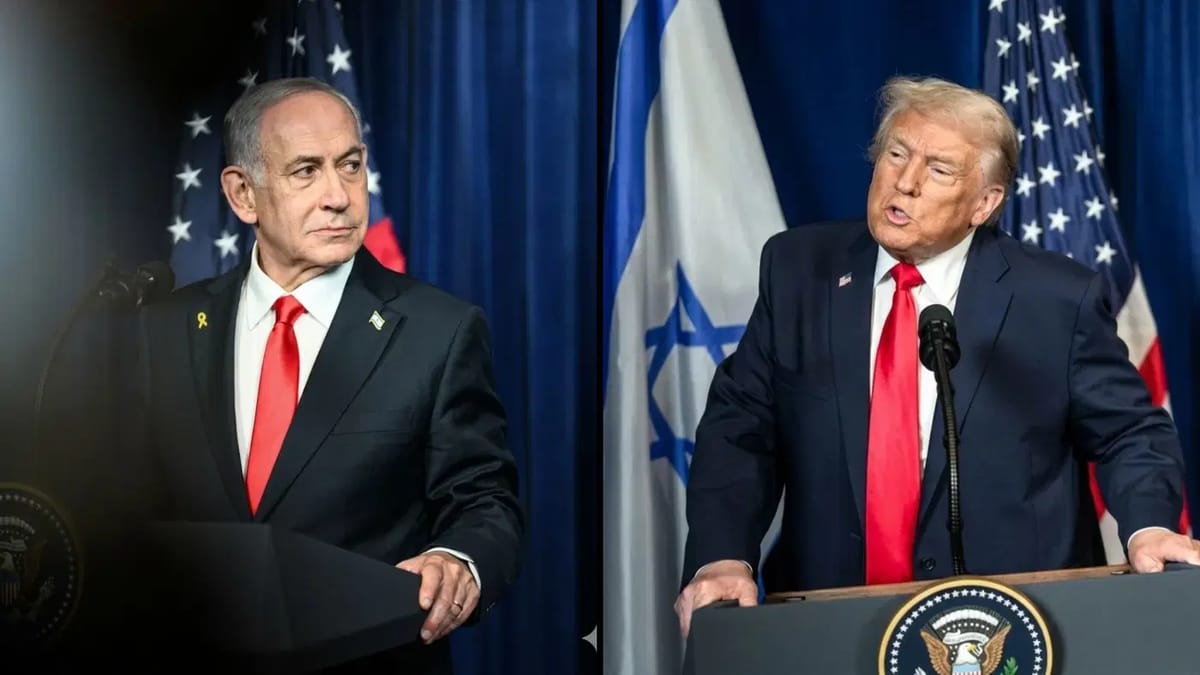
On President Trump, Menashri offered a nuanced reading. Trump is a genuine friend of Israel, he said, but his interests diverge sharply from Jerusalem's. "Trump has no real experience with ideological entities like Iran. In the past, people convinced him that Iran was like Venezuela, that he would come in, apply pressure, say 'I came, I saw, I conquered,' and it would all be over. It doesn't work that way." He added that the World Cup, opening this week, was itself a symbol of how distracted the international community is. "Look what a strange world this is: on one hand people are talking about wars and casualties, and on the other hand about football matches that have become the Olympics of our time, for which you are supposed to stop the fighting."
On the question of a future nuclear deal, Menashri staked out a position that will surprise many on the Israeli right. "A bad agreement is better than no agreement at all," he said. "No agreement will satisfy the Israeli people or its leadership, that is clear. But even the 2015 deal, with all its flaws, prevented Iran from advancing toward nuclear weapons for a certain period of time. In 2018, Trump left that deal with Israeli backing. There is no problem leaving an agreement, the problem is that they found no replacement. The moment you leave without bringing an alternative, you leave them room to operate."
Iran's decision to enter the current round of fighting directly, rather than through proxies, Menashri traced to a long-standing strategic logic. "Iran's embrace of its proxies, especially the Shia ones, has continued for years, essentially since 1982," he said. "There is a deep religious and political bond between Iran and Lebanon's Shia, and also with the Houthis in Yemen and the militias in Iraq. From Iran's perspective, a strike on Dahieh in Beirut is a direct strike on Tehran."