On September 27, 2024, Israel killed Hassan Nasrallah, the leader of Hezbollah, in a strike on the organization's headquarters in Beirut.
The operation shifted the balance of power in the region. Two years later, the organization still holds weapons, funding sources and the capacity to strike. How do you recognize a decisive victory without declaring the threat over prematurely?
There are victories that adversaries seek to minimize, while supporters may exaggerate their significance.
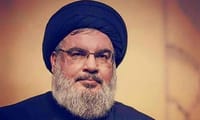
The elimination of Hassan Nasrallah belongs to both categories. After 32 years at the head of Hezbollah, the man who embodied the organization's military strength, its political authority and its special relationship with Iran was killed on September 27, 2024, in an Israeli bombardment of an underground command center in the southern suburbs of Beirut.
His death was not merely a symbolic event: it deprived the organization of the figure who settled its internal disputes at the very moment its chain of command was also damaged. But it would be equally rash to assume that an armed movement, rooted in Lebanon and funded through international networks, disappears with its leader. The IDF described the sequence of events and the intelligence work that led to the strike.
Hezbollah's activity has long extended beyond Israel's border
Nasrallah was not just an orator who knew how to fill public squares.
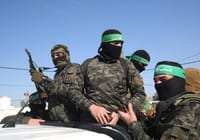
Under his leadership, Hezbollah attacked Israel, maintained an independent army not subordinate to the Lebanese state, and participated in operations in regional arenas. As early as October 8, 2023, the organization opened a front in northern Israel; tens of thousands of residents were forced to leave their homes.
The head of this organization thus had a tangible impact on the lives of Israelis and Lebanese. The IDF's review of strikes in 2023 and 2024 documents the scope of fighting on the northern border, with the data attributed to the source that published it.
The organization's reach extended far beyond the region. Following the 1994 bombing of the AMIA Jewish community center in Buenos Aires, which killed 85 people, United States authorities imposed sanctions on individuals in a network linked to Hezbollah, whom they claimed were involved in carrying out and financing the attack.
The U.S. Treasury Department also detailed the activity of shell companies, drug trafficking and money laundering in Latin America. These files allow us to speak of networks that were identified, but do not allow us to attribute to Nasrallah personally every criminal transaction documented on the continent. The organization also used commercial intermediaries and complex financing routes.
An intelligence campaign, not a single move
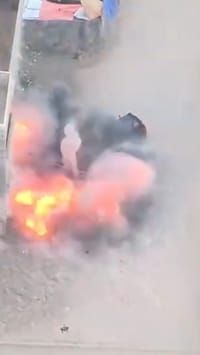
The explosions of pagers used by Hezbollah on September 17, 2024, followed the next day by exploding walkie-talkies, exposed the depth of Israeli penetration into the organization's supply chain. Within days, strikes against commanders and finally against Nasrallah turned a security breach into a leadership crisis. This operation will long be remembered as one of the great intelligence achievements of our time. However, the sequence of events must be specified precisely: the pagers did not kill Nasrallah; the strike on September 27 killed him, at the end of a campaign in which the booby-trapped devices were one component. The IDF's published account also shows the different stages of the campaign.
Operational sophistication does not exempt examination of the human cost. People who did not participate in combat were killed or wounded in the device explosions. UN experts disputed the legality of the operation under international law. Their position is not a court ruling; harm to civilians is not merely a theoretical question. It is possible to recognize the scope of the Israeli achievement while simultaneously demanding that every operation meet the legal obligations that apply to it.
Did the Israeli opposition refuse to recognize the achievement?
Here the facts require correcting a tempting assumption. Yair Lapid, leader of the opposition, congratulated the security establishment and the IDF after Nasrallah's elimination, describing it as an important achievement for security and deterrence. Benny Gantz also saw it as a significant event opening strategic possibilities. Their public statements were reported the day after the strike. Therefore there is no basis for the claim that the entire Israeli opposition refused to acknowledge the victory.
The dispute relates more to the way political meaning is assigned to the achievement. It is possible to congratulate the pilots, the intelligence personnel and the decision-makers who approved the operation, including Benjamin Netanyahu, while simultaneously demanding accountability from the government on other decisions.
Criticism of the conduct of the war or the handling of hostages does not lose its validity because one strike succeeded. The opposite is also true: opposition to Netanyahu need not erase his role in a strategic decision. Recognition of the contribution of all who brought about success leaves room for democratic debate.
The claim that all of Europe capitulated to Hezbollah and sought to hide the Israeli success also does not withstand precise examination of its public positions.
Several governments gave priority to preventing a regional war, to Lebanese sovereignty or to protecting civilians. These choices can be seen as weakness or inconsistency. To claim that European foreign ministries acted to silence the achievement out of hostility to Netanyahu requires evidence. I cannot confirm this.
What a leader's death cannot achieve alone
The decisive test is what happens on the ground. In September 2026, the IDF claimed that Hezbollah still holds its weapons and continues to attack its forces in southern Lebanon. In contrast, the Lebanese army announced that it is seizing weapons in certain areas, while accusing Israeli operations of thwarting its mission. Both accounts assign responsibility to different actors, but point to a shared fact: the Lebanese state has not yet achieved a practical monopoly on the use of armed force in its territory.
A similar picture emerges on the economic front. In February and June 2026, the U.S. Treasury Department imposed sanctions on additional Hezbollah financing mechanisms and on individuals it claimed were working to thwart its disarmament. The department described gold transactions, shell companies and regional trade channels. The ongoing effort against funding sources indicates that the organization has not disappeared. Its historic leadership suffered a severe blow; its capabilities and status within Lebanon continue to be the focus of struggle.
The question two years after Nasrallah is not whether to celebrate without reservation or automatically diminish the value of the achievement. Israel inflicted a severe defeat on a man who believed he could hold northern Israel under threat for an extended period. A lasting victory will require more: preventing the rebuilding of the weapons stockpile, cutting off money flows, and enabling Lebanon to restore control over its territory, without leaving its residents indefinitely between two armies.