Israel's Supreme Court on Sunday, November 15, overturned the murder conviction of Ron Nahum, who had been sentenced to 30 years in prison for the 2017 killing of Artyom Vilov in Ramat Gan. The court convicted him instead of the lesser offense of manslaughter with indifference, Ynet reported.
Ramat Gan Killing Case
Supreme Court Overturns Ramat Gan Murder Verdict
Ron Nahum, sentenced to 30 years for the 2017 death of Artyom Vilov, will be resentenced for manslaughter after justices ruled intent to kill was not proven.
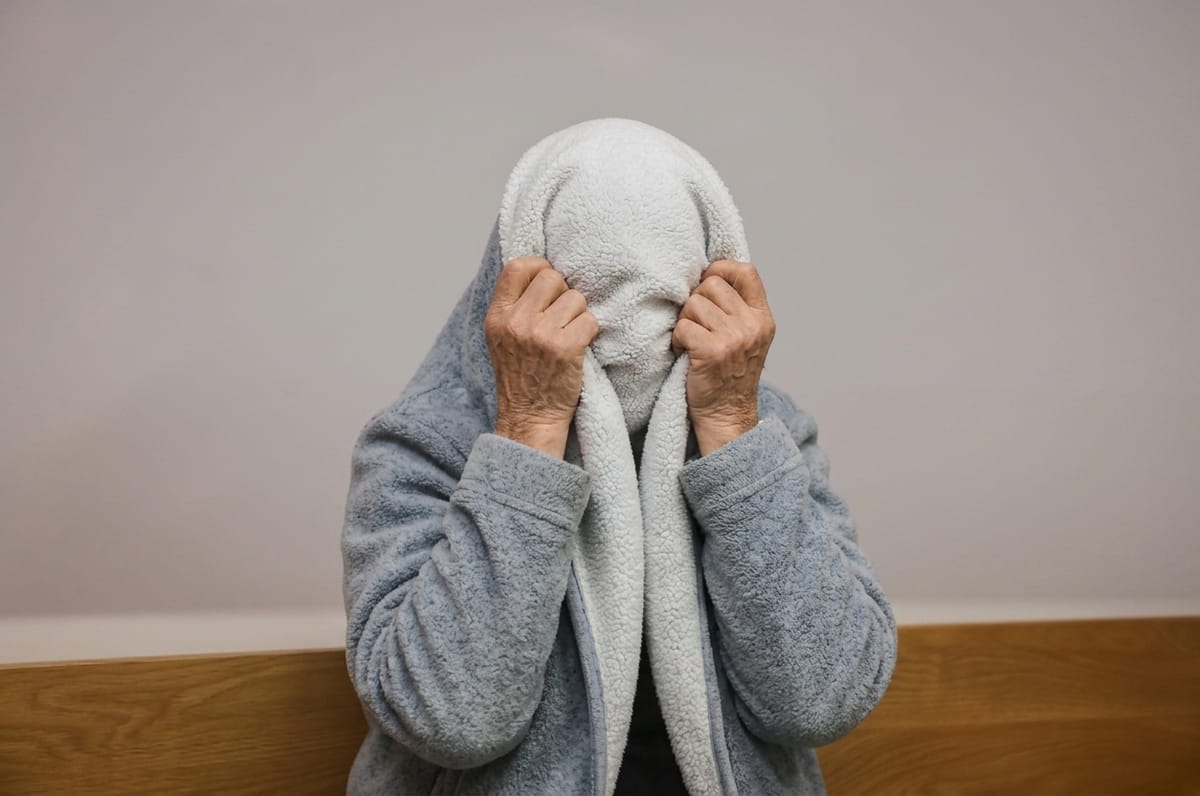
The case now returns to the Tel Aviv District Court for resentencing. The maximum penalty for the revised offense is 20 years, so Nahum's prison term is expected to be reduced significantly.
In a ruling written by Justice Khaled Kabub, with Justices Yael Willner and Ofer Grosskopf concurring, the court found it proven beyond a reasonable doubt that Nahum used severe violence against Vilov and caused his death in the Ramat Gan apartment. However, the justices ruled that the prosecution had failed to prove he intended to kill. Because the killing took place in 2017, Nahum was tried under the law in force before Israel's sweeping reform of homicide offenses. That reform redefined murder and manslaughter and added killing with indifference as a form of murder. Under the old law, the absence of intent to kill requires a manslaughter conviction rather than murder.
The case began on December 19, 2017, which was Vilov's 37th birthday. Security cameras filmed the two men walking together on Bialik Street in Ramat Gan that evening, and at about 10:43 p.m. they entered Nahum's apartment. At 3:54 a.m., cameras recorded Nahum dragging Vilov along the building's access path toward the trash room of the neighboring building. Vilov was lying motionless on his back with his head hitting the ground, his upper body naked and his trousers and underwear pulled down. He was not seen again. On December 31, a worker at the Hiriya waste site spotted a tattooed leg protruding from a pile of garbage. The body was identified as Vilov's and was found in an advanced state of decomposition.
The condition of the body was the main evidentiary obstacle. Because of the time that had passed and exposure to heavy machinery at Hiriya, experts at the National Institute of Forensic Medicine could not determine the exact cause of death. They also could not tell which of the severe injuries occurred before death and which were caused afterward by garbage trucks and bulldozers.
Police nonetheless found Vilov's blood on clothing and furniture in Nahum's bedroom. In the trash room they found Nahum's palm print in a substance suspected to be blood, which contained a mixture of both men's DNA. Security cameras also filmed Nahum cleaning bloodstains on the building's access path the following morning.
Nahum was indicted in February 2018. Throughout the investigation and trial he denied the charges. He claimed he did not know Vilov, denied being with him in the apartment and accused police of planting evidence. In May 2022 the Tel Aviv District Court convicted him of murder and obstruction of justice based on circumstantial evidence. In March 2023 it sentenced him to 30 years. The district court relied on the legal "presumption of intent," under which a person is presumed to intend the natural consequences of his actions.
On appeal, Nahum's public defender, attorney Netanel Yaakov-Hai, argued that intent to kill cannot be inferred when the cause of death is unknown. He also pointed to Nahum's mental state, noting he had previously been diagnosed with impaired reality testing. Attorney Adi Segev, representing the state, asked the court to uphold the conviction. She argued that the sequence of events, from the violence in the apartment to dragging Vilov away and cleaning the blood, showed clear intent to kill. She also cited earlier rulings in which defendants were convicted of murder even though the victims' bodies were never found.
The justices rejected the defense's suggestion that Vilov might have left the trash room alive and died of another cause, ruling that Nahum's actions caused his death. However, Kabub wrote that the presumption of intent cannot be applied automatically when the nature of the violent incident is entirely unknown. He noted there was no information about the weapon or means used, or about the number, location or force of the blows, and that no motive or advance planning had been proven. He added that Nahum's conduct afterward could be consistent with murder, but was equally consistent with indifference to the victim's death and a wish to hide a crime from the authorities.
Addressing Nahum's blatant lies during questioning, Kabub cited a legal principle: "A defendant's lies can strengthen the evidence that exists, but they cannot strengthen evidence that does not exist." He said Nahum's unstable mental state, and the fact that he had been drinking with Vilov that night, made it even harder to draw firm conclusions from his statements.
The court also rejected the defense's request to reduce the conviction further to reckless killing. The justices ruled that dragging an unconscious man to a trash room and failing to call for medical help showed, at the very least, complete indifference to his life.
Kabub concluded that many questions remain about what happened in the apartment that night. Because reasonable doubt remained over whether Nahum intended to kill, he wrote, the defendant is entitled to the benefit of the doubt.