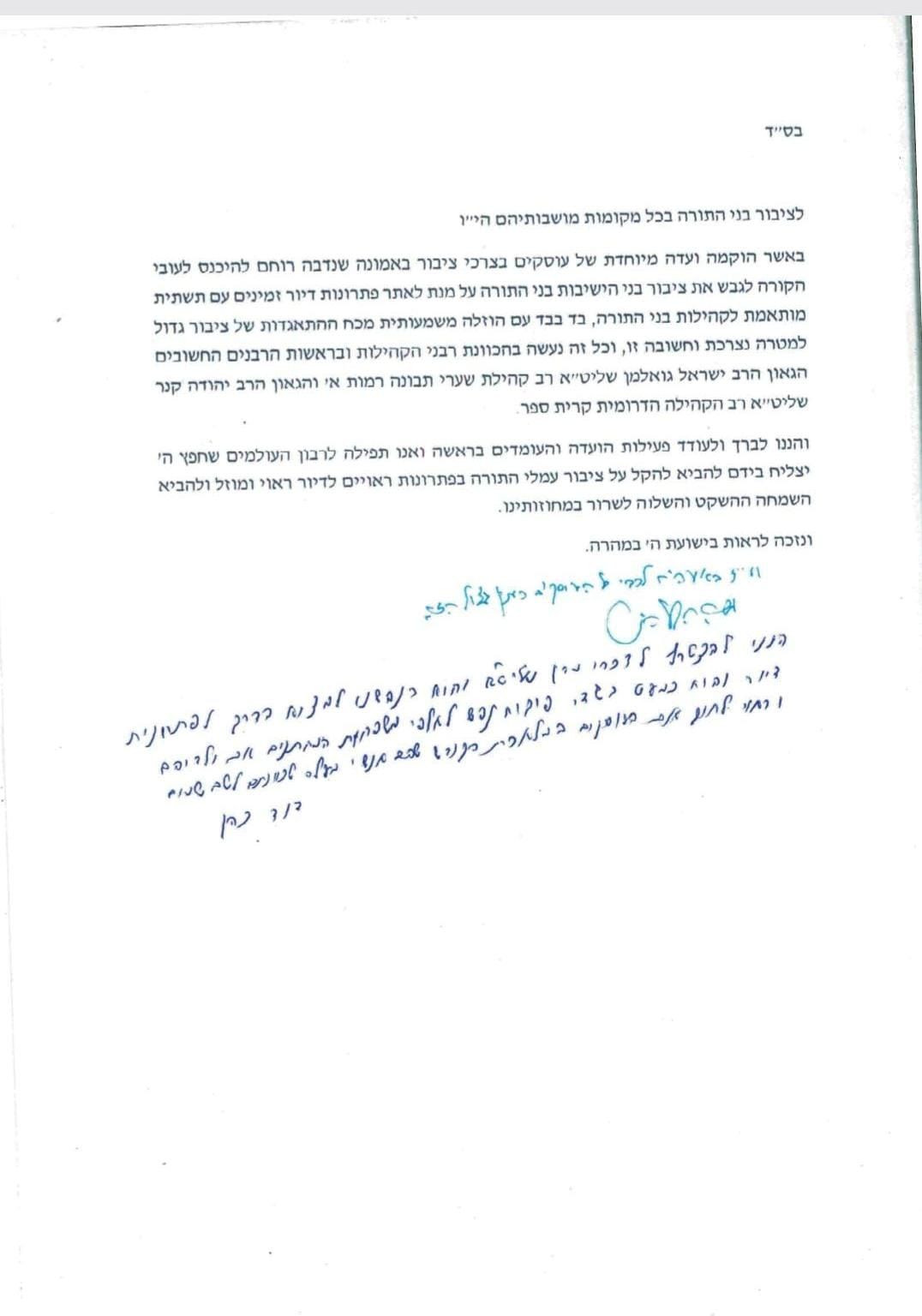
Rabbi Moshe Hillel Hirsch, one of the top leaders of the Lithuanian chareidi world, has put out a rare letter calling for affordable housing for kollel families. He also gave his backing to a new committee that is trying to solve the problem.
Kikar HaShabbat reported the letter, which is addressed to "the Torah-learning community wherever they live." Rabbi Hirsch, who heads the Slabodka Yeshiva in Bnei Brak, says the answer is for a large group of Torah-observant families to buy together. That kind of collective buying power, he writes, could bring apartment prices down significantly. It could also make it possible to build new communities with their own Torah institutions, schools and infrastructure, designed around what these families need.
The committee is made up of communal activists who, as Rabbi Hirsch puts it, set out "to get to the heart of the matter." They are organizing yeshiva students and kollel men and looking for housing that works for them.
"We hereby bless and encourage the activity of the committee and those who lead it," Rabbi Hirsch writes. He prays that they succeed "in easing the burden on those who toil in Torah with proper solutions for decent and affordable housing," and that the homes of Torah scholars will have joy, calm and peace.
Rabbi Dovid Cohen, head of the Chevron Yeshiva in Jerusalem, added a handwritten note at the bottom of the letter. "I hereby join the words of Maran shlita," he wrote. He explained how serious the situation has become. For the thousands of families marrying off their children, he called finding a solution a matter of pikuach nefesh. He also praised the people behind the committee, calling them people of high standing who are acting for the sake of Heaven.
For many kollel families, getting a child married now means having to help pay for an apartment, and prices are out of reach. These families also need to live in neighborhoods that fit a Torah lifestyle, which limits their options even more. According to Kikar HaShabbat, the rabbis' message is that the problem is about more than price. Families need to live in real communities with yeshivas, schools and the kind of communal infrastructure their way of life depends on.