Jerusalem Faction Shuts Down Highway 4 in Massive Anti-Draft Protest as 17 Yeshiva Students Sent to Military Prison
Route 4 completely blocked between Sheva and Mesubim junctions as thousands protest transfer of arrested yeshiva students to military prison • Police deploy heavy forces, warn drivers to avoid entire Gush Dan area | Traffic chaos spreads across central Israel (Haredim)

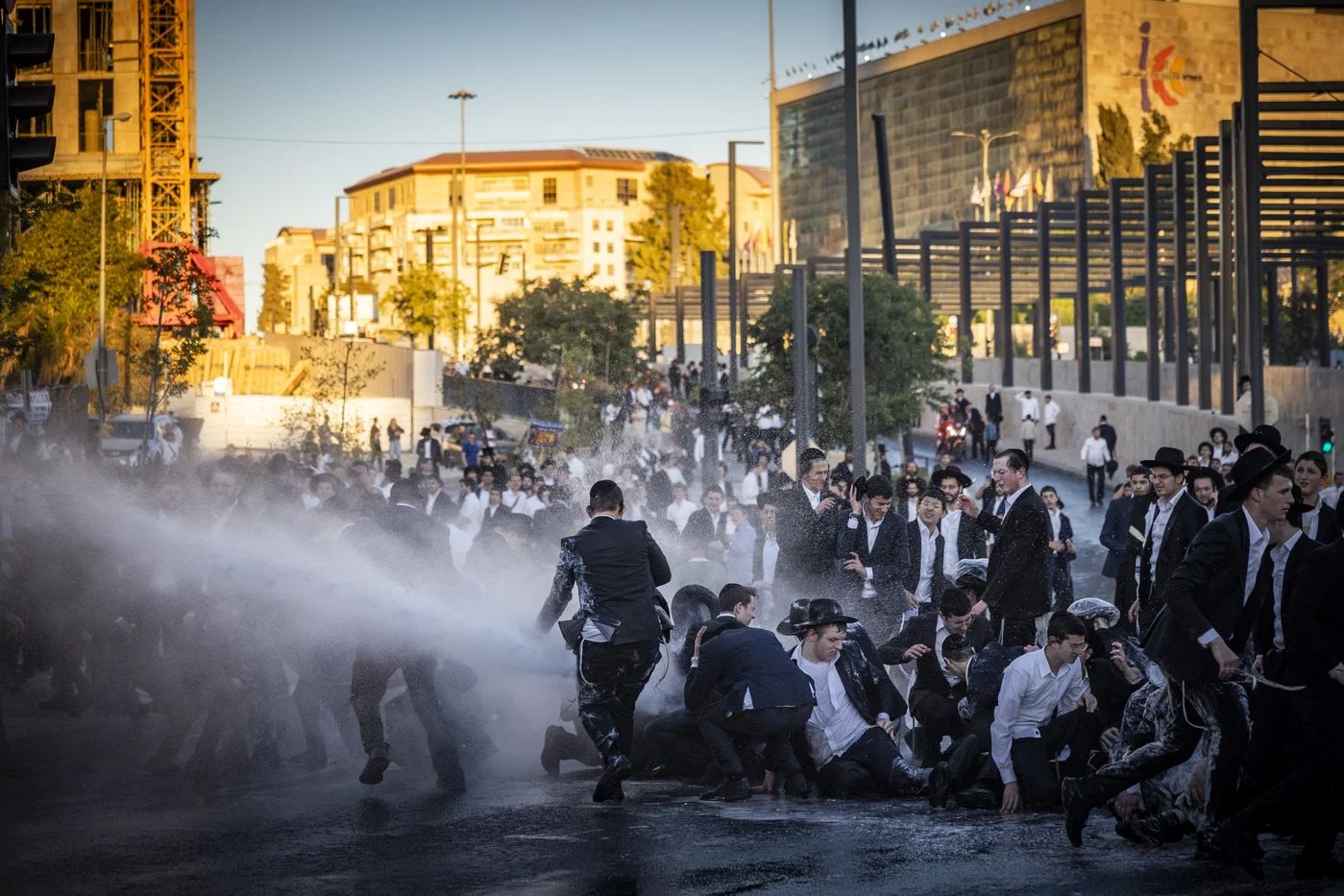
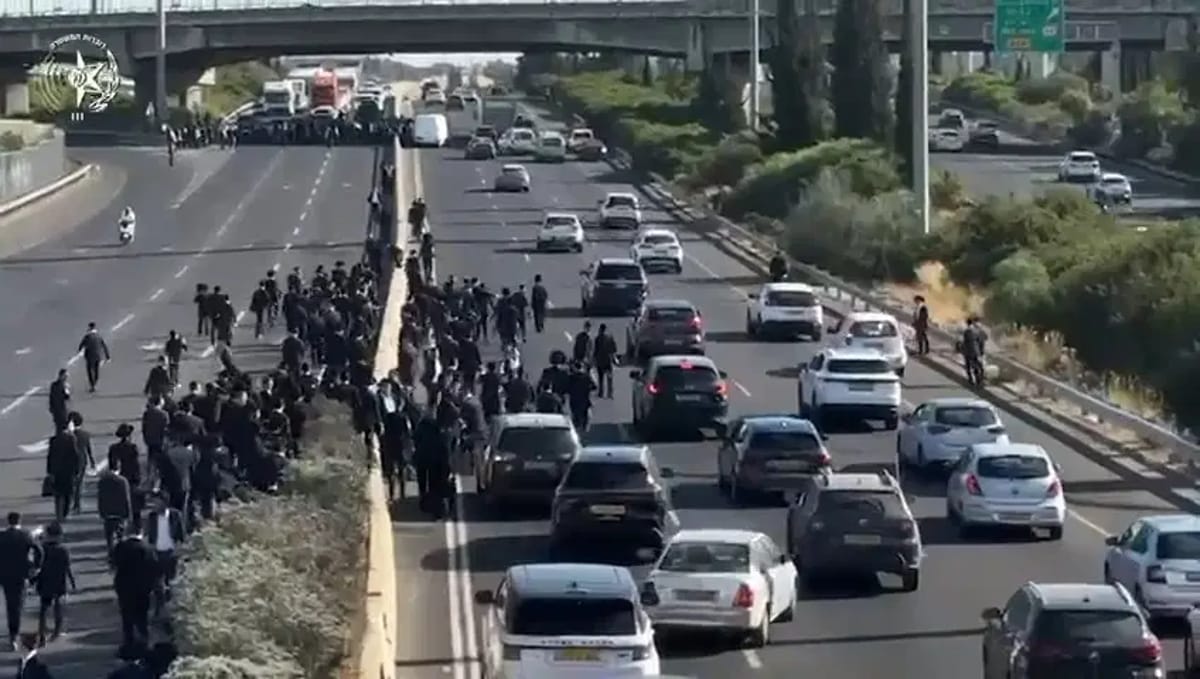
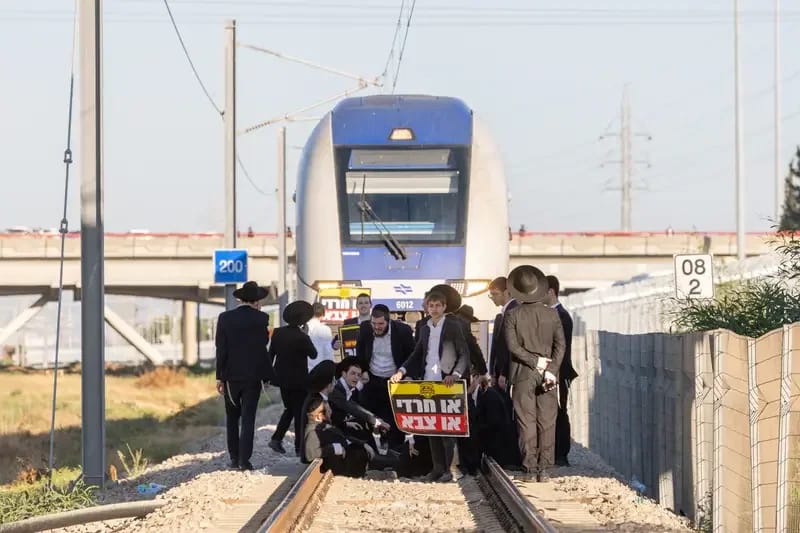
Route 4, one of central Israel's critical transportation arteries, ground to a complete halt Thursday evening as thousands of Jerusalem Faction protesters blocked the highway in both directions between the Sheva and Mesubim junctions, triggering unprecedented traffic chaos across the greater Tel Aviv area.
The massive demonstration erupted following the Israeli Police's decision to transfer 17 arrested yeshiva students to military prison — a move the hardline ultra-Orthodox faction characterized as "crossing a red line" in what they describe as an "obsessive persecution campaign" against Torah scholars. The students had been detained during previous protests after refusing to comply with IDF conscription summons.
In a statement issued shortly after midnight, the Jerusalem Faction declared: "We will all take to the streets tomorrow in a determined and uncompromising struggle for the honor of Torah and its students, with a clear cry that will be heard throughout the entire country." The group warned that the transfer to military detention would trigger a significant escalation in protest activity and an expansion of demonstration sites nationwide.
Police Deploy Heavy Forces, Warn of Zero Tolerance
Superintendent Amir Jibli, commander of Israel's National Traffic Police, confirmed that officers had been deployed in reinforced formations across the region. "The Traffic Division of the Israel Police is prepared with reinforced units and extensive deployment, in light of the anticipated multiple large-scale events and protests today in the central area," Jibli stated.
The police commander emphasized that while authorities would facilitate the right to protest, they would not tolerate public disorder. "The Israel Police will allow the exercise of the right to protest but will not permit violations of public order, attacks on officers, or endangerment of road users' safety," he declared. Police urged Gush Dan drivers "to avoid intercity routes as much as possible and to postpone non-urgent travel to another time."
Traffic came to a standstill in both directions on the blocked section of Route 4, with severe congestion spilling over into internal roads and secondary transportation routes throughout the greater Tel Aviv metropolitan area. The disruption created what sources described as an unprecedented transportation crisis in one of Israel's most densely populated regions.

New Tactical Approach: Surprise Locations Nationwide
The protests marked a significant tactical evolution for the Jerusalem Faction, with organizers keeping blockade locations strictly confidential to complicate police preparations. In a revealing strategic hint, protesters received explicit instructions not to disrupt railway traffic — a directive that analysts interpreted as a plan to use Israel's rail network to rapidly transport demonstrators to surprise protest sites across the country.
According to sources familiar with the movement's planning, the faction promised "surprises" at undisclosed locations throughout Israel, moving away from predictable demonstration sites to maximize disruption while minimizing advance police countermeasures. The approach represents a calculated shift designed to stretch law enforcement resources thin across multiple simultaneous fronts.
The escalation follows the 40-day military prison sentence handed to Michael Petrof, son of Maalot HaTorah head Rabbi Yosef Petrof, after five years classified as a military deserter. That harsh sentence, combined with the transfer of the 17 students to military detention, has galvanized the hardline ultra-Orthodox movement into what leaders describe as a decisive confrontation with state authorities over the fundamental principle of Torah study versus military service.