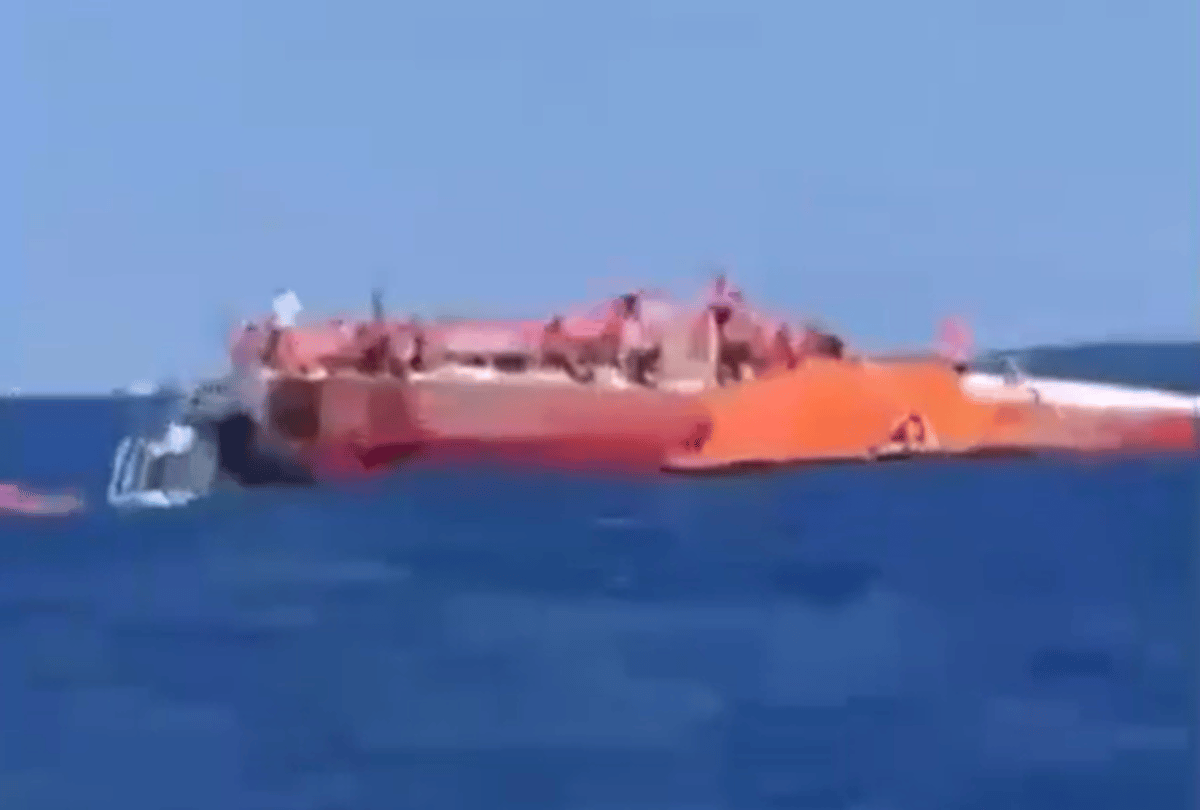
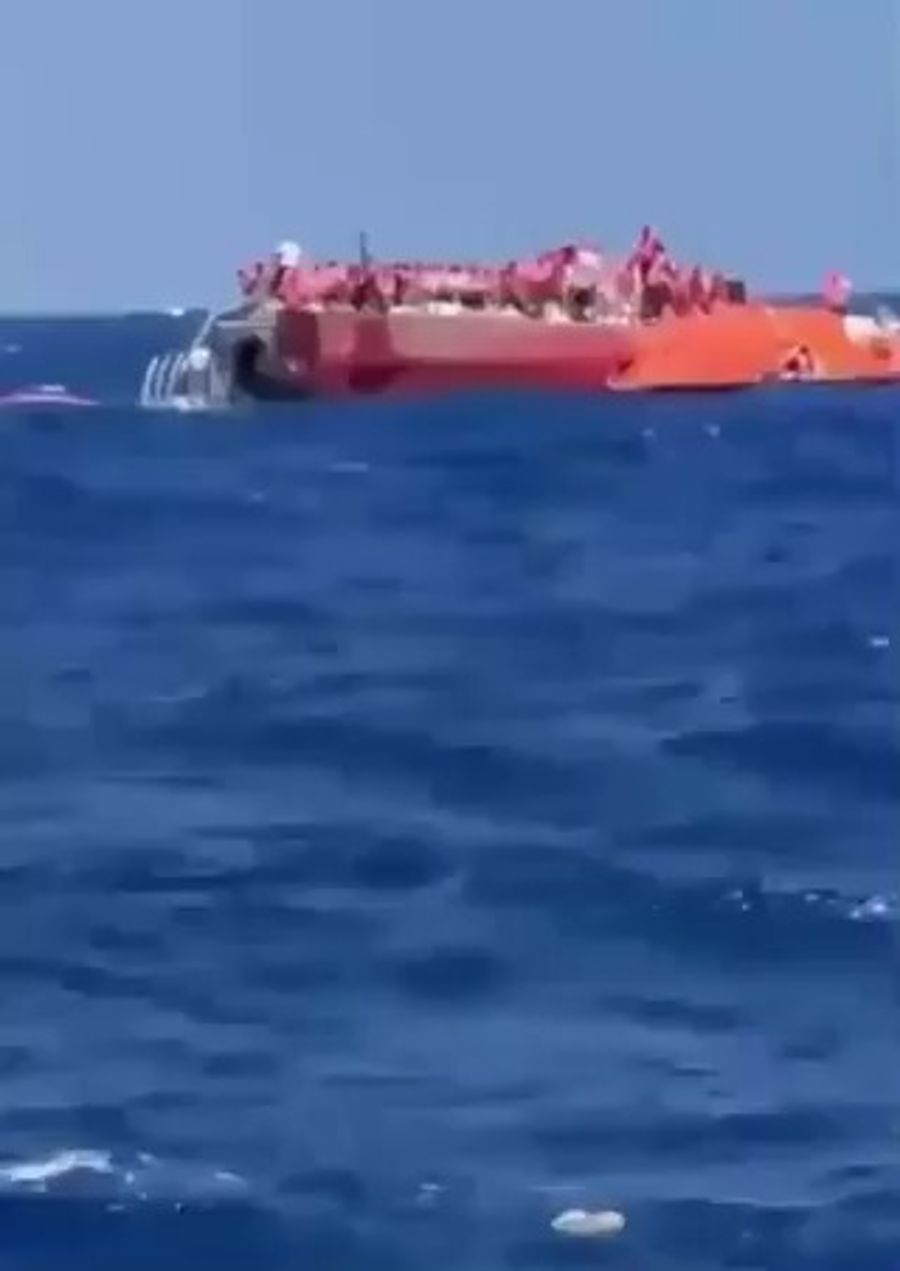
A major rescue operation is underway in the Mediterranean Sea after a Turkish passenger ferry carrying approximately 270 people capsized Sunday afternoon just miles from the northern Cyprus coastline.
The vessel departed from Kyrenia port around noon, bound for Turkey. Within a short time after leaving harbor, the ferry lost stability and overturned in waters roughly 2 to 4 miles offshore, apparently due to exceptionally rough sea conditions.
Emergency services immediately launched a large-scale rescue effort. Local coast guard units, civil defense teams, helicopters, and civilian boats in the vicinity converged on the scene for what has become a complex operation. Witnesses described harrowing scenes as many passengers clung to the capsized hull awaiting rescue, while others were swept into the sea. Rescue crews have so far managed to pull approximately 160 people from the water, who are being transported to shore for medical treatment. The race against time continues to locate and save the dozens of passengers still unaccounted for.
Erhan Arikli, the Minister of Infrastructure and Transport for northern Cyprus, confirmed details of the incident to local media outlets. He said the exact circumstances that led to the capsizing remain unclear at this stage, but emphasized that sea conditions in the area are extremely rough. Arikli stated that the top national priority is the swift and safe evacuation of all passengers and crew without loss of life. Meanwhile, the mayor of Kyrenia described the situation as "very serious," with all emergency systems in the region placed on highest alert to receive survivors.
The maritime disaster unfolds against a backdrop of unusual and severe weather that has struck the Cyprus region over the recent weekend. The island has faced heavy rainstorms and strong winds in recent days—a rare and abnormal occurrence for August—which have already claimed lives and caused injuries and damage across the country. The turbulent seas and high waves generated by the weather system have complicated navigation in the area and are now significantly hampering rescue operations off the island's coast.