
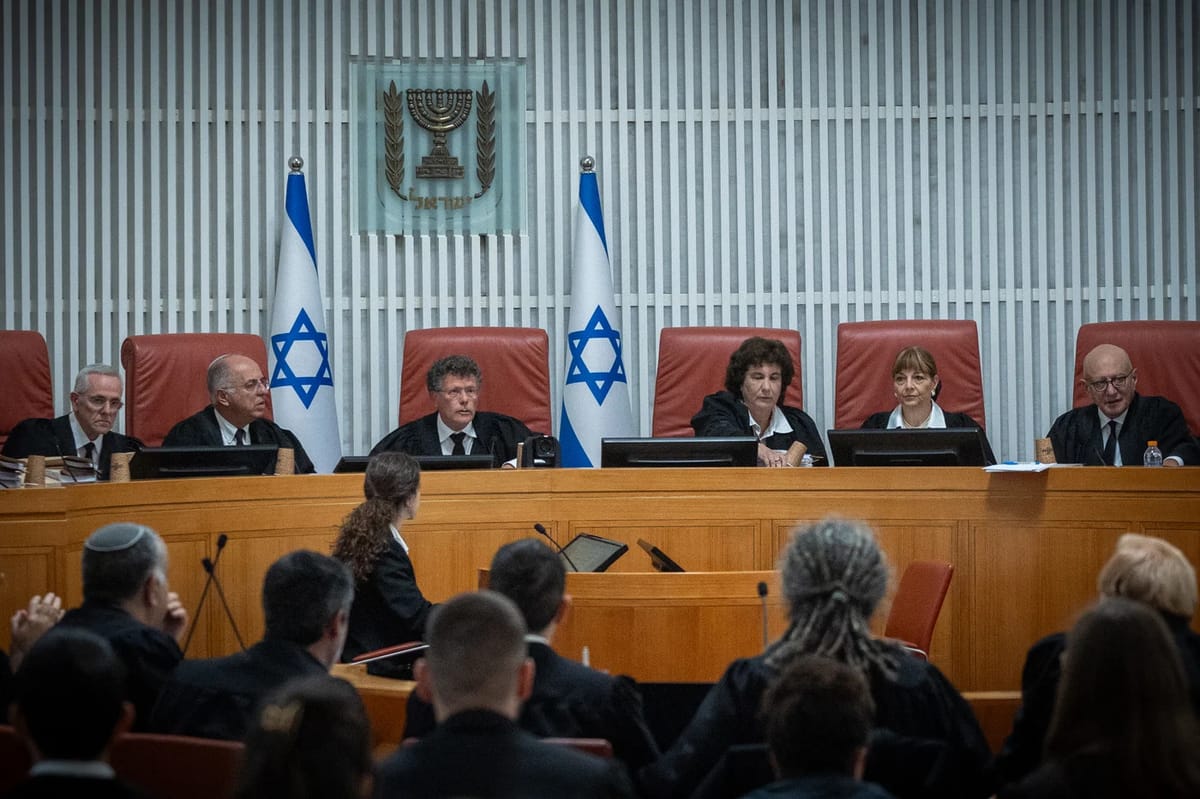
Israel's High Court of Justice on Thursday struck down a petition that had sought to strip yeshivas of their tax benefit under Section 46, but the ruling left the underlying sanctions untouched, meaning the practical outcome for the affected institutions remains unchanged.
The justices did not hold a full hearing on whether revoking the benefit was lawful. Because Attorney General Gali Baharav-Miara had already agreed with the petitioners' position and was actively implementing it, the court found no need to rule on the substance of the petition itself.
As a result, the sanctions against the yeshivas will stay in effect, and the tax benefit will not be restored at this stage. The policy advanced by the attorney general will continue unless and until a different ruling is issued.
The justices were careful to note that dismissing the petition does not amount to approving the attorney general's position. The court did not determine that stripping the benefit from the yeshivas is lawful or justified. It simply concluded that there was no need to proceed with the current petition, since the relief it sought was already being carried out.
That leaves the yeshivas in a kind of legal limbo. The court neither approved the move nor blocked it. For the institutions affected by the sanctions, the practical result is identical either way, they remain without the Section 46 tax benefit.
The dispute is expected to return to the High Court through a counter-petition filed by the organization Emet L'Yaakov, which is seeking to challenge the revocation of the tax benefit and to examine the legal basis underlying the attorney general's decision.
Until that counter-petition is heard and decided, the denial of the benefit will remain in force. It is only within that separate proceeding that the justices are expected to examine the arguments against the move and consider whether the sanctions can continue.