Get our mobile app
Download on the App StoreGet it on Google Play

Beit Tzafafa Terror Cell

Four Convicted of Spying for Iran

Jerusalem District Court convicts Mamdouh Hader, Omri Abu Hamida, Mahmoud Hader and Mohammed Taha of security offenses carried out on behalf of Iranian operative, including scouting nuclear scientist's home for assassination

Iranian missiles. Illustration

Four residents of the Jerusalem neighborhood of Beit Tzafafa were convicted Wednesday by the Jerusalem District Court of security offenses committed on behalf of an Iranian operative, following a plea agreement.

Mamdouh Hader, Omri Abu Hamida, Mahmoud Hader and Mohammed Taha admitted to carrying out missions assigned by an Iranian handler in exchange for payment, according to the amended indictment. The tasks were designed to harm Israeli national security and included establishing a terror cell, acquiring weapons and grenades, and creating staged documentation of attacks on a soldier's home and a police vehicle.

The Iranian operative also tasked another defendant in the case with assassinating a nuclear scientist and his family members. As part of that mission, Mamdouh Hader and Omri Abu Hamida joined a trip to the Weizmann Institute in Rehovot, during which they were informed the assignment came from an Iranian source. When the group was unable to enter the institute grounds, they filmed the entrance and surrounding area, and the videos were transmitted to the Iranian handler. Abu Hamida later asked about the purpose of the filming and was told that a person the Iranians wanted to eliminate lived at the location. Neither man took any action to prevent the planned attack.
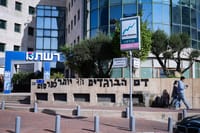

Mahmoud Hader and Mohammed Taha were convicted of contact with a foreign agent. Hader assisted in spray-painting and documenting graffiti in Jerusalem, drove another defendant to collect two grenades, and helped obtain a fake police identification plate intended for creating staged footage of an attack on a police vehicle.

Taha proposed throwing a stun grenade at an empty house in the village of Kfar Qatanna to create fake documentation of an attack on a Jewish home. He arrived at the location with the grenade, asked his companions to throw it, filmed the act and sent the video to the defendant who maintained contact with the Iranian operative. In another instance, he kept possession of the phone used to communicate with the Iranian handler in order to make it harder to trace.

The case was prosecuted by attorney Benny Liebskind of the Jerusalem District Attorney's Office. Sentencing arguments will be heard at a date to be determined. Proceedings against other defendants in the case are ongoing.

Ready for more?

Join our newsletter to receive updates on new articles and exclusive content.

We respect your privacy and will never share your information.

Enjoyed this article?

Yes
No
Follow Us:

Unmissable content


Loading comments...

Also of Interest