Get our mobile app
Download on the App StoreGet it on Google Play

Unusual directive

Police chief blocks Shin Bet election probe aid

Head of investigations orders officers to refer all Shin Bet requests in election interference case directly to him 

Right: Shin Bet chief David Zini; left: Attorney General Gali Baharav-Miara

The head of Israel Police's investigations division, Chief Superintendent Boaz Blatt, has issued an unusual directive to officers: no information relating to the election interference case may be passed to the Shin Bet without his explicit approval. The directive also covers other requests for investigative assistance, even though the police are supposed to serve as the Shin Bet's operational arm in parts of the probe.

"If the Shin Bet approaches you with any request for assistance relating to the elections, such as help retrieving camera footage, interrogations, or any other action, refer it to me and do not comply with their request until you receive approval from the division," Blatt wrote. He emphasized: "Again, any request whatsoever relating to the elections must be referred to me."

At the center of the case is suspicion that foreign actors, including Qatar, Turkey and the Palestinian Authority, transferred large sums of money to members of the Joint List in order to influence the elections. The Shin Bet began transferring materials to the police in stages relating to alleged irregularities at polling stations in the Arab sector. This came after days in which the service refrained from sharing information in its possession with the police.

The Shin Bet's handling of the case has drawn criticism of its chief, David Zini. Zini demanded that the case and the suspects in it be defined under suspicion of security offenses, so that he could summon Arab party leaders for interrogation without presenting evidence against them. Those involved include Joint List chairman Ahmad Tibi, Ra'am chairman Mansour Abbas, and Balad chairman Sami Abu Shehadeh, who was disqualified from running in the elections.

Attorney General Gali Baharav-Miara stated that in a state governed by law, citizens or public officials cannot be interrogated without evidence justifying it. "Anyone who needs to be interrogated will be interrogated, but people will not be interrogated without an evidentiary basis," she stated.

Attorney General Gali Baharav-Miara
Attorney General Gali Baharav-Miara (Photo: Ben Hakon, Flash 90)

Another name that has come up is Ayman Odeh, who is expected to complete his term when the new Knesset is sworn in next Tuesday, November 10. According to a report on i24NEWS, authorities are examining whether Odeh received hundreds of thousands of shekels from the Palestinian Authority. Reports indicate that there is "wall-to-wall agreement" that sufficient evidence has been gathered to summon him.

The police clarified that at this stage there is no intention to summon Odeh, who is currently abroad, for interrogation, because intelligence material linking him to the matter has not yet been transferred.

Representatives of the Shin Bet, Israel Police and the State Attorney's Office met to discuss the serious suspicions of foreign interference in the elections. The meeting focused on suspicion that the transfer of large sums to promote voting in the Arab sector was carried out through channels previously used to transfer terror funds. During the meeting, a joint work framework was agreed upon between the various bodies, and the Shin Bet chief committed to the attorney general to act in accordance with her directives and to transfer the required investigative materials promptly.

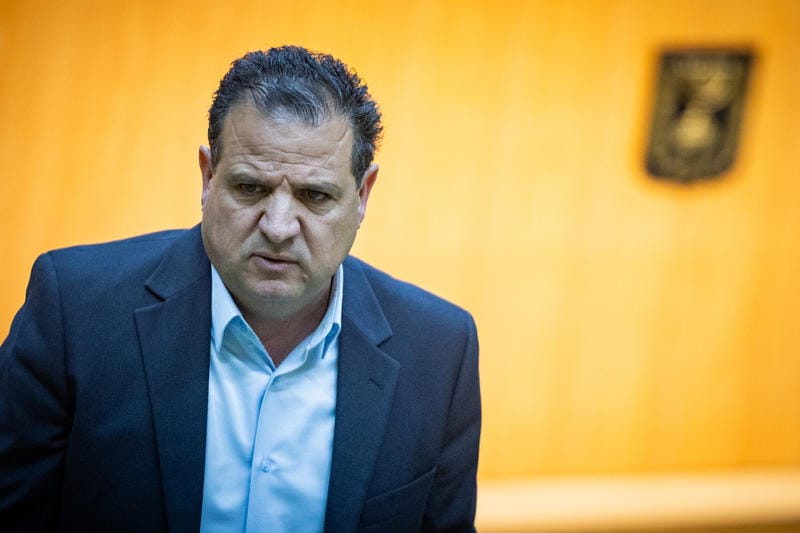
Ayman Odeh
Ayman Odeh (Photo: Yonatan Sindel/Flash90)

In addition, the "Choosing Life" forum of bereaved families and terror victims filed a formal complaint with the Shin Bet chief following the exposure of a dedicated app called "Aswatcom," which according to findings was used by key activists in the Ra'am party to manage the voting apparatus and track voters in real time. According to the complaint, the app allowed activists to receive reports on voters at the polling-station level and to manage the voting apparatus divided by polling stations.

The forum claims this is activity contrary to legal provisions and High Court rulings, and requires examination of the scope of information collected, the identity of users, and the parties to whom the information was exposed. An additional finding raised by the forum points to the involvement of actors from Ramallah, with ties to the Palestinian Authority, in the system's development process.

Ready for more?

Join our newsletter to receive updates on new articles and exclusive content.

We respect your privacy and will never share your information.

Enjoyed this article?

Yes
No
Follow Us:

Unmissable content


Loading comments...

Also of Interest