Washington and Jerusalem have spent years demonstrating military power without producing a decisive regional outcome. The Iranian axis has been damaged, but not dismantled. Deterrence has repeatedly failed. America's allies have learned that its protection is neither automatic nor sufficient.
So perhaps no one should be surprised that Saudi Arabia, Turkey and Pakistan are drawing closer.
The three countries have now signed the Mecca Joint Defence Agreement, under which an armed attack on one will be regarded as an attack on all. The precise military obligations remain undefined, but Turkish Foreign Minister Hakan Fidan has already compared the arrangement to NATO's Article 5. He also said that the alliance will establish a ministerial committee and a permanent secretariat in Saudi Arabia, and that Egypt could eventually join.
At first glance, none of this should alarm the United States. Turkey is a NATO member, while Saudi Arabia and Pakistan are longstanding American partners. The signatories insist that the pact is defensive and directed against no particular country.
But its deeper importance lies not in its declared target. Three American partners are constructing a regional security system that is increasingly independent of Washington. That alone will reduce American leverage, and, with it, Israel's ability to shape the region through American power.
This emerging Sunni axis is not composed of invulnerable states. Each has serious economic, political or strategic weaknesses. Yet each also holds a powerful card. Turkey brings a substantial military-industrial base and NATO's second-largest army. Pakistan brings a large military and is the Muslim world's only nuclear-armed state, even though there is no evidence that the agreement extends a Pakistani nuclear umbrella. Saudi Arabia brings energy, capital, religious prestige and diplomatic reach.
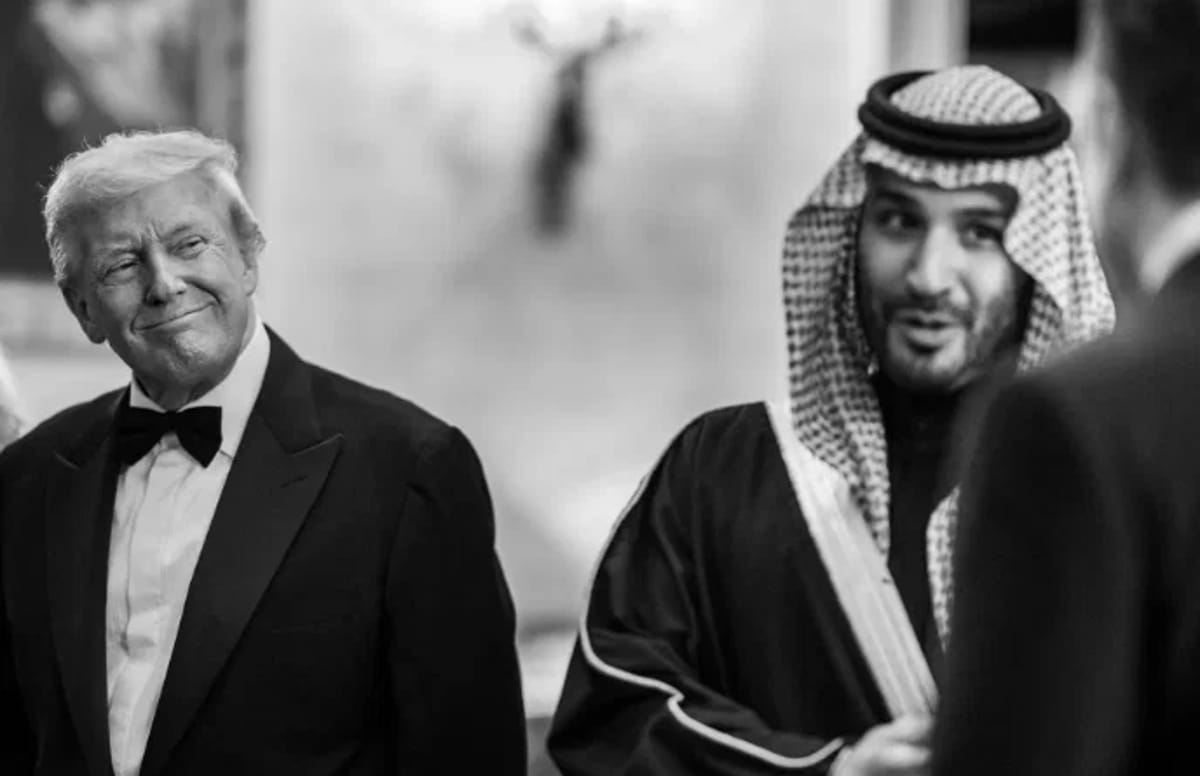
Together they possess industry, military weight, money and energy. This is not yet an “Islamic NATO,” but neither is it merely a photograph from another summit.
The outlines of such a bloc were already visible after the pager operation in Lebanon. Weakening Hezbollah did not guarantee an Israeli-led regional order. It also created space for Sunni powers with their own ambitions. Israel failed to eliminate the Shiite axis; it may now face the gradual rise of a broader and potentially stronger Sunni one.
Israel should not be reassured by technical denials that the pact is aimed at no one. Saudi Arabia may be its comparatively moderate member, but Ankara's rhetoric toward Israel has become openly hostile. Pakistan's defense minister has gone further, calling Israel a threat to the entire Muslim world and urging a united Muslim military front. An alliance does not need to be founded against Israel in order to become a serious challenge to it.
History offers a warning, but also a qualification. Arab military coalitions fought Israel in the past, and the 1967 Khartoum summit symbolized common rejectionism through its infamous “three noes.” Those coalitions repeatedly fractured under the weight of rival national interests. This new alliance will face the same test: can Muslim solidarity overcome Turkish-Saudi rivalry, Pakistan's focus on India and Egypt's own calculations?
Egypt's possible entry would make that question more urgent. Its population, military and control of the Suez Canal would transform the scale and geography of the pact.
This bloc might have emerged even after a decisive Israeli victory. The forces driving it, fear of Iran, distrust of American guarantees, Turkish ambition and Saudi hedging, were already present. But American and Israeli strategic failure has accelerated the process.
The Mecca pact is not a declaration of war on Israel or the United States. It is something more sobering: a declaration that the region will no longer wait for either of them to create order. If Washington and Jerusalem continue mistaking tactical blows for strategy, they may discover that the next Middle East is being built without them.