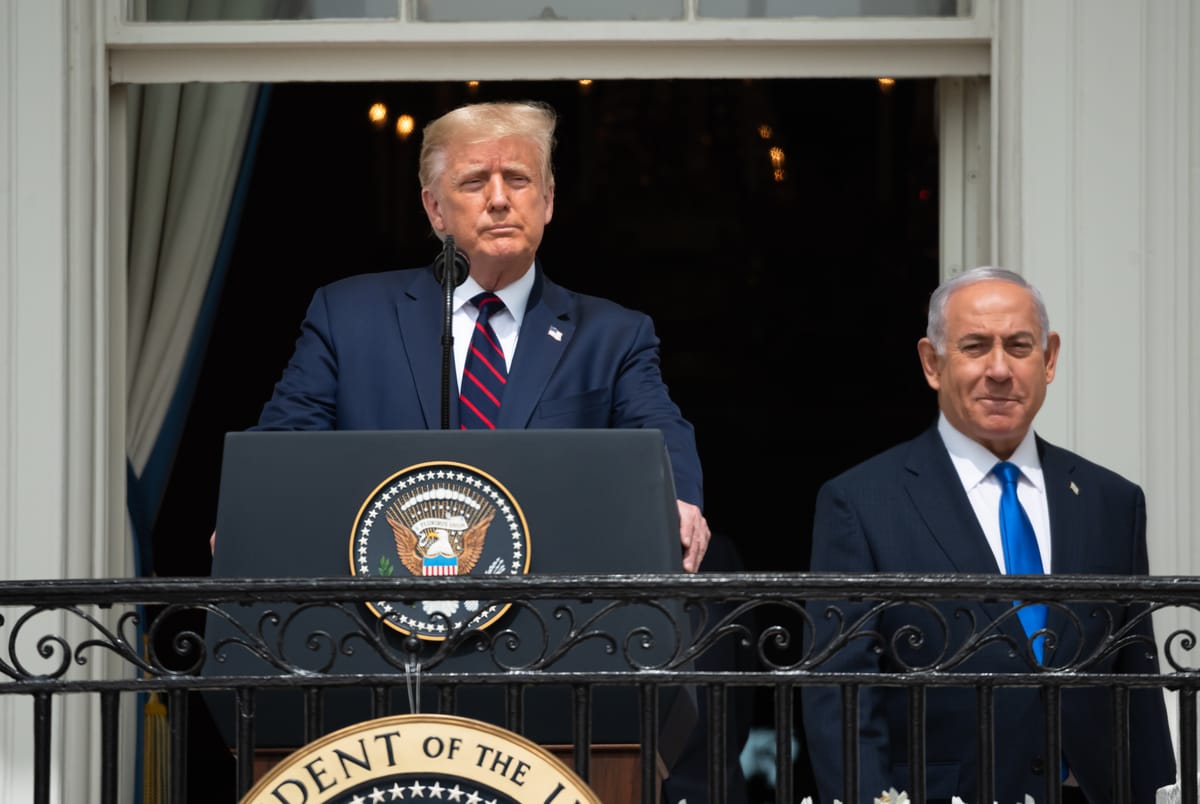
The personal and strategic relationship between President Donald Trump and Prime Minister Benjamin Netanyahu has collapsed into unprecedented acrimony, according to a comprehensive Wall Street Journal investigation revealing harsh phone calls, cutting public remarks, and a fundamental breakdown in trust that culminated last night with the signing of a U.S.-Iran agreement that Netanyahu fundamentally opposes.
Trump, frustrated by the economic toll of the Middle East conflict on American fuel prices and global markets, repeatedly pressured Netanyahu to halt offensive operations. Netanyahu, conversely, pushed for continued military action and urged Washington to delay diplomatic overtures to Iran.
In one heated phone call about operations in Lebanon, Trump lost his patience entirely, attacking the prime minister directly: "Why are you blowing up buildings? Stop blowing up buildings."
Behind closed doors, according to people close to the president, Trump called Netanyahu "a fucking crazy person," noting pointedly that without American backing, the Israeli leader would face criminal prosecution.
The Strategic Divide
The tensions reflect a fundamental divergence in priorities. Trump's administration, alarmed by global economic slowdown driven by the ongoing military conflict, feared the effects on his political standing and domestic support. Officials in the White House raised questions about whether Netanyahu was prolonging the fighting for internal Israeli political reasons.
Netanyahu, by contrast, viewed the military campaign as essential to Israeli security and remained skeptical of American diplomatic efforts, particularly regarding Iran. When Jerusalem learned that the U.S. had decided to announce a ceasefire, Israeli officials were caught off guard, having calculated that Trump would approve further strikes.
The prime minister directly challenged the president's approach to Iran. In one conversation, Netanyahu warned Trump against signing an agreement he could not effectively monitor and posed a pointed question: "Donald, how are you planning to verify this?"
After learning that the Iran deal was taking shape without Israeli coordination, Netanyahu requested an urgent meeting with the president, a move that underscored his alarm and the breakdown in the bilateral communication that once defined their relationship.
The Public Humiliation
The private tensions spilled into public statements that Jerusalem interpreted as deliberate damage to Israel's standing. Trump told interviewers that Netanyahu asks him for permission to take military action, adding with visible condescension, "He calls me the big one, and he is the small one." In another comment, Trump openly questioned whether Netanyahu even wanted to continue serving as prime minister, in apparent reference to upcoming Israeli elections.
These remarks, amplified through media coverage, landed in Jerusalem as deliberate attempts to diminish the prime minister's authority and autonomy.
A Rapid Collapse
This breakdown comes after a period of unprecedented military and security cooperation. During the recent conflict, Israel presented Trump with a golden copy of the binoculars used to target senior Hezbollah operatives, a gesture intended to cement the personal bond between the two leaders. That symbolic gift now appears almost quaint against the backdrop of the current rupture.
Experts had long noted that Netanyahu harbored concerns about Trump's mercurial temperament and unpredictability, yet the prime minister had believed he possessed the ability to persuade the president on critical matters. That confidence appears to have been decisively shattered.
The Iran Deal Becomes Reality
Last night, as tensions between Washington and Jerusalem reached their nadir, the United States and Iran formally signed a Memorandum of Understanding at the Palace of Versailles in France, making official what Netanyahu had warned against.
Under the agreement, Iran commits to fully opening the Strait of Hormuz to international shipping. In return, Washington will remove its economic blockade and permit the resumption of Iranian oil sales on global markets. Discussions on Iran's nuclear program have been postponed for the next two months.
Tehran celebrated the signing as a decisive victory. Iranian Parliament Speaker Mohammad-Baqer Qalibaff declared: "Our finger is on the trigger. The MOU is a document of American defeat." The Iranian Foreign Ministry made clear that missile capabilities remain entirely off the table for any future negotiations.
What Comes Next
Implementation talks are scheduled to begin tomorrow in Switzerland. Delegations from the United States and Iran, along with mediators from Qatar and Pakistan, will meet in Burgenstock to discuss the agreement's operational details.
Netanyahu's office declined to comment on the WSJ reports. The White House indicated that no pressure is being applied to the president regarding his approach to Israel or the Iran agreement.
The question now is whether the relationship can be repaired or whether this rupture represents a fundamental realignment in U.S.-Israel strategic partnership. The evidence suggests the latter is far more likely.