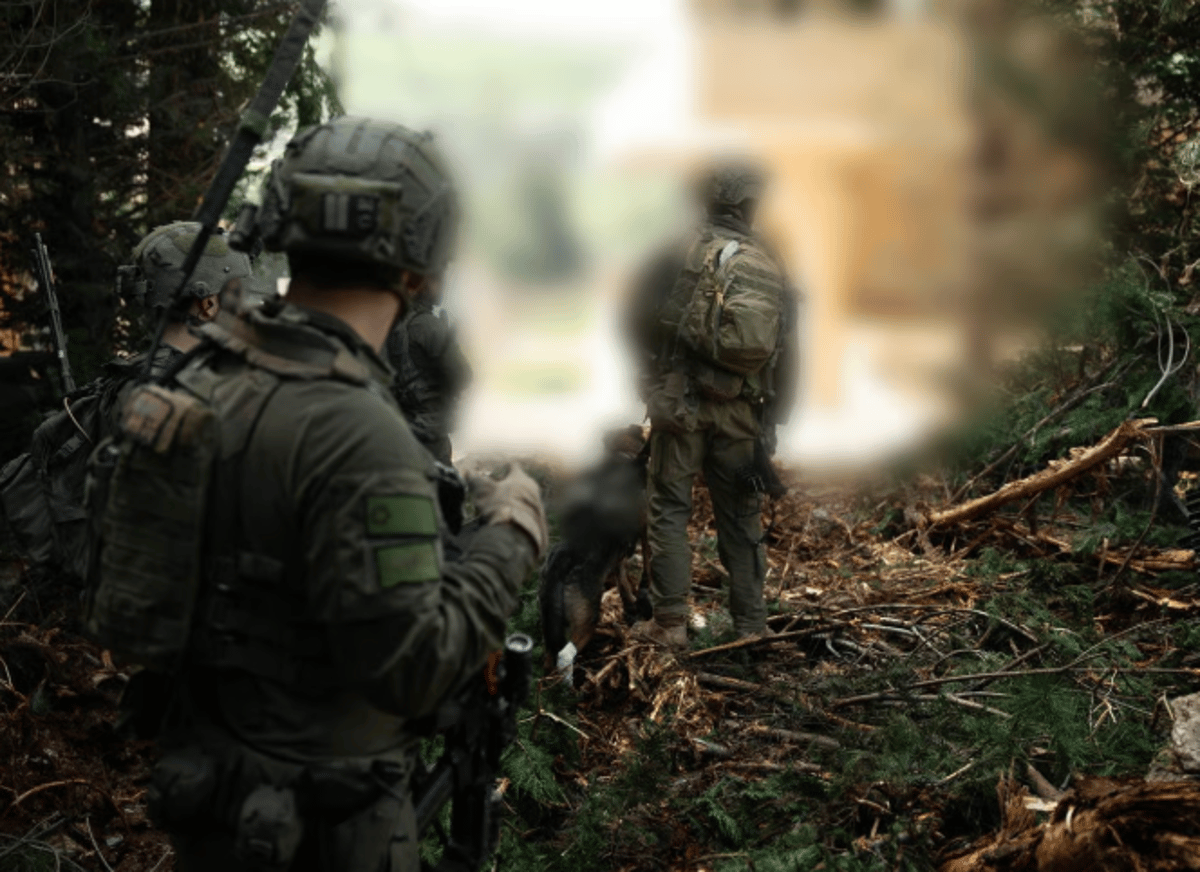
Israeli forces started implementing the initial phase of understandings reached in Rome last week, withdrawing from the village of Fareen with a nearby village to follow, as the Lebanese army moves in under close American oversight
The IDF began over the weekend to implement the first phase of understandings reached between Israel's defense establishment and the Lebanese army during two days of talks held in Rome last week, according to a report from the Israeli outlet Srugim. Israeli forces have started withdrawing from the village of Fareen, located in the Bint Jbeil sector of central southern Lebanon.
The Lebanese army is set to take over the vacated territory, entering and clearing areas that Israeli intelligence indicates may still contain Hezbollah operatives or weapons infrastructure. A similar withdrawal from the neighboring village of Randouriye, also in the Bint Jbeil area, is expected to follow within the coming days.
Under the terms of the agreement, Israeli forces will return to any area from which they withdraw if the Lebanese army fails to certify that the territory has been fully cleared of terrorists and weapons, and Israel independently verifies that certification. The arrangement represents an initial opening for implementing broader Lebanese military control over parts of the border region, subject to final Israeli approval at each stage.
Senior officials in the IDF's Northern Command emphasized that the current withdrawal is limited to a pilot program only, and does not signal a broader Israeli intention to withdraw from locations that posed a threat during the war or during the October 7 invasion of Israel. Officials also said Israel will not permit the return of residents to villages along the contact line between Lebanon and northern Israel.
Israeli security assessments cited in the report estimate that approximately 1,000 Hezbollah operatives remain south of the Litani River, some positioned in tunnels beneath the Ali Taher ridge. Israel says it intends to continue monitoring the area and to act against terrorists and weapons infrastructure as necessary. Over the weekend, three Hezbollah operatives attempted to launch a drone targeting Israeli forces in the village of Tebnit; Israeli troops located and eliminated the cell within minutes, with no Israeli casualties reported.
According to Srugim, the U.S. Central Command is expected to announce in the coming days that the pilot program will continue for an indefinite period, pending further understandings between Israel and Lebanon. No timeline for additional talks has currently been set.
The pilot program stems from a framework agreement reached in Washington on June 26 between Israel and Lebanon, which called for an end to the conflict, the disarmament of armed groups including Hezbollah, the deployment of Lebanese troops to the south, and a progressive Israeli withdrawal. Despite the agreement, Israeli strikes in southern Lebanon have continued, and Hezbollah has publicly rejected both the framework and efforts to disarm it. Israel has said its forces will remain in a security buffer zone as long as Hezbollah retains its weapons.
Talks in Rome concluded last week without a specific public timetable for further Israeli withdrawals, though Lebanese officials said they were pushing to begin implementation of the pilot project as quickly as possible.