A profound disclosure regarding the diplomatic constraints of international military coalitions has emerged from the highest levels of the regional defense establishment. Senior security officials have detailed the intricate behind the scenes communication that altered the trajectory of ongoing operations across multiple northern and eastern theaters. These insights highlight the tactical adjustments required when independent strategic objectives intersect with the broader geopolitical agendas of global superpower allies during active warfare.
Israeli Defense Minister Israel Katz delivered a detailed commentary regarding the controversial decision to tie the Lebanese and Iranian fronts together against the explicit desires of Jerusalem. Katz praised the resistance of the executive leadership during intense bilateral discussions, noting that "The Prime Minister fought courageously. I witnessed four phone calls between the Prime Minister and the President of the United States, during which the President tried to pressure him to link Iran and Lebanon. The Prime Minister stood firm. Iran was constantly pressing the United States to pressure Israel to stop."
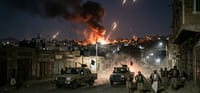
The Defense Minister explained that Israel possessed immense strategic leverage due to widespread displacement inside hostile territories while the military campaign proceeded unhindered. Katz stated that "At the same time, we were striking across Lebanon. There were 700,000 evacuees from Dahieh and 600,000 evacuees from southern Lebanon, a total of 1.3 million. Most of Tyre was evacuated as well." He clarified that "This was the situation we wanted because it was the strongest possible leverage to change reality in Lebanon: to pull the snake's fangs, remove Hezbollah's venom, and defeat Hezbollah in Lebanon. That was the objective I supported, and I believed it was achievable because of what we had done in Iran, our determination, our capabilities, and the broad support for that goal."
The operational plans were originally designed to expand much further north to completely eradicate enemy strongholds. Katz revealed that "It would not have ended in southern Lebanon or Dahieh. We were prepared to order aerial evacuations of villages in the Beqaa Valley and strike Hezbollah everywhere with maximum force to bring security to Israel's northern residents. I instructed the IDF accordingly, and the military prepared operational plans." According to the defense chief, the sheer intensity of this military pressure severely destabilized the enemy leadership. Katz asserted that "Hezbollah understood this and, in panic, pressured Iran to link the two fronts. I have never seen a terrorist organization beg so desperately for a ceasefire."
However, the diplomatic dynamic shifted decisively during a final conversation between the heads of state that the Defense Minister did not personally observe. Katz recalled that "I was not present for the fifth phone call. In that conversation, the President insisted forcefully on linking the two arenas. Even then, the Prime Minister said: 'Fine, we won't bring down buildings in Beirut, but we can still carry out surgical strikes.' We eliminated the Radwan Force commander afterward and conducted similar operations."
The Defense Minister openly expressed his dissatisfaction with the resulting diplomatic compromise, attributing it directly to Washington's desire to foster a broader regional diplomatic breakthrough with Tehran. Katz remarked that "I regret that linkage, but it was an American interest. The President was very eager to advance the possibility of negotiations with Iran and viewed this as an obstacle. When you have a partnership, it brings advantages, but also certain constraints."
This geopolitical constraint forced the Israeli military command to alter its immediate tactical objectives on the ground. Katz concluded that "We therefore moved to Plan B: deepening the Yellow Line and implementing other measures. Meanwhile, residents returned to Dahieh and parts of southern Lebanon outside the Yellow Line, and Hezbollah reinforced its presence, including south of the Litani River, as a result of this situation. We then held discussions on whether to expand the ground maneuver."