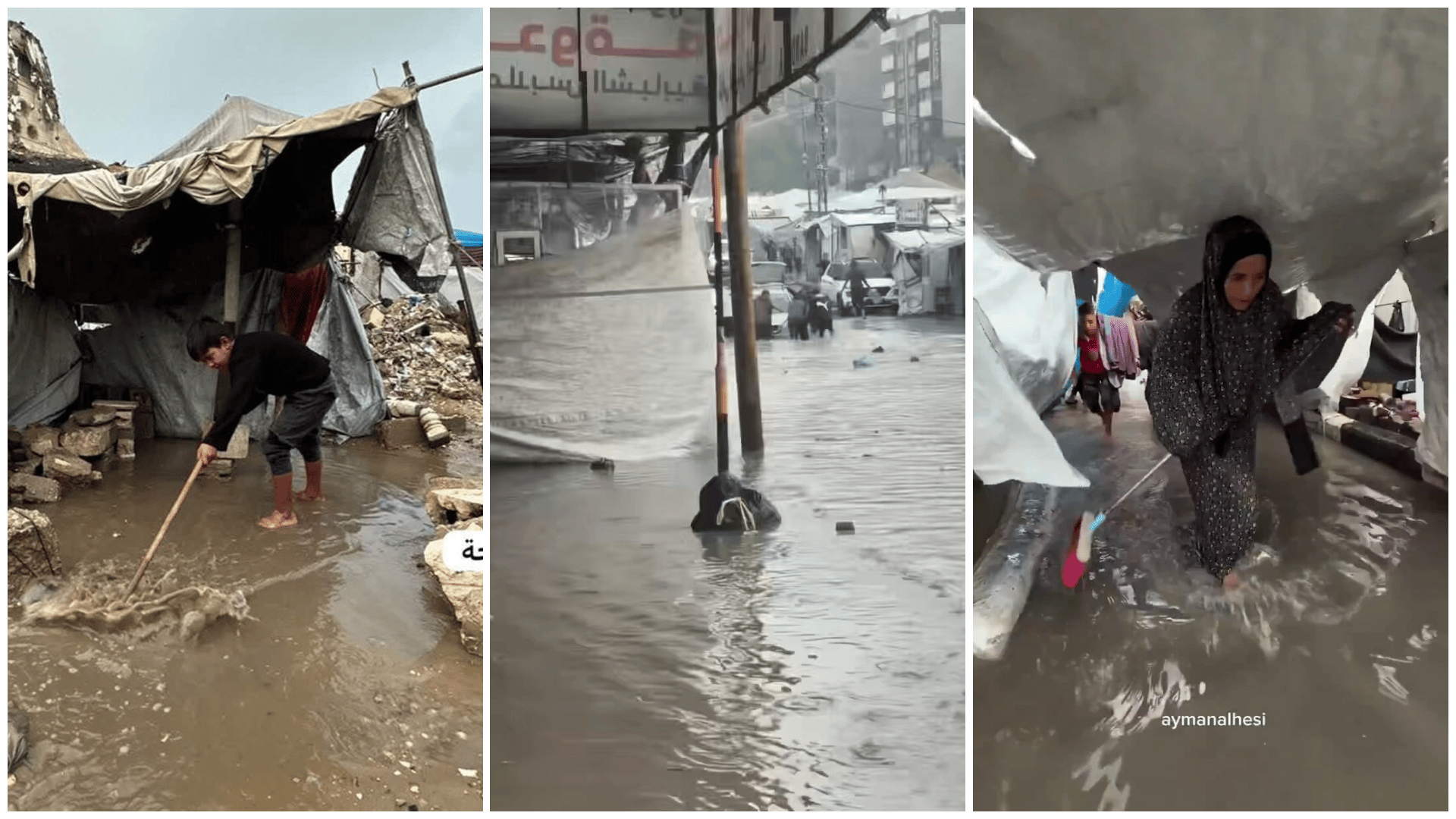

Israel’s defense establishment has begun preparing to allow equipment and construction materials classified as “dual-use” into the Gaza Strip to carry out urgent repairs to its collapsed sewage and sanitation infrastructure, Channel 12 reported Monday evening.
According to the report, the decision was made by the political echelon and passed on to the defense establishment, which is now working out how to implement it. It comes amid heavy pressure from the US administration to address Gaza’s preparations for winter. The pressure intensified in recent days after flooding caused by heavy rain swept through displacement camps across the Strip. According to the report, Washington wants to prevent further images of flooding and humanitarian distress from emerging from Gaza.
The materials expected to enter include concrete, iron, steel and certain types of pipes. Israel has until now almost entirely blocked or tightly restricted these items because of their dual-use classification, out of concern that Hamas would use them to rebuild tunnels and military fortifications.
The first planned project is the repair of wastewater treatment facilities inside Gaza, which could begin in the short term.
The defense establishment is now examining oversight and monitoring mechanisms aimed at ensuring, as far as possible, that the materials are used only for civilian infrastructure and do not reach Hamas.
The concern is grounded in past experience. After previous rounds of fighting, some of the concrete brought into Gaza for reconstruction was diverted by Hamas, because oversight was insufficient, and used to repair damaged tunnels and build new ones.
The move is taking place even though Hamas has not disarmed and is not taking any practical steps toward doing so. Israel has long insisted that disarmament must come before any large-scale reconstruction of the Strip.
Alongside the planned change, Israel continues to allow routine humanitarian supplies into Gaza, including vacuum trucks for pumping sewage, winter equipment, food and medicine. The entry of heavy construction materials, however, would mark a precedent and an unusual shift in current policy.