
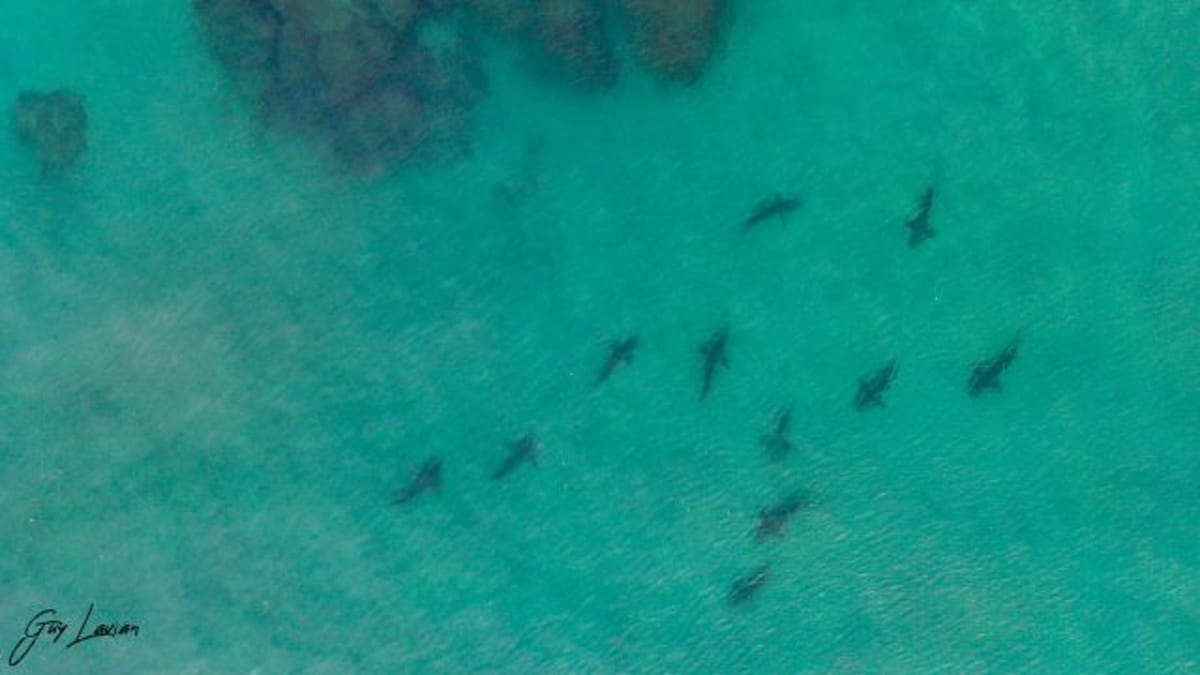
The Israel Nature and Parks Authority issued an urgent warning Tuesday morning after sharks returned to the waters near the Hadera power station, urging bathers, divers and snorkelers to stay out of the water and keep away from the animals.
Every year between November and May, dozens of sharks gather in the warm water discharged from the Orot Rabin power station. Swimming is prohibited in the area. The Authority said encounters with sharks are unpredictable and can be dangerous.
Beyond the sharks themselves, the Authority warned that the outflow area has strong currents and dangerous whirlpools that can put lives at risk. The water is also full of fishing equipment, including hooks and loose fishing lines, which can trap divers.
The Authority stressed that the sharks are not confined to Hadera and have been spotted at other beaches along Israel’s coast. It called on the public to keep away from them anywhere they are seen.
The warning comes a year and a half after Barak Tzach, a 40-year-old father of four from Petah Tikva, was killed in a shark attack off Hadera in April 2025. He had entered the water to dive and film the sharks. It was only the third recorded shark attack in Israel’s history. In the days before the attack, videos showed sharks swimming just meters from bathers, including children, and some people tried to touch or feed them despite repeated warnings.
The sharks that gather off Hadera belong to two species. The dusky shark can reach about 3 meters in length and about 150 kilograms in Israeli waters. The sandbar shark grows to about 2 meters and roughly 70 kilograms. Both can be easily identified by their prominent dorsal fins.
According to the Authority, research shows the sharks come to Hadera to rest and warm up, which helps with processes such as digesting food and reproduction. Sharks are a protected species in Israel. The sandbar shark is endangered in the Mediterranean, and there is insufficient data on the state of the dusky shark population in the region. Harming, harassing or feeding the sharks is against the law and can lead to criminal penalties.
“Sharks in the Mediterranean suffer from severe population declines due to overfishing and unintentional harm from fishing,” said Yigal Ben Ari, head of the Authority’s Marine Unit. He said that as predators, sharks thin out weak and slow animals, strengthening other species and the marine environment as a whole.