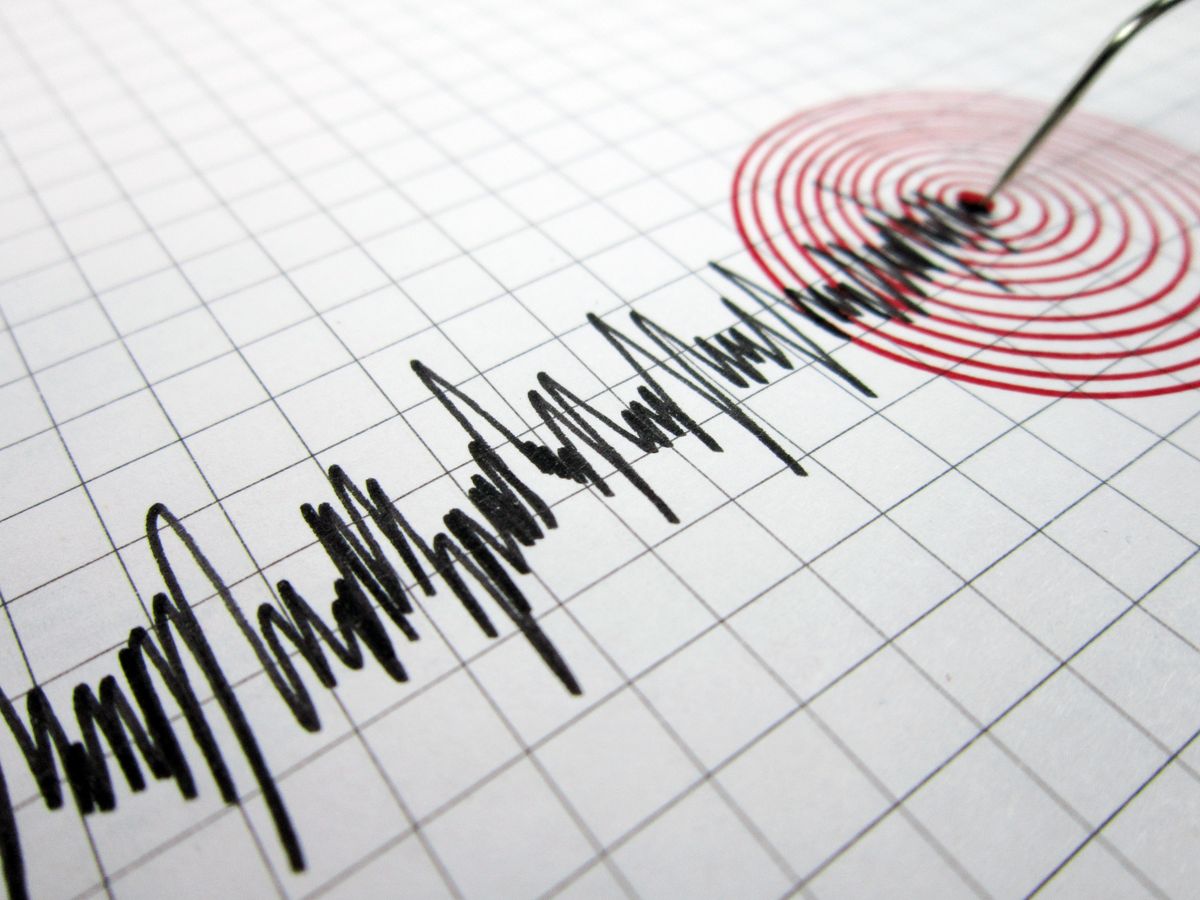
Residents of Eilat and the Arava received a jolt this morning (Wednesday) when the Home Front Command's earthquake alert sounded across the city and surrounding communities, moments before a 4.5-magnitude tremor struck the Gulf of Eilat. The alert went out to Eilat, the Eilot regional council, the Shahoret industrial zone, Be'er Ora, Eliphaz and the Timna copper mines in the Arava.
Minutes later, the Geological Survey confirmed the quake's magnitude at 4.5. Residents across the city reported feeling the tremor. Authorities instructed residents in Eilat and neighboring communities in the Negev to evacuate to open areas. At Ramon Airport, all passengers were evacuated from the terminal. Minor damage was reported at the airport, mostly shattered glass. No injuries have been reported.
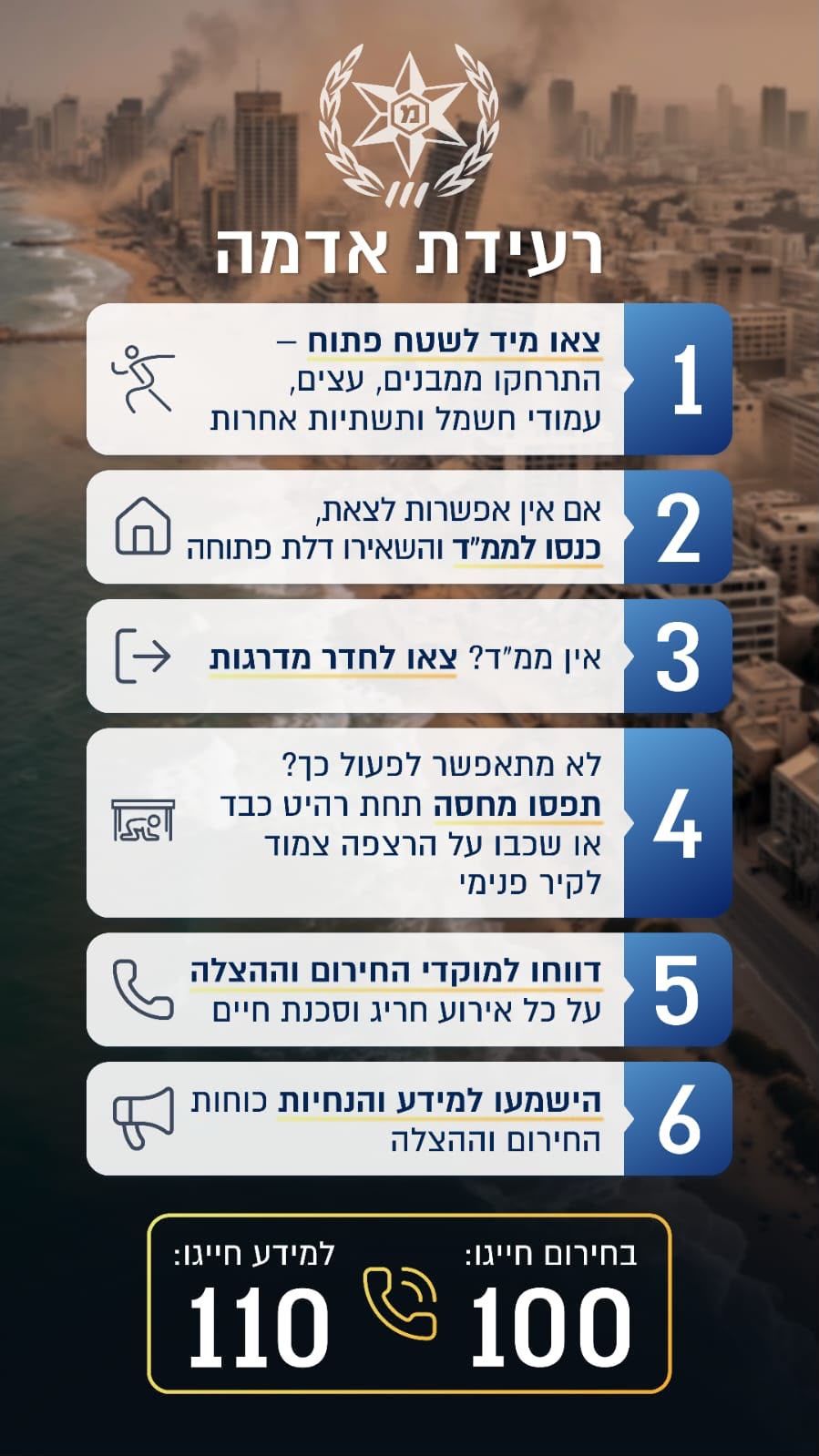
This is the first time in recent memory that the Home Front Command has activated a live earthquake alert. The message residents received read: "Exit immediately to an open area. If not possible, enter your protected room and leave the door open, or go to a stairwell. Only if neither is possible, sit in an interior corner of the room or under heavy furniture and protect your head with your hands."
An IDF spokesperson said: "Following the alerts activated a short time ago due to an earthquake in the Eilat area, follow the official instructions on the Home Front Command app and website."
How the system detects a quake
To provide early warning to the public, the National Emergency Authority and the Geological Survey installed a network of seismic sensors across the country, allowing detection of an earthquake at its onset. The system is linked to the Home Front Command's alert infrastructure and is called "Truah."
According to Home Front Command policy, an earthquake alert is activated upon detection of a tremor of magnitude 4.5 or higher, a threshold with the potential to cause significant damage and endanger lives. The system is designed to give civilians a few seconds, or more in areas farther from the epicenter, to move to a safe location. The alert is activated in every area that may be at risk from the quake.
In addition to the national alert system, local earthquake warning systems are installed in public institutions, primarily schools, and operate by detecting ground motion caused by a quake measured at the site where the system is installed.
The Home Front Command emphasizes that beyond receiving an alert, there are several additional signs indicating the onset of an earthquake: the floor shakes and window panes rattle in their frames, difficulty standing steadily and a sensation of mild dizziness, lamps swinging from the ceiling, objects shaking, sliding on surfaces or falling, and furniture beginning to "travel" across the floor.