Even as U.S. and Iranian forces exchanged military strikes overnight, a senior Iranian foreign policy advisor issued a sweeping ultimatum Wednesday morning, declaring that no nuclear agreement will be reached until the United States capitulates entirely to Tehran's terms.
Mohammad Marandi, an advisor to Iran's Foreign Ministry, stated that Iran will not sign any deal unless Washington returns frozen Iranian assets, ends what he called the "genocide" in Gaza and aggression against Lebanon, lifts the economic blockade on Iran, and removes all sanctions. "Otherwise," Marandi warned, "Trump's economy will collapse."
The statement comes hours after a significant military escalation at the Strait of Hormuz. The U.S. military launched what it described as "self-defense" airstrikes against Iran on June 9 in response to the downing of a U.S. Army AH-64 Apache attack helicopter. The airstrikes by Air Force and Navy aircraft began at 5 p.m. Eastern Time. Both pilots aboard the downed helicopter were rescued safely.
U.S. military strikes hit Iranian air defenses, ground control stations, and surveillance radar sites near the Strait of Hormuz, damaging a communications tower and two water reservoirs. Explosions were reported in Qeshm Island, Bandar Abbas, and Jask county, three strategic locations around the strait.
Iran responded swiftly. The Islamic Revolutionary Guard Corps announced drone strikes against the U.S. Fifth Fleet in Bahrain, and Iranian commanders confirmed additional attacks on American bases in Jordan and Kuwait.
Iranian Foreign Minister Abbas Araghchi wrote on X following the American strikes: "Despite its defeats on the battlefield, the U.S. has chosen to test our resolve. Leave the region if you want security." Earlier, Araghchi had sought to minimize the significance of the helicopter downing, suggesting that foreign forces operating near Iranian territory face "constant risk" from human error, accidents, or crossfire.
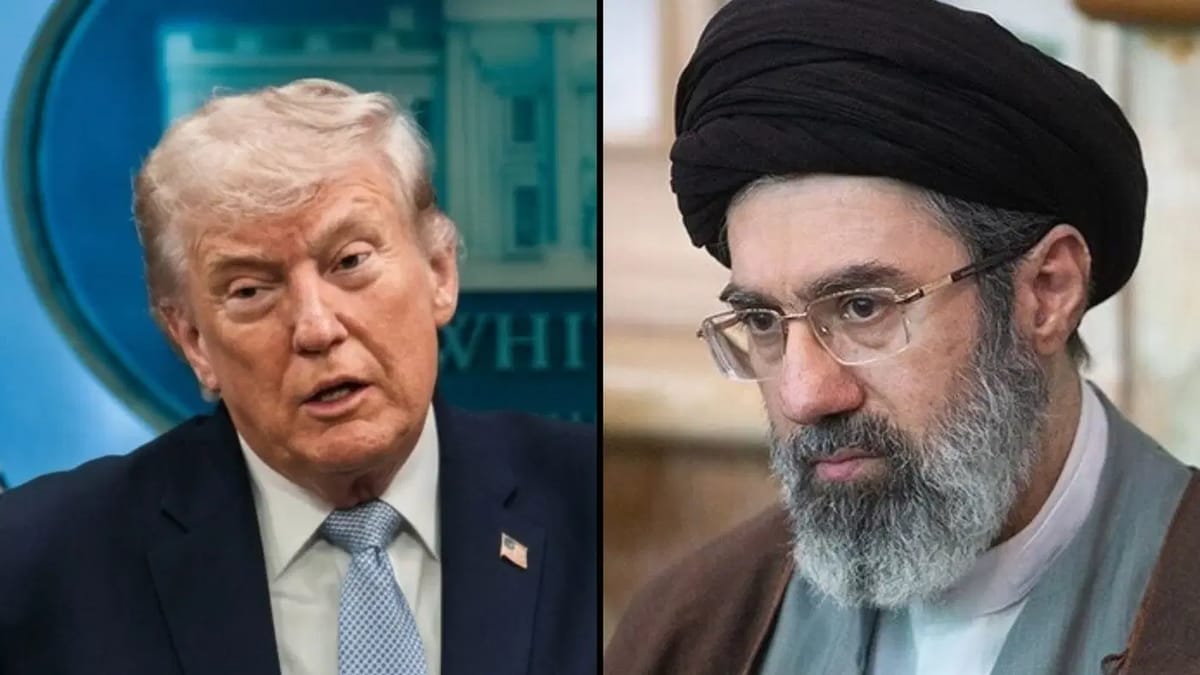
Despite the exchange of fire, President Trump insisted a diplomatic path remains open. Before the helicopter's downing, Trump had expressed renewed optimism over negotiations, saying the U.S. had "a good chance" of signing a deal in "two or three days." In an interview with the Financial Times, Trump also asserted that Prime Minister Benjamin Netanyahu "will have no choice" but to accept a nuclear deal. "I'm the one who decides, not Netanyahu," Trump said.
A senior U.S. official described the negotiating framework as one in which reopening the Strait of Hormuz is a prerequisite that "opens the door to Phase 2" of nuclear talks, in which Iran would commit to negotiations over the disposition of its highly enriched uranium and agree to "severe and long-term limitations and/or cancellation of enrichment activity."
Israel was briefed in advance on the U.S. military operation but was not involved.