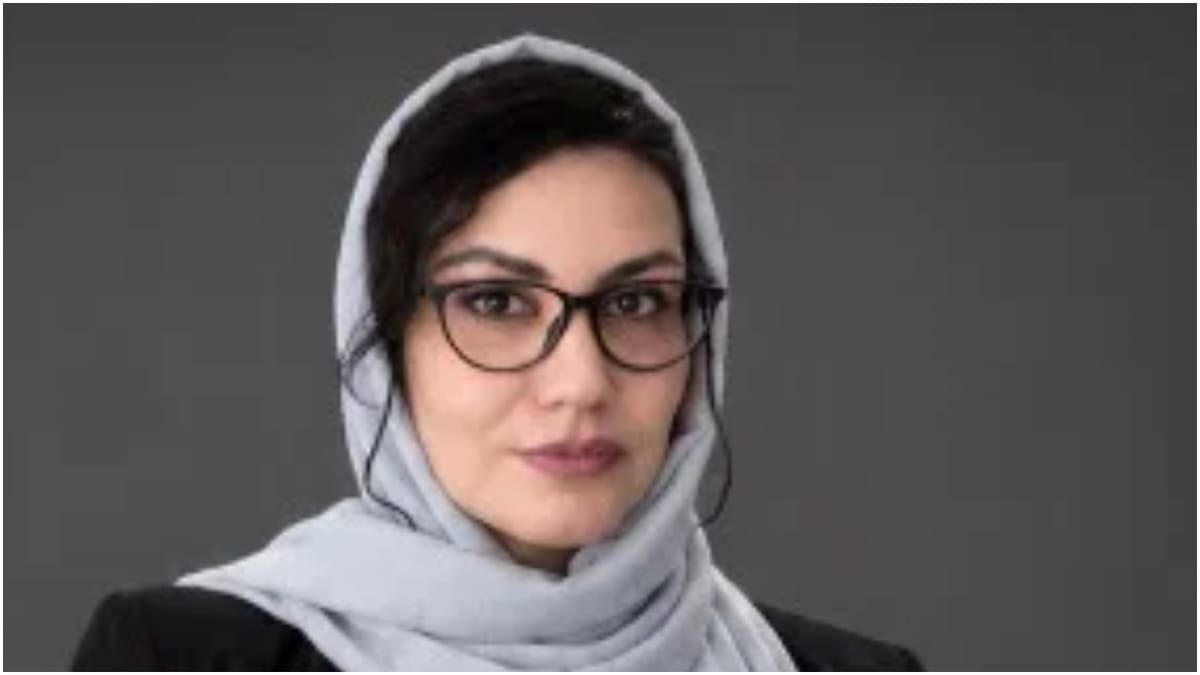
Iran's Supreme Court has upheld the death sentence against Mojdeh Hashemi Bazargani, a 27-year-old Red Crescent worker convicted of espionage based on her confession, Iran International reported.
The ruling stands despite testimony that Bazargani's confession was extracted through severe physical torture and that she was denied proper legal representation throughout the proceedings. She is currently held at the central detention facility in Qazvin, a city approximately 150 kilometers west of Tehran.
According to the report, the case began on April 4 when Iranian security forces raided Bazargani's apartment in the middle of the night. Officers broke into the home using a metal saw while she was living there with her elderly and ill mother in the town of Alvand, near Qazvin. After her arrest, she was taken to the detention facility and charged with passing the location of a sensitive military site to entities defined as "the enemy", a charge Bazargani has consistently and categorically denied.
In a harrowing audio message smuggled out of prison earlier this year, Bazargani detailed the abuse she endured at the hands of interrogators. She said she was beaten brutally with pipes and batons on her head, neck and shoulders during prolonged and exhausting interrogation sessions.
The violent beatings broke two of her teeth and left her suffering from severe medical symptoms including chronic dizziness, shortness of breath and heart problems. Despite the clear physical injuries on her body, authorities denied her medical treatment, and her repeated requests to be examined by a licensed physician or transferred to a forensic medicine institute to document the signs of violence were rejected outright.
The interrogators, she detailed in her testimony, applied heavy psychological and physical pressure to break her spirit and force her to confess to crimes she did not commit. "They pin a thousand charges on me and force me: everything we tell you, you must write and sign," she described in the recording.
Bazargani said her interrogations were conducted while she was blindfolded, and that segments of her statements were carefully cut and edited to assemble a propaganda video presenting her as a terrorist. The video was eventually broadcast as part of propaganda programming on Qazvin's state provincial television channel. Beyond the espionage charges, she was also accused of receiving funds from foreign sources, a claim she also firmly denied.
Due to the harsh detention conditions and the enormous psychological pressure applied to her, her physical and mental condition deteriorated significantly. Sources familiar with the details said Bazargani suffered a series of seizures and lost consciousness several times, and was even hospitalized and returned to prison before fully recovering. Beyond her personal distress, she expressed deep concern for the fate of her elderly and ill mother, who was left alone in Alvand with no one to help or care for her.
The wave of judicial persecution in Iran has intensified markedly this year, with the court system and hundreds of revolutionary tribunals handing down a long series of harsh sentences, ranging from lengthy life sentences to death penalties, against dozens of citizens accused of espionage, passing information to foreign entities or contact with hostile states, a significant portion of them arrested following the public protest wave that erupted in January. Human rights organizations and relatives of defendants repeatedly note that confessions broadcast on state television are systematically obtained under severe physical and psychological torture, and that trials in these courts are conducted in darkness without allowing public oversight or genuine examination of evidence.