Trump Explodes after Iran Denies Deal - Is the U.S.-Iran Agreement Already Falling Apart?
Hours after Trump declared victory, Iran denied any deal exists, attacked commercial ships in the Strait of Hormuz, and accused Washington of lying. The weekend summit is now in serious doubt.

Iran's Foreign Ministry denied Friday that a final agreement with the United States was imminent ahead of proposed talks in Switzerland this weekend, saying significant work remained to be done, even as President Trump lashed out at what he called Iranian disinformation about the state of the negotiations.
The dual salvos injected fresh turbulence into what had appeared, just 24 hours earlier, to be a diplomatic breakthrough. President Trump had said as recently as Monday that a deal to end the war could be reached in "two or three days," and that the Strait of Hormuz would reopen "immediately" after such an agreement. On June 11, Trump said he expected a deal to be signed in the coming days, possibly this weekend in Europe, after announcing he had canceled planned strikes on Iran and that a settlement had been reached.
But Tehran moved quickly to complicate that picture. Iranian officials said the country had not agreed to any memorandum of understanding or framework deal with the United States, and that there was still considerable distance between the two sides. A senior Iranian official linked with the talks said Iran had not yet agreed to any memorandum of understanding or framework of a deal with the United States.
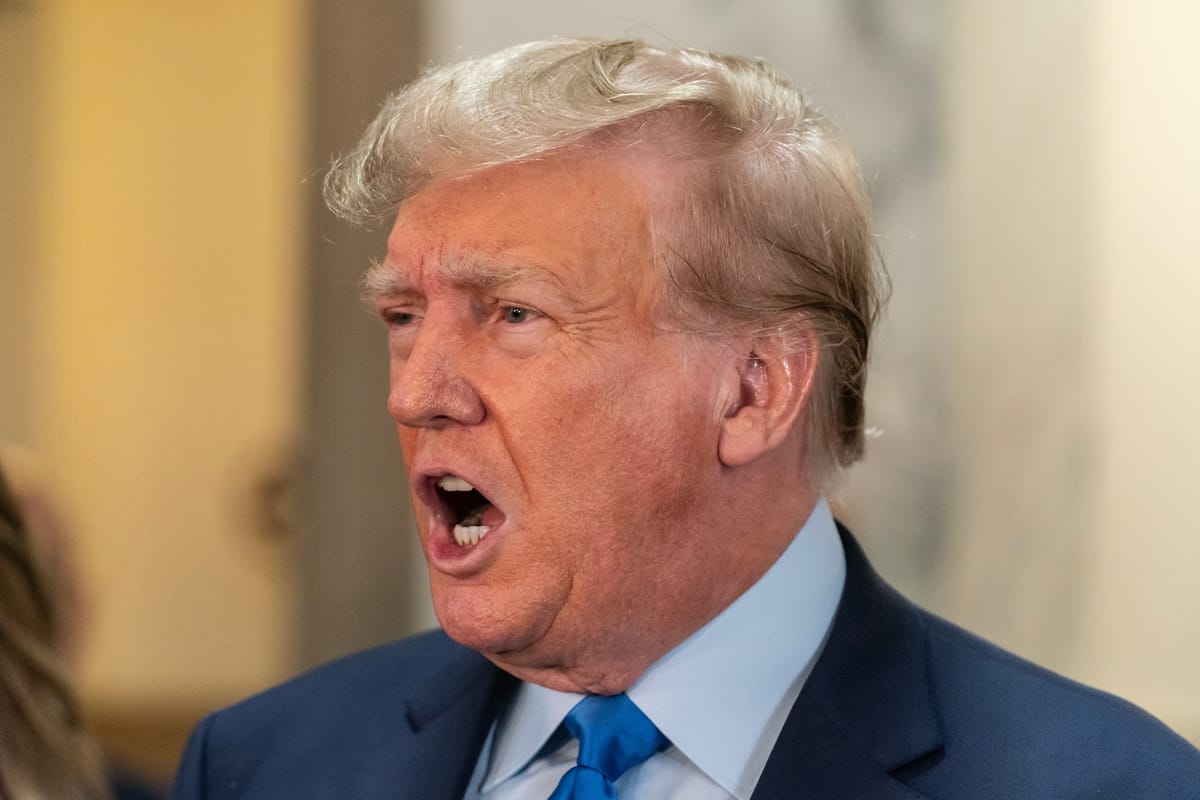
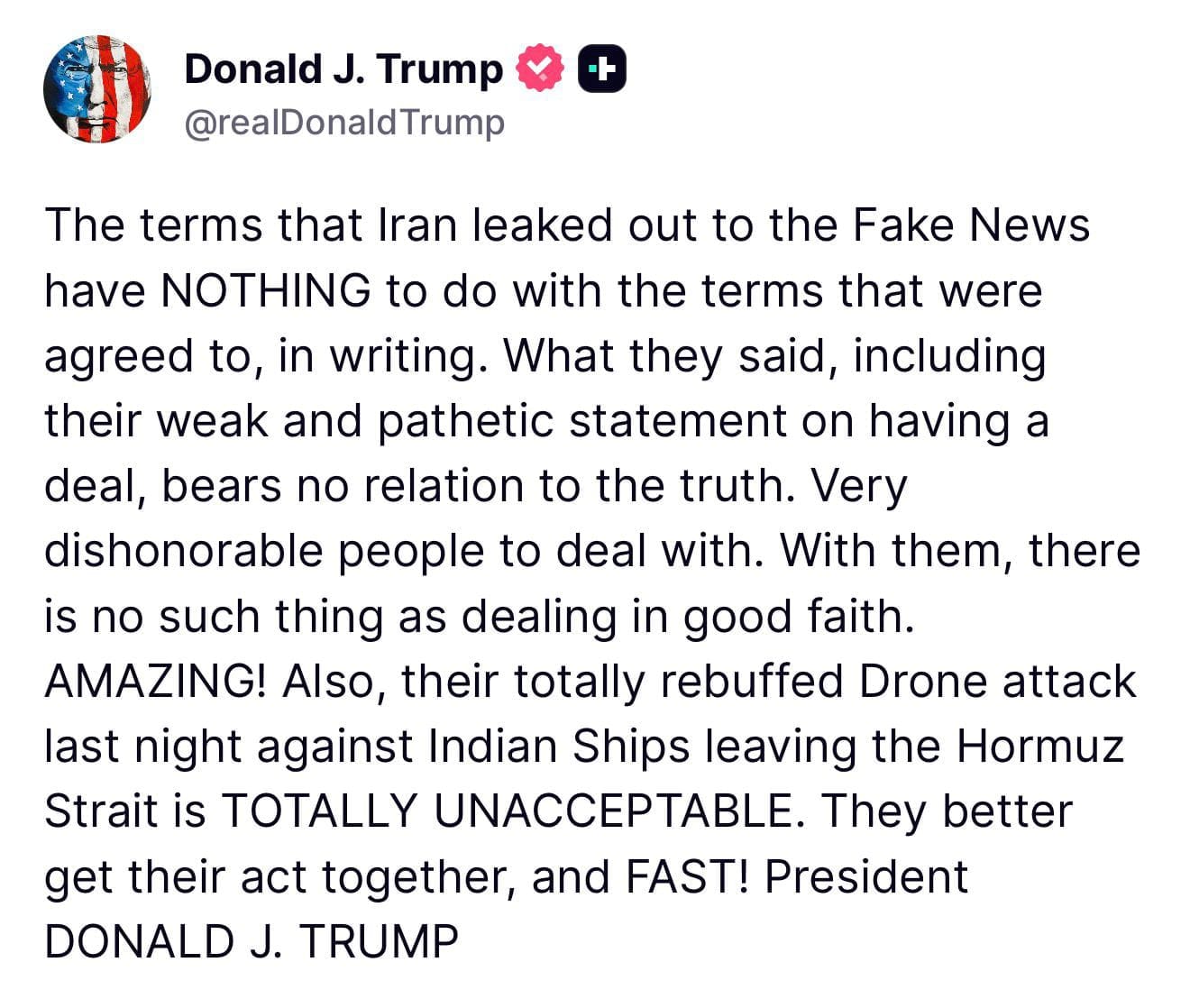
President Trump, furious at what he characterized as deliberate Iranian disinformation about the terms and the timeline, pushed back sharply. Calling to Fox & Friends, he blamed "fake news" and described media outlets as "crooked," saying that coverage of Iran was falsely portraying Tehran as succeeding. Trump accused Iran of acting in bad faith by publicly misrepresenting the state of the talks.

The clash came hours after a dangerous incident in the Strait of Hormuz that threatened to derail the negotiations entirely. U.S. forces shot down two Iranian one-way attack drones after what a senior U.S. defense official described as an Iranian attempt to strike commercial ships transiting the strait. "It appears Iran has attempted to strike commercial ships transiting the Strait of Hormuz tonight," the official said. "Traffic flow through the strait continues."
Iranian state media reported that the country's forces had fired toward a tanker transiting the waterway. The attack, which targeted vessels not affiliated with the United States or Israel, drew a sharp American warning. President Trump, already angered by the Iranian public disclosures about deal terms, made clear that continued provocations in the strait would carry consequences.
Oil prices, which had fallen sharply after Trump's announcement of a settlement on June 11, with Brent crude dropping toward $88-$88.65 per barrel in early Asian trading on June 12, remained volatile as the contradictory signals from both capitals left markets uncertain about whether a deal would materialize this weekend or collapse entirely.
The gap between American and Iranian characterizations of where the talks stand has become a story in itself. Iran's publication earlier this week of what it described as a 14-point draft framework, which excluded its ballistic missile program and support for regional proxy forces entirely, caught Washington off guard and drew fierce opposition in Israel. President Trump dismissed the Iranian account of those terms as fabricated.
Whether the talks proceed in Switzerland this weekend, and under what conditions, remained unclear as of Friday evening.