
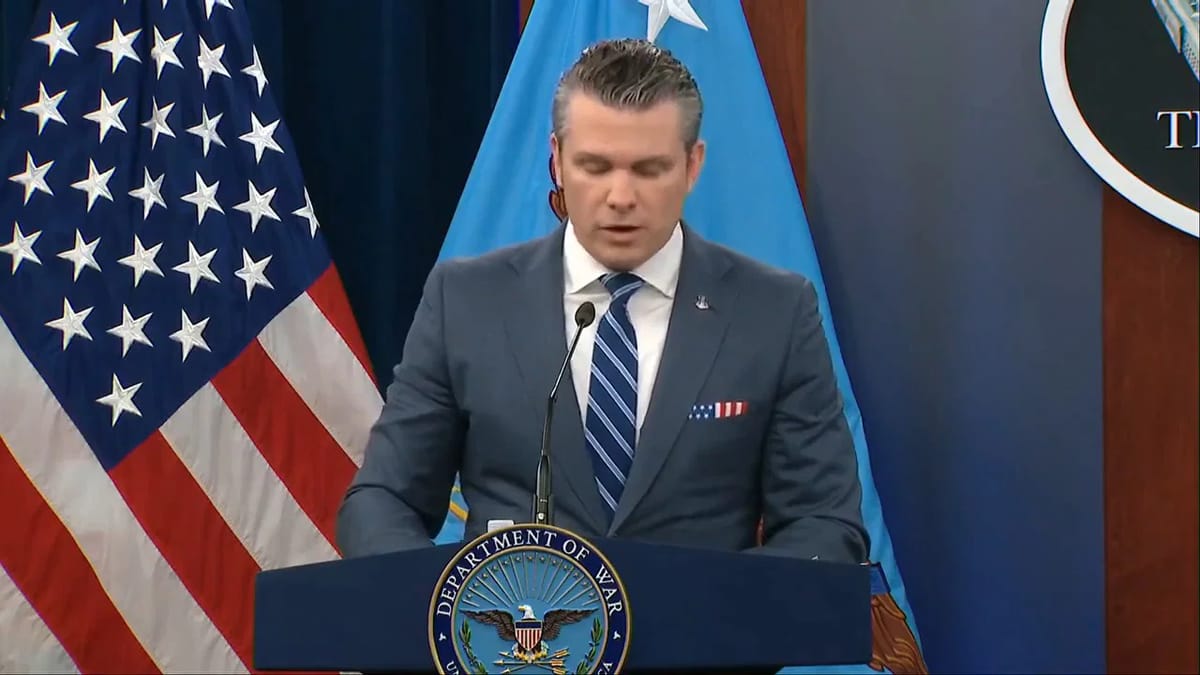
Pentagon chief Pete Hegseth announced Wednesday that U.S. service members aged 30 and older will be required to undergo testosterone-level screening as part of a new military health initiative aimed at improving performance, resilience and long-term readiness.
Troops under the age of 30 will also be permitted to request testing voluntarily.
“While we invest heavily in our weapon systems, platforms and gear, our most decisive tactical advantage will always be the individual warfighter,” Hegseth said in a video announcing the program.
According to Hegseth, the initiative is intended to identify service members whose testosterone levels may have declined naturally with age and determine whether medical treatment could help restore normal hormone levels.
He stressed that the program is not intended to provide artificial physical enhancement.
“This initiative is not about artificial enhancement,” Hegseth said. “It is about restoring and optimizing your natural capabilities, protecting your longevity and ensuring you have the biological foundation required to sustain the fight.”
Although screening will be mandatory for eligible service members, any subsequent treatment—including testosterone replacement therapy—will remain voluntary.
“If treatment is recommended, it is entirely your choice to receive testosterone replacement therapy,” Hegseth said.
The Pentagon has not yet announced when the mandatory screenings will begin or released detailed medical guidelines explaining how service members will be evaluated.
The initiative is the latest step in Hegseth’s broader campaign to tighten physical and grooming standards across the armed forces. Since taking office, he has emphasized combat fitness, participated in public workouts with troops and restricted most military beard exemptions.
“By addressing these health markers early, we are keeping you on the leading edge of lethality,” Hegseth said.
Testosterone levels commonly decline as men age and may be associated with reduced muscle mass, weight gain, fatigue and changes in mood. However, physicians continue to debate how testosterone deficiency should be diagnosed and when hormone replacement therapy is medically appropriate.
The announcement also comes as Health Secretary Robert F. Kennedy Jr. and other Trump administration officials move to loosen federal restrictions affecting testosterone prescriptions.
The Food and Drug Administration recently proposed easing some limits involving testosterone gels, pills, injections and patches. The agency has nevertheless warned that certain testosterone products may increase blood pressure.
At the same time, the FDA removed an earlier warning suggesting that testosterone treatment could increase the risk of heart attack or stroke after a major clinical trial did not find a higher cardiovascular risk compared with a placebo.
Researchers have also reported a long-term decline in average male testosterone levels. A recently publicized Israeli-led international study suggested that male testosterone levels may have fallen dramatically during the past five decades, although scientists continue to investigate the possible causes.
Potential explanations include increasing obesity, diabetes, environmental factors, declining physical activity and changes in the overall age and health of the male population.
Hegseth presented the military program as both a healthcare initiative and a national-security measure.
“We owe our warriors the absolute best medical care in the world,” he said. “This program delivers on that obligation.”