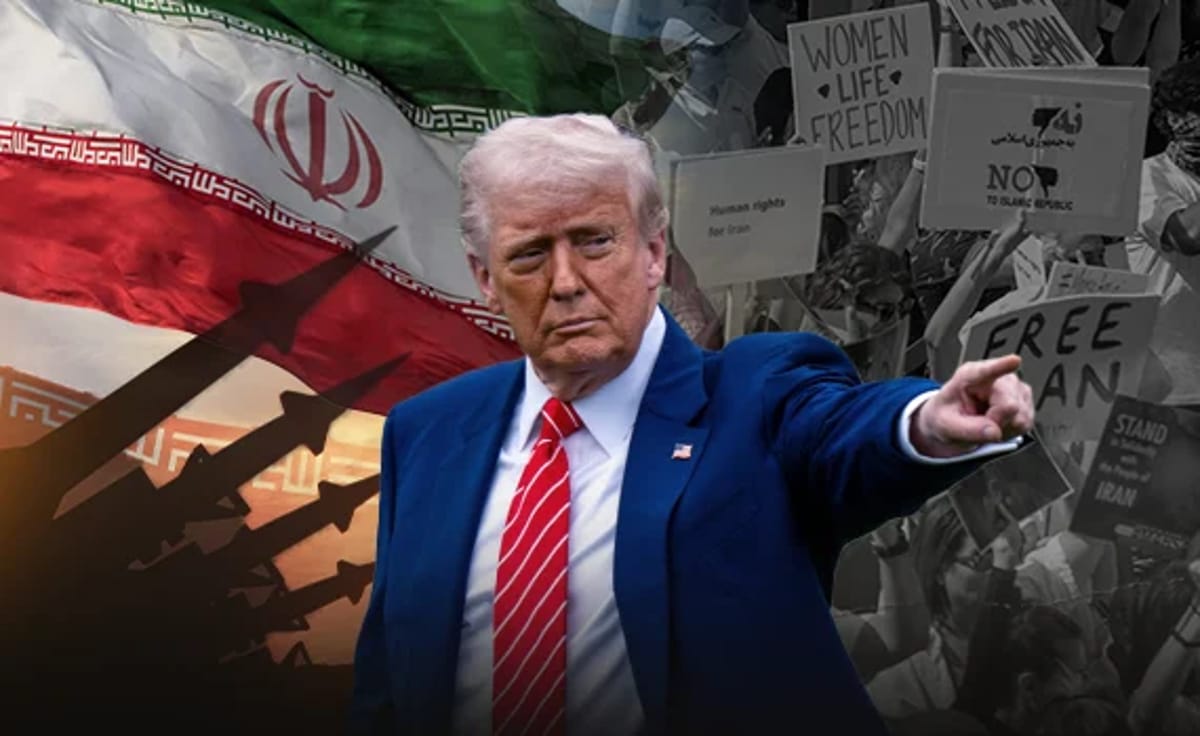
It is possible that Trump has started a new game with Iran.
Not necessarily a full-scale war. Not necessarily an occupation. Not necessarily an immediate attempt to topple the regime. Something else: a strategy in which America, every few months or at every point of escalation, can deliver a short, violent, precise blow against Iran, and once again dismantle whatever the regime has managed to rebuild since the previous round.
It is a dangerous strategy. It could come at a heavy price for Israel, the Gulf states, American bases in the region, and anyone within range of Iranian retaliation. But it may also answer the major question we raised here last night: what exactly is Trump trying to achieve?
To understand this, we need to look carefully at the sequence of events over the past two days.
First came the 17-hour war between Israel and Iran. The round was short, violent, and focused — and then it appeared that things were calming down. But then Iran struck an American Apache helicopter. America responded forcefully. Iran, in turn, fired at American assets, apparently believing it was creating a new equation: fire would be answered with fire. A response would be answered with a response.
But then came the American answer.
And this is precisely where the new element appears: Trump continues to insist, through actions and not only words, that there will be no symmetry between Iran and America.
Symmetry between Israel and Iran? Perhaps.
Regional equations? Possibly.
But symmetry between Iran and the United States? Forget it.
That is the central message of the American strikes on strategic targets inside Iran. And that is also their broader meaning: Trump is not necessarily looking for a single limited round. He is trying to restore Iran’s sense of helplessness in the face of overwhelming American power.
For years, Iran built its regional strategy around the weapon of blackmail: threatening shipping lanes, threatening the Persian Gulf, threatening Israel, threatening American bases, threatening oil prices and the global economy.
But to a large extent, the world has already grown accustomed to sanctions, pressure, threats, tension, and recurring rounds of escalation.
Iran’s blackmail weapon is no longer as total as it once was.
Trump’s message is simple: you can fire, but you will not determine the height of the flames. You can respond, but you will not dictate the rules of the game. You can try to create an equation, but against America there is no symmetrical equation. This also explains why the American strikes signal several things at once.
First, the Iranian regime is weaker than it tries to appear.
Second, the global economy is no longer paralyzed by every Iranian threat.
Third, continued economic pressure, combined with targeted military blows, can make Iranian recovery almost impossible.
And fourth, Trump wants to remind every player in the region who still holds the strongest cards.
This is not a strategy free of risk. Quite the opposite. Iran can still respond, strike, activate proxies, and try to escalate against Israel or against American assets. But perhaps that is exactly Trump’s gamble: not to prevent every Iranian response, but to deny Iran the ability to define the American response as part of an equal equation.
In other words, Trump is telling the Iranians: you are not playing only against Israel. You are playing against America. And in this game, every attempt to prove your strength may end with a blow far harsher than the one you expected.
This may not be a final victory.
It may not be regime change.
But it is certainly a reminder.
In the Middle East, as in Washington, Trump wants to show one thing: the cards are still in his hands.