
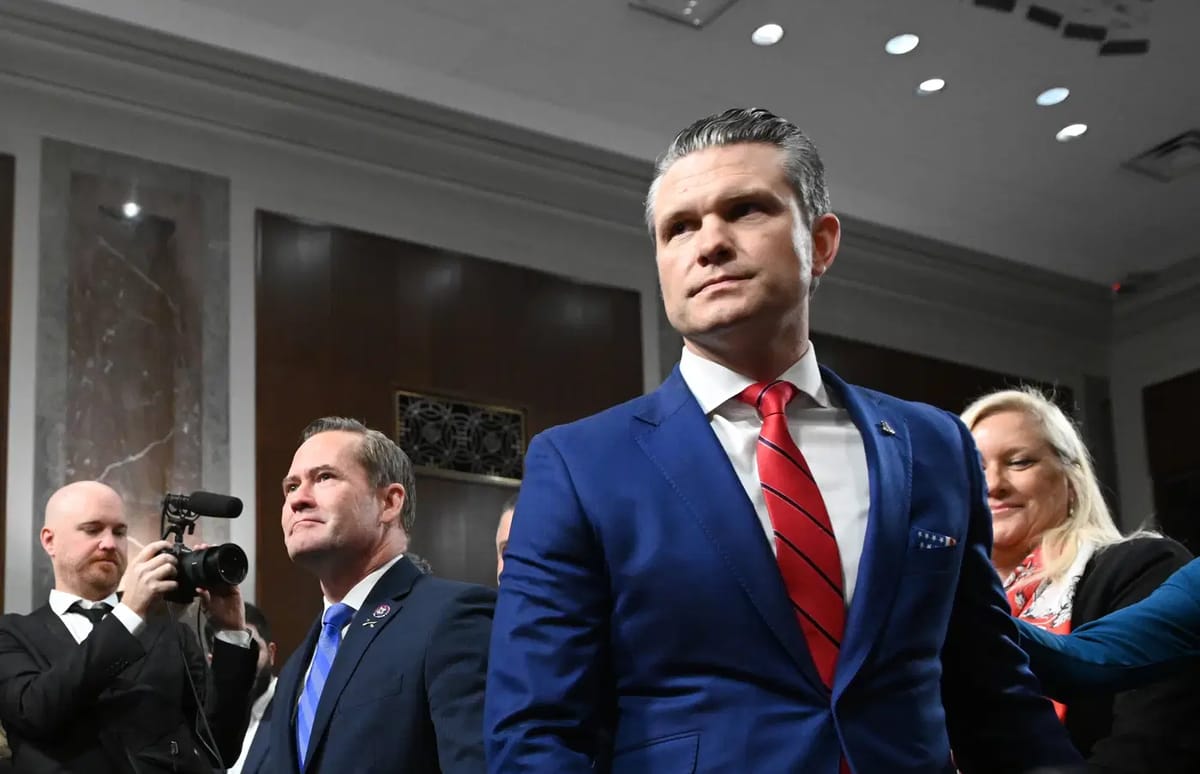
Secretary of State Marco Rubio and Defense Secretary Pete Hegseth could see their positions jeopardized if they continue to oppose President Donald Trump's emerging deal with Iran, a senior administration official warned in comments reported Monday evening by MSN.
The official said the internal debate had been settled and that those who keep resisting "may pay a personal price".
The warning lays bare a sharp split inside Trump's national security team. According to Axios, Vice President JD Vance and envoys Steve Witkoff and Jared Kushner pushed for the agreement, arguing the Iranian regime is unlikely to collapse soon and that Gulf states, Qatar in particular, pressed hard for a deal.
Rubio and Hegseth took the opposite view, contending that Iran is cracking under economic pressure and that Washington should tighten sanctions rather than ease them.
The skepticism extends to the intelligence community. CIA Director John Ratcliffe told Trump and other senior officials that intelligence collected by U.S. agencies raises serious doubts about Iran's willingness to make the nuclear concessions Washington is seeking in any final deal, Axios reported, citing three sources.
Ratcliffe and Rubio reportedly told colleagues they doubted Tehran would take the nuclear steps the U.S. wants.
The dissent unfolds around a deal that remains only partly nailed down. Pakistani Prime Minister Shehbaz Sharif announced Sunday that the U.S. and Iran had reached a framework after 107 days of war, and the memorandum of understanding was signed electronically that day, with a formal ceremony set for Friday in Switzerland.
Trump declared on Truth Social that the deal was complete and authorized the toll-free reopening of the Strait of Hormuz and the immediate removal of the U.S. naval blockade.
In practice, the timeline is murkier. Trump later indicated the blockade would lift and the strait reopen on Friday, after the ceremony, and a U.S. defense official said the military was ordered to prepare for that date, according to CNN and Axios. The strait is not yet fully open: Trump said ships were already moving, while Iranian state media reported its status was unchanged. Under the MOU, Iran is to allow safe passage at no charge for 60 days while the U.S. removes the blockade in stages within 30 days. The release of billions in frozen Iranian funds remains among the most contentious issues, and the two sides have offered conflicting accounts of what happens next.