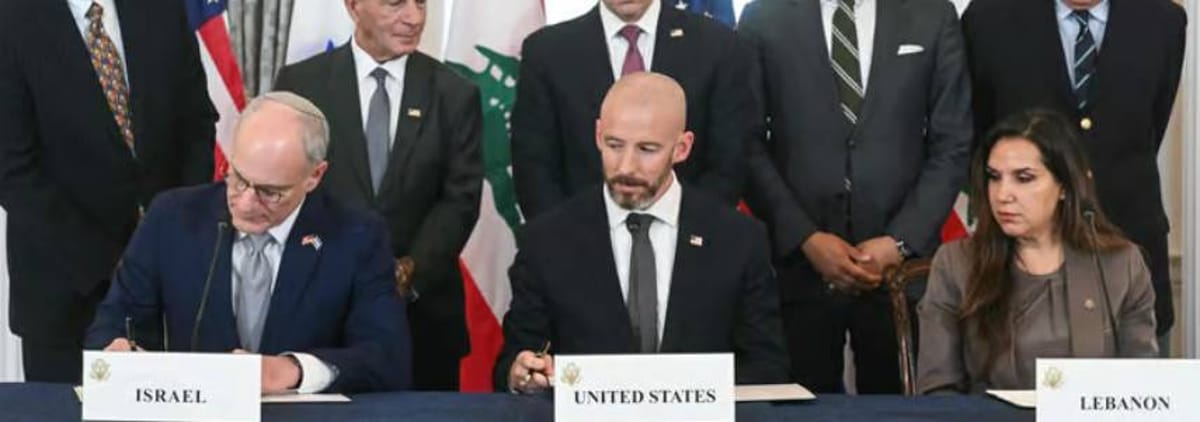
The full details of the new Israel-Lebanon framework agreement have not yet been published. The timetable remains unclear, the exact scope of the pilot zones has not been finalized publicly, and it is still uncertain how quickly the Lebanese army will be able, or willing, to replace Israeli forces in areas currently held by the IDF.
But the importance of the agreement lies less in the operational details and more in the principles it establishes.
The first principle is mutual recognition of sovereignty. Lebanon and Israel are not yet making peace, and this is not normalization. But when both states formally acknowledge each other’s sovereignty, they are also saying something important: the border is not supposed to be controlled by militias, proxies, or foreign powers.
That matters most of all for Hezbollah.
If Lebanon is sovereign, then Hezbollah has no legitimate authority to drag the country into war, invade Israeli territory, fire rockets at Israeli civilians, or maintain an independent military force outside the authority of the Lebanese state. The agreement therefore strikes directly at Hezbollah’s central claim: that it alone is the “protector” of Lebanon.
The second principle is even more important at this moment: Lebanon is not Iran’s file.
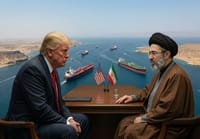
Iran has been trying to use Hezbollah and Lebanon as bargaining chips in its wider confrontation with the United States and Israel. Tehran wants Israeli withdrawal from Lebanon to become part of its own regional negotiations. The Washington framework says the opposite. Lebanon’s future is to be decided by Lebanon, Israel, and the United States — not by the Islamic Republic.
That is a strategic defeat for Iran if it is actually implemented.
The third principle is that Israeli withdrawal is not automatic. Israel is not agreeing to leave southern Lebanon simply because a document was signed in Washington. The agreement creates a conditional process: Hezbollah must be disarmed, its infrastructure must be dismantled, and the Lebanese army must prove that it can take real control of the territory.
Only then does Israeli withdrawal become possible.
This is the key difference between a dangerous illusion and a potentially serious framework. Israel is not being asked to trust promises alone. The withdrawal is supposed to depend on performance, verification, and the ability of the Lebanese state to prevent Hezbollah from returning to the border.
That is also why the American role is so important. The United States is not only sponsoring the deal diplomatically; it is expected to help monitor, coordinate, and support the implementation process. Without direct American involvement, the agreement would likely collapse into the same kind of empty language that has failed in Lebanon before.
For Lebanon, the agreement offers a path back to sovereignty. For Israel, it offers a path to removing the Hezbollah threat from its northern border without giving up the security zone prematurely. For the United States, it offers a rare chance to turn battlefield pressure into a diplomatic achievement.
But the caution is necessary.
Israel has been here before. In 1983, Israel and Lebanon signed an agreement that looked historic on paper and then vanished almost completely from political memory. U.N. Resolution 1701, which ended the Second Lebanon War in 2006, also promised a southern Lebanon free of Hezbollah’s armed presence. In practice, Hezbollah rebuilt, rearmed, and turned southern Lebanon into one of the most dangerous missile fronts in the Middle East.
That history cannot be ignored.
The agreement signed in Washington may be meaningful. It may also become another document that fails the moment Hezbollah, Iran, or weak Lebanese institutions test it. The difference will not be found in speeches, ceremonies, or diplomatic language. It will be found in whether Hezbollah is actually removed from the border, whether the Lebanese army actually takes control, and whether Israel retains the ability to act if the agreement is violated.
For now, the principles are good.
Lebanon belongs to Lebanon, not Iran. Hezbollah cannot remain both a militia and a state-within-a-state. Israeli withdrawal must follow disarmament, not precede it. And America must remain involved if the agreement is to have any chance of surviving.
But the Middle East is full of agreements that looked promising on the day they were signed.
The test begins now.