Trump Pushes Ceasefire as Israel Pounds Iran - But His Real Motives Tell a Different Story
US President demands immediate halt to Israel-Iran fighting • Oil prices surge, markets tumble as midterms loom | The full picture (World News)

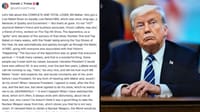
US President Donald Trump declared Monday that Israel and Iran are "looking to do an immediate ceasefire," posting the claim on Truth Social as fighting between the two countries intensified throughout the day. But the assertion appears disconnected from reality on the ground, where Israeli forces continue striking deep inside Iran and Tehran shows no sign of coming to the negotiating table.
The disconnect reveals what sources familiar with Trump's thinking describe as a president driven less by strategic calculation than by a convergence of domestic political pressures. With US midterm elections approaching, oil prices spiking over 4% and stock markets flashing red, Trump faces mounting incentives to declare victory and move on, whether or not the parties involved are actually ready to stop fighting.
"Israel and Iran must stop the 'shooting' immediately," Trump wrote in his latest post, signing his full name in characteristic fashion. The message came after Iran fired at least 30 missiles toward northern Israel overnight, prompting Israeli strikes on weapons depots in southern Tehran and a petrochemical facility in Mahshahr. Israeli officials have made clear they intend to respond with overwhelming force to any Iranian attack.
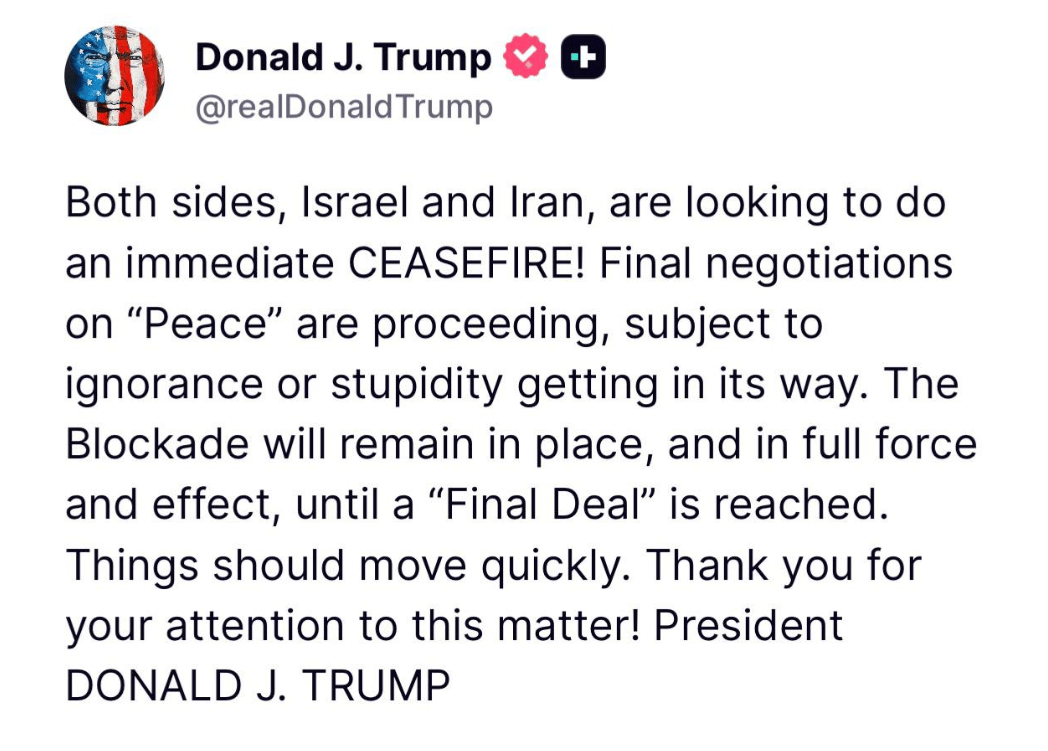

Trump's public posture Sunday night revealed the competing pressures shaping his approach. Speaking to Fox News, he struck a conciliatory tone toward Tehran, urging Iran to "return to the negotiating table" after firing "enough" missiles. At the same time, he expressed anger over Israel's strike in Beirut, claiming there had been no coordination, a claim Israeli officials flatly contradicted.
The president's motivations appear straightforward to those tracking his public statements and policy priorities. As a businessman who remains deeply invested in financial markets, Trump has watched stock indices tumble as the Israel-Iran conflict escalates. Brent crude surged 4.8% to $97.52 per barrel Monday, while US crude climbed 4.3% to $94.82 --- precisely the kind of oil price spike Trump has repeatedly warned would damage the American economy.
With midterm elections less than six months away, Trump also faces political pressure to demonstrate he can manage international crises without allowing them to spiral into broader regional wars. A ceasefire, even a fragile one, would allow him to claim credit for de-escalation and shift focus back to domestic issues where Republicans hope to make gains.

The Nobel Peace Prize ambition, while less openly discussed, has also been a recurring theme in Trump's public comments about Middle East diplomacy. Sources close to the administration note that Trump has referenced the prize multiple times in private conversations about regional peace efforts, viewing it as validation of his deal-making prowess on the world stage.
But the gap between Trump's ceasefire rhetoric and the military reality continues to widen.
Israeli Education Minister Yoav Kish announced Monday that schools nationwide would be closed Tuesday, while the Home Front Command drastically revised civilian safety guidelines across the country. Mayors in northern Israel ordered bomb shelters opened immediately as Iranian missiles targeted the region.
Israeli officials, speaking on condition of anonymity, assessed that Iran's attack was designed as a limited response rather than an all-out escalation. but emphasized that Israel would respond massively regardless.
Obviously though, if Iran targeted America with ballistic missiles, Trump would launch an insane attack against them. So why he is applying double standrads to his closest ally is a question Israel should be asking itself.