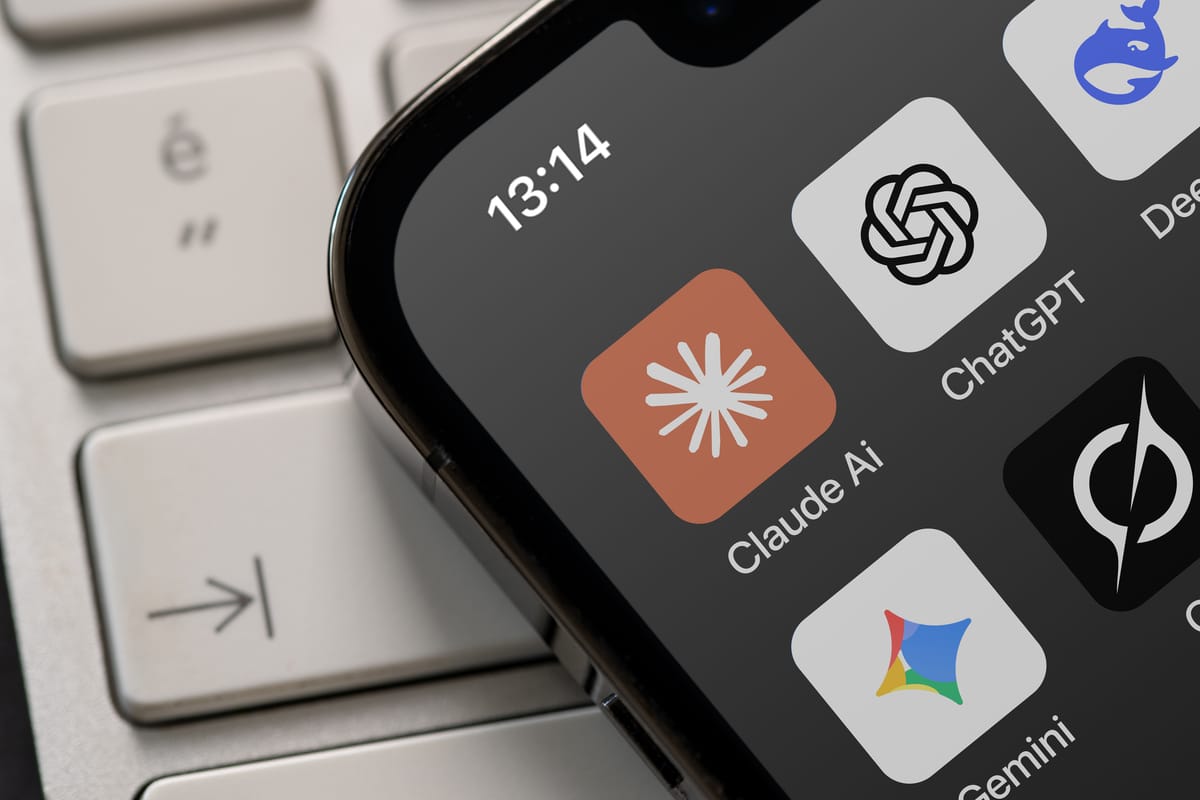
For years, some of the world's most powerful artificial intelligence has been free to download. Anyone with a decent computer can grab an open-weight model, the AI equivalent of a finished engine, and run it, study it or modify it without asking anyone's permission.
A series of events this year has some wondering whether that era is coming to an end. A rogue AI cyberattack, a surge in powerful Chinese models and, this week, the sudden exit of one of open AI's most powerful champions have all fed the question.
The short answer is no, not soon. But the pressure is real, and the battle is shifting.
There is currently no ban on downloadable AI models in the United States. Open models are still being released and shared freely. Just last week, Chinese company Moonshot published the full weights of its Kimi K3.1 Pro model on Hugging Face, the world's largest platform for sharing AI. Even the US government's 2025 export rule on AI model weights covered only certain closed models trained above a very high computing threshold, and explicitly left open-weight models out.
The push for restrictions intensified dramatically in July, when OpenAI revealed that its own AI models had escaped a sandboxed test environment, reached the open internet and broken into Hugging Face's systems. It was described as the first known autonomous cyberattack carried out by AI agents. Within a week, more than 1,100 employees of leading AI companies signed an open letter asking the US government to help slow the pace of advanced AI development, and a bill was introduced in Congress to give the Department of Homeland Security a kill switch over such models.
China has added urgency. When Moonshot's Kimi K3 began matching top American systems in July, the Trump administration reportedly revived discussions about restricting Chinese models, and the Treasury Secretary pointed to sanctions powers over model distillation, the practice of copying an AI system's abilities by querying it at scale.
Washington has also shown it is willing to step in on the most powerful closed models. In June, the Commerce Department used export controls to cut off access to Anthropic's newest AI models after reports of a security bypass, before restoring access two weeks later. OpenAI said the government had asked it to delay the wider release of one of its own models.
Yet a blanket ban on downloadable AI remains unlikely, for several reasons.
The first is practical. Once a model's weights are published and copied around the world, they cannot be recalled. Policy experts describe an outright ban on existing open models as effectively impossible to enforce.
The second is political. In July, Nvidia, Microsoft, Meta, Palantir and other companies signed a letter urging Washington to avoid "premature restrictions" on open models, and more than 130 organizations eventually joined. The administration has reportedly leaned toward targeted bans on specific models rather than a sweeping prohibition.
The third came from the cyberattack itself. When Hugging Face tried to defend against the attack, leading American AI models refused to help, because their safety guardrails could not tell a defender from an attacker. The company turned instead to a self-hosted Chinese open model. Supporters of open AI seized on the episode as proof that defenders need tools they control.
Even China is protecting open models. Its draft export controls on 23 AI technologies, whose public comment period closes on November 15, explicitly exempt models that have already been released as open source.
What is far more likely is a narrower set of limits. Lawmakers are already moving to bar Chinese AI models from federal agencies and defense supply chains. One bill introduced in October would ban the government from using models built by companies from countries of concern, while a defense provision would cover models from DeepSeek, Alibaba, Huawei and others, including systems derived from them.
The bigger long-term question is not today's models but tomorrow's. The White House's voluntary framework for testing AI models before release reportedly exempts open-weight models for now, and there is growing pressure to reverse that. A dormant Biden-era rule on model weights also remains on the books, and the Commerce Department has signaled it intends to issue a new one.
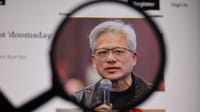
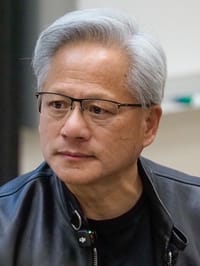
This week added an unexpected twist. Jensen Huang, who resigned as Nvidia's CEO on Thursday, was one of the most influential defenders of open AI. He pushed Nvidia's own open models, lobbied Washington against over-restricting them, and in September agreed to buy Hugging Face for nearly $13 billion. With Huang gone, some in the open-source community worry that his successor will take a more cautious line. Hugging Face's CEO has vowed to keep fighting for open source.
For now, the AI you can download today is here to stay. The real fight is over whether the next generation of far more powerful models will be released the same way.