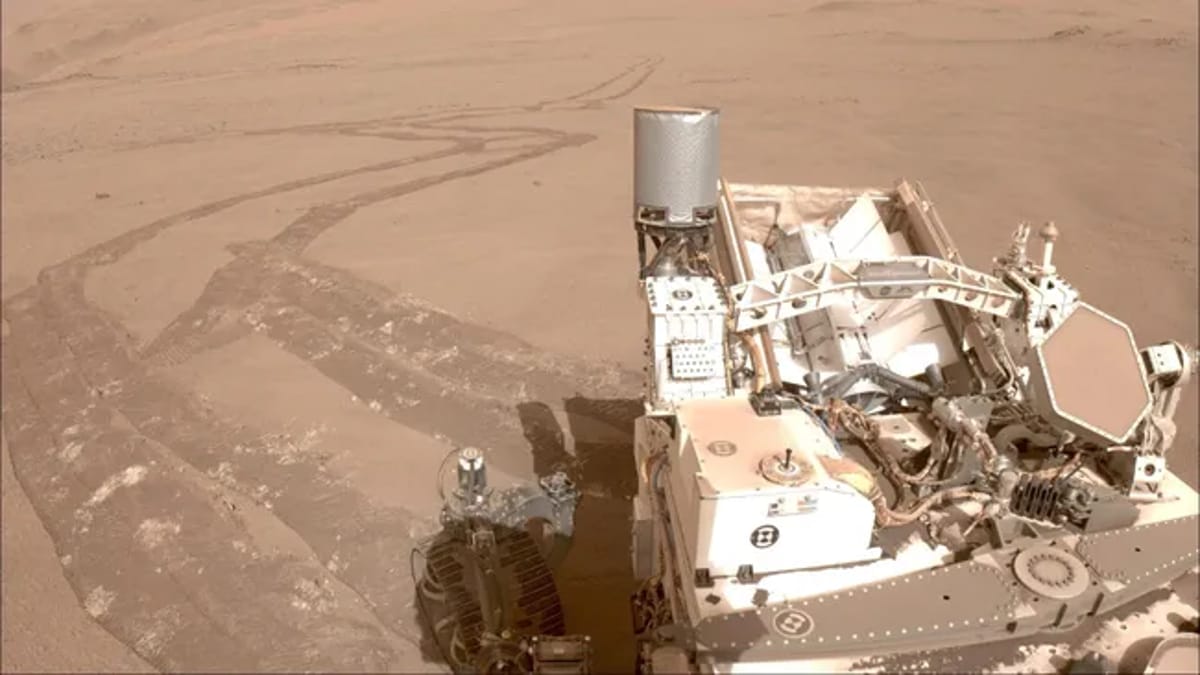
NASA's Perseverance rover is on the verge of making history. Within days, the vehicle will claim the record for the greatest distance ever traveled on another planet. Since touching down on Mars in February 2021, Perseverance has been steadily closing in on the 45.16-kilometer mark set by its predecessor, Opportunity, which operated on the Red Planet until 2018.
The achievement comes after a period of remarkably rapid progress. On June 14, 2026, Perseverance completed a full marathon distance—42.195 kilometers—on its 1,890th Martian day of operation. The rover accomplished this feat in just five years and four months, while Opportunity required 11 years and two months to cover the same ground.
Behind the accelerated pace is an advanced autonomous driving system called AutoNav. The system analyzes images from the rover's navigation cameras, identifies rocks and obstacles, and selects safe routes in real time—eliminating the need for lengthy waits for instructions from Earth. According to NASA data, approximately 90 percent of Perseverance's distance has been covered using autonomous navigation.
In June 2025, the rover also set a record for autonomous travel in a single day, covering 411.7 meters. NASA estimates that its steering mechanisms should allow it to travel at least another 60 kilometers, and the rover may continue operating until at least 2031.
Meanwhile in the Skies: Glowing Clouds of Frozen Carbon Dioxide
While Perseverance continues racking up kilometers on the ground, NASA's Curiosity rover has been turning its attention to the Martian skies. The rover, which has been operating in Gale Crater for more than 13 years, captured glowing, colorful clouds on January 17, 2025, just after sunset.
Curiosity's Mastcam recorded the nighttime clouds for approximately 16 minutes, displaying shades of red, green, and blue. The clouds were located at an altitude of roughly 60 to 80 kilometers above the surface and are composed of frozen carbon dioxide—or "dry ice"—formed when the primary component of Mars's atmosphere crystallizes in the extreme cold at high altitude.
The clouds are visible only during a brief window at twilight: the surface is already in shadow, but the high-altitude ice crystals still catch and reflect sunlight. Below them, water-ice clouds were also observed, moving in the opposite direction and indicating the presence of two distinct cloud systems in the same region of sky.
January 2025 marked the fourth consecutive Martian year that the Curiosity team has documented this seasonal phenomenon. The observations help researchers better understand when and under what conditions carbon dioxide condenses in Mars's atmosphere—adding a visually stunning dimension to ongoing study of the Red Planet.