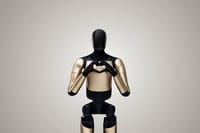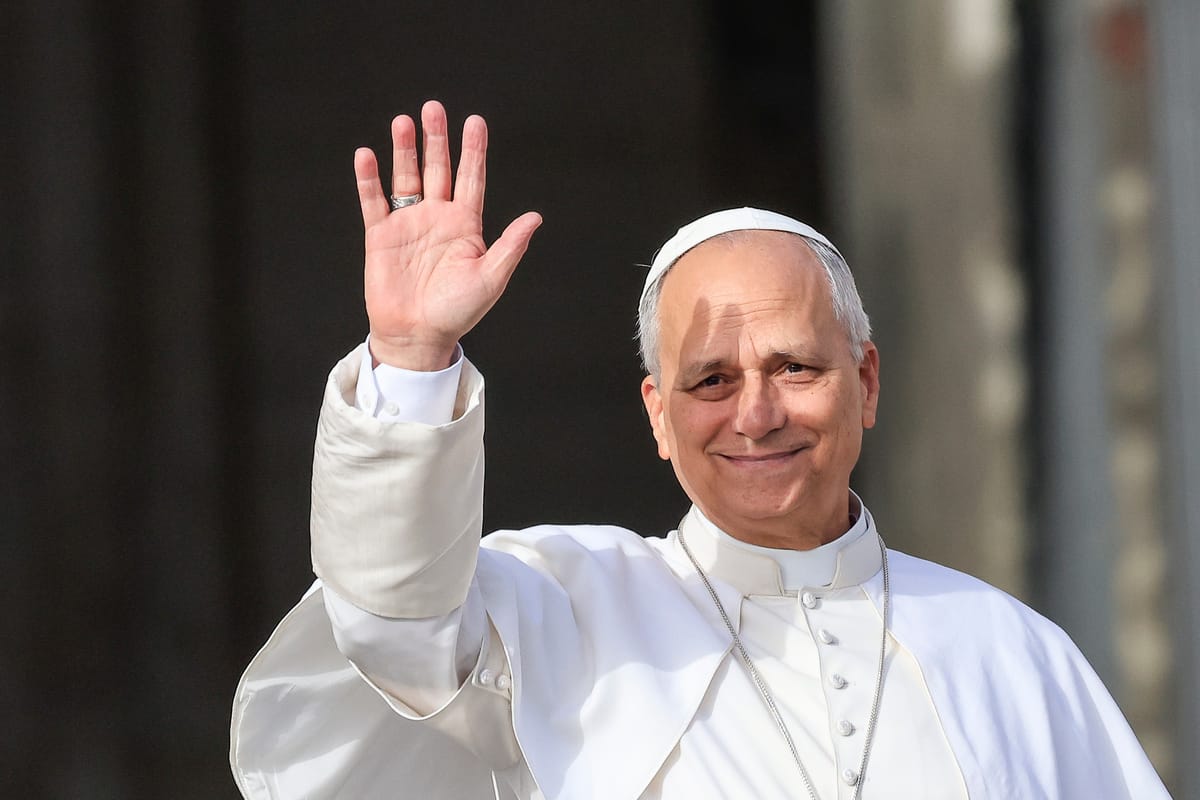
Pope Leo XIV placed artificial intelligence at the center of his visit to France, warning that the world risks losing control of the technology, and perhaps of itself. In a speech in Paris, he said humanity must guard against a situation in which it "loses its humanity inside a paradise of machines," as AI systems become an inseparable part of daily life.
Speaking at UNESCO headquarters, Leo called for cooperation among nations, institutions and technology companies, and made clear that artificial intelligence must remain a tool designed to serve human beings. According to him, it cannot become a mechanism of control, discrimination, exploitation or injustice.
"Not dangerous technology, but a world that abandons the human being"
The Vatican's concern is not only about apocalyptic science-fiction images of robots and autonomous weapons. Behind the warning stands a deeper worry: a world in which human beings are measured only by performance, efficiency and profit, while computer systems are attributed human qualities such as "intelligence" and the ability to make decisions.
Leo warned against this paradox: society may grant greater value to machines that know how to calculate, analyze and predict, while simultaneously losing the ability to recognize human value that is not measured in output. According to his approach, artificial intelligence can identify patterns and process enormous databases, but is incapable of understanding meaning, morality, responsibility or compassion.
Peter Thiel attacked: "The Pope is playing into China's hands"
Peter Thiel, co-founder of PayPal and one of the most influential investors in the technology world, responded with unusual sharpness. During an event in Berlin where he received the Axel Springer Award, he argued that the Pope's call for international regulation of AI could harm the West more than China.
According to him, the United States and Europe may adopt restrictions, safety protocols and bureaucracy that will slow their companies, while the Chinese Communist Party simply continues to develop the technology at full speed. Thiel even called the Pope a "useful idiot" of the Chinese Communist Party, and argued that the Vatican's message effectively assists America's strategic rival.
The real battle: brakes on AI or advantage for China?
Behind the sharp confrontation lies a debate currently occupying governments, giant corporations and security experts around the world: should the development of artificial intelligence be slowed to protect the public, or will such a slowdown allow an unconstrained China to take control of the technological race?
The Vatican and UNESCO emphasize the dangers: harm to privacy, algorithmic discrimination, deepfakes, manipulation of public opinion, concentration of power in corporate hands, and the possibility of military use of autonomous systems. UNESCO calls for ethical, equitable and sustainable AI development that protects human rights and keeps the human being at the center.
Thiel presents a different threat: if democracies impose rigid restrictions on themselves while authoritarian states ignore them, they may lose their technological and security advantage. The confrontation between the two sharpens the great question of the decade: will humanity succeed in controlling artificial intelligence, or will the fear of losing the race cause it to give up on the rules of the game in advance.