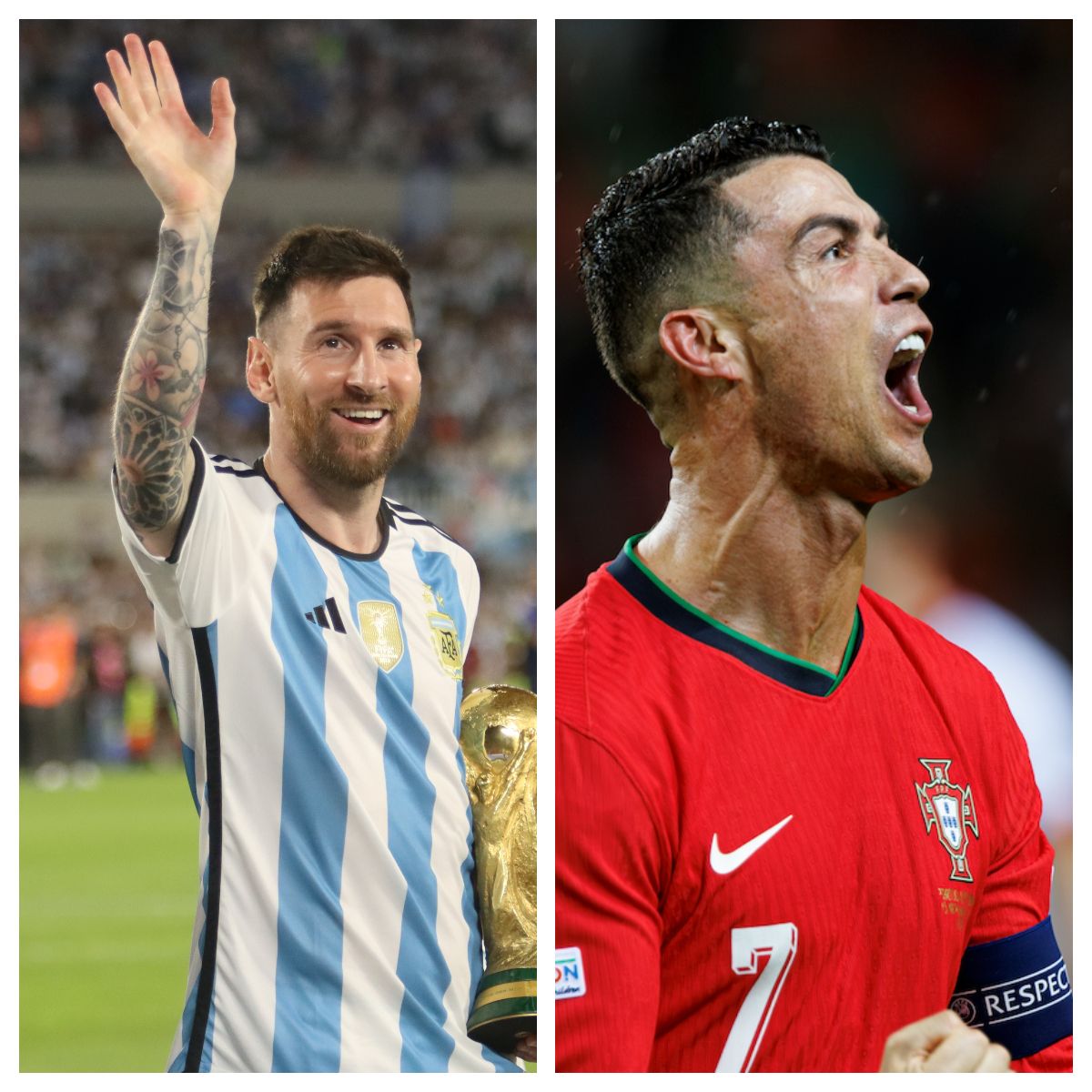
The 2026 World Cup is here, and the argument that has defined a generation of football is not just alive, it is happening on the pitch in real time: Lionel Messi or Cristiano Ronaldo — who is really the greatest of all time?
Remarkably, both men are giving us their answer this summer. And the contrast could not be more dramatic.
Messi: Rewriting History at 39
Nobody seriously expected Lionel Messi to be the story of this World Cup. At nearly 39, carrying a hamstring injury into the tournament, there were genuine whispers that Argentina might be better served building around younger legs.
Then he opened against Algeria at Arrowhead Stadium in Kansas City.
Messi scored a hat-trick in Argentina's 3-0 win over Algeria, matching Miroslav Klose's all-time World Cup scoring record of 16 goals. He was tearful after the first goal, and it later emerged his father was recovering from a health issue. It did not slow him down for a second.
Against Austria, he broke the all-time record entirely, taking his tournament tally to 18 goals across six World Cups, then added a second late in the match, surpassing even the women's all-time record held by Brazilian great Marta.
And then, on Saturday against Jordan, coming off the bench for the first time at a World Cup since 2006, the 39-year-old curled a free kick around the wall in the 80th minute, his sixth goal of the tournament, his 19th World Cup goal in total, a record in both the men's and women's game.
Messi has now scored 12 World Cup goals since turning 35. That is more than Harry Kane, Cristiano Ronaldo, Diego Maradona, Rivaldo, Neymar, and Thierry Henry have scored in their entire World Cup careers.
The word "impossible" keeps getting used. It keeps being inadequate.
Ronaldo: The Will That Refuses to Die
Cristiano Ronaldo's 2026 World Cup began very differently.
He was virtually invisible in Portugal's opening match against DR Congo, going through 90 minutes essentially absent, prompting loud questions about whether at 41 he had finally reached the end. The contrast with Messi's hat-trick opener was glaring, and social media made sure everyone noticed.
Then came Uzbekistan.
It took all of six minutes. Deep inside the penalty area, Ronaldo struck a powerful right-footed volley into the net. His face said everything. The worry was gone, replaced by relief, a smile, fist pumps, teammates mobbing him.
He became the first player in history, man or woman, to score in six consecutive World Cup tournaments, a record stretching back to 2006, surpassing even Messi. He added a second before halftime, finishing with 10 World Cup goals, more than any other Portuguese player in history, including the legendary Eusébio.
After the game, Ronaldo told reporters that records are always nice, but his goal is always to help the national team achieve its objectives. Classic Ronaldo: performative humility wrapped around fierce personal pride.
The Honest Answer
Here is what 2026 is telling us. Messi is producing the more extraordinary football, rewriting the record books with a grace that defies biology. Ronaldo is producing the more extraordinary story, a 41-year-old refusing the exit with such ferocity it borders on the heroic.
Both arguments are correct. That is precisely why this debate has consumed football for fifteen years, and why it still has no clean resolution.
What is increasingly clear, watching these two aging giants perform on the same stage one final time, is that we are living through something we will spend the rest of our lives explaining to people who weren't paying attention. Two players, one era, neither fully explicable.
Enjoy every single minute of it.