The narrative is simple and politically convenient: Israel is at war, the IDF is desperately short of soldiers, and the ultra-Orthodox community is refusing to do its share. That narrative is real. But it is also incomplete. Because alongside the Haredi refusal, which is genuine, organized, and backed by rabbinical authority, there exists a quieter, less examined story: the IDF's own ambivalence about what it is asking for.
The raw data is striking. Since July 2024, the IDF sent out draft orders to some 24,000 ultra-Orthodox men. Only around 1,200, roughly five percent, began the enlistment process. A subsequent wave of 54,000 notices was dispatched in July 2025. The army's own stated goal for the 2024–25 draft year was 4,800 Haredi recruits; by mid-year, fewer than 1,850 had enlisted, and even the record figure of roughly 3,000 projected for the full year falls well short of the target. Against a pool of approximately 90,000 eligible men, the IDF's actual annual intake of Haredi soldiers remains a rounding error.
Chief of Staff Eyal Zamir has called Haredi enlistment "an essential operational necessity." The IDF warns that without new soldiers, especially from the Haredi community, a manpower collapse looms in January 2027, when 2,500 mandatory-service combat troops will be released simultaneously. So desperate is the army that it is exploring recruiting diaspora Jews from the United States and France to fill a gap of 10,000 to 12,000 soldiers. The crisis, in other words, is real.
The structural contradiction
Yet the IDF has simultaneously acknowledged it can only absorb a limited number of Haredim, not draft them wholesale. The attorney general, relaying the army's position to the High Court, used the language of "absorption capacity" rather than "recruitment drive." The distinction matters. A system that tells the court it can absorb 4,800 men this year, while admitting it cannot enforce orders against the other 85,000, is not running a draft. It is running a pilot program with good PR.
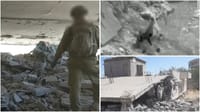
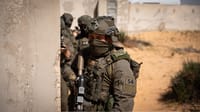
The Hasmonean Brigade, the new all-Haredi infantry unit established in 2024, is the clearest expression of institutional good faith. Its soldiers completed combat training, conducted operations in Gaza, and graduated a squad commanders' course, a viral clip of its troops chanting "another page of Gemara" in place of the usual battle cry was widely praised as a sign that integration can work culturally. The brigade is real, its soldiers are real, and their service is real.
But the brigade can potentially hold up to 4,000 soldiers. in an eligible pool of 90,000. And the conditions required to fill even that frame reveal the tension at the heart of the enterprise. The IDF has formalized three separate service tracks for Haredi soldiers: "Magen," which places them in gender-segregated sub-teams within mixed units; "Herev," which creates entirely gender-separated frameworks; and "David," in which the entire base is male and observant. These are not minor accommodations. They represent a fundamental restructuring of how large portions of the military would need to operate, and they run directly against the other integration project the IDF has pursued for a decade: expanding the role of women in combat.
Two integrations at war
One in five IDF combat soldiers is now female, a figure that has grown steadily precisely during the period in which Haredi exemptions continued. The army has used female enlistment as a pressure valve to compensate for the Haredi gap. Now it is being asked to reverse course: to gender-segregate units, to restrict where women can serve, to adjust evaluation metrics because standard psychotechnical tests have been found unsuitable for ultra-Orthodox candidates.
As one analysis from the religious-Zionist publication Tzarich Iyun put it plainly: in meetings with senior IDF officials, integrating women was seen as an important goal, while integrating Haredim "was often viewed as a complicated administrative challenge." That tension has not been resolved. It has been formalized into three color-coded tracks.
The political dimension compounds everything. Chief of Staff Zamir issued his Haredi draft expansion order without coordinating with Prime Minister Netanyahu or Defense Minister Katz, a remarkable breach of civil-military norms, reported by Ynet, that underlines how politically charged the file has become.
Netanyahu's ultra-Orthodox coalition partners threatened to bolt the government when military police launched enforcement operations against draft evaders. The coalition's draft exemption bill, currently advancing in the Knesset, has been described by the Bank of Israel as "deficient" - producing targets so low they represent barely an increment above what the army is already achieving without legislation. Even Haredi rabbis, caught on leaked recordings, admitted the bill's real purpose is to buy time and neutralize existing sanctions, with no genuine intention of meeting its own conscription targets.
The left-liberal critique, dominant in Haaretz and among opposition parties, is that the political system is simply corrupt: Netanyahu sacrifices military needs to survive in office, the rabbinical leadership is cynically manipulating the system, and the secular majority is carrying a burden it can no longer afford. That critique is largely correct.
But it stops short of the more uncomfortable question: even if the politics were fixed tomorrow, does the IDF have a coherent plan for integrating 50,000 or 80,000 ultra-Orthodox soldiers into a modern, mixed-gender, technologically intensive army? The honest answer is no, not yet, and possibly not ever at that scale.
The right-religious counterargument
From the national-religious and traditional right, the response is that the IDF's ambivalence is itself the obstacle. Give Haredi soldiers the environment they need, separate, observant, commanded by religious officers, and they will serve. The Hasmonean Brigade is cited as proof. On this reading, the secular establishment's resistance to accommodating religious needs is the real integration problem, not Haredi unwillingness. The Israeli Democracy Institute has estimated that at least 35,000 Haredi men of draft age are neither studying nor working, men who are not, in fact, engaged in the Torah study that is the claimed basis for exemption. These are not ideological refusers; they are simply unreachable because the army has not built the frameworks to reach them.
Both sides have a point, which is why the debate has produced so much heat and so little movement. The IDF genuinely needs soldiers. The Haredi community genuinely contains men who could serve. The political system is genuinely preventing enforcement. And the army is genuinely unprepared, culturally, logistically, and institutionally, to absorb tens of thousands of men whose religious requirements conflict with the direction it has spent years pursuing.
What we are left with is a system that performs urgency without practicing it. Draft orders go out by the tens of thousands; a handful of men show up. Legislation is advanced; it is designed to fail. The IDF warns of collapse; it sends notice letters instead of military police. The Hasmonean Brigade graduates; it is celebrated and starved of recruits.
The question is not whether the IDF wants Haredi soldiers. In the abstract, under pressure of war, it clearly does. The question is whether Israel, its political leadership, its military institution, its rabbinical establishment, and its secular majority, has the collective will to build the actual conditions under which that service becomes possible and sustainable. So far, the answer is no.
Until that changes, the crisis will deepen, the recriminations will multiply, and soldiers who have been in reserve service for two years will continue to pay the price for a deal that none of the key parties is truly willing to abandon.