There's a bitter irony embedded in the wreckage of this deal, and nobody in polite company wants to say it out loud. So we will.
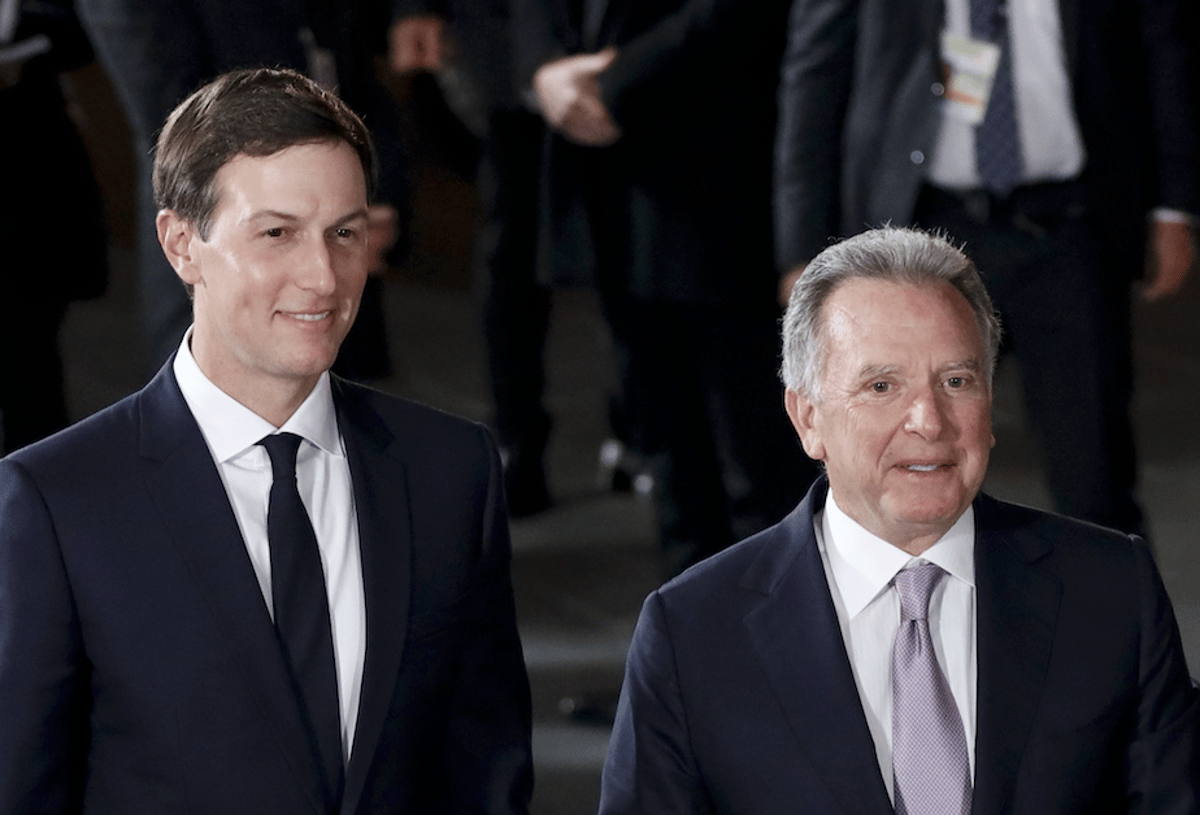
The two men most responsible for pushing Donald Trump across the finish line on the most dangerous capitulation in American Middle East policy since the JCPOA are Jared Kushner and Steve Witkoff. Both Jewish. Both men who built their public personas, in part, on deep and loudly proclaimed love for Israel and the Jewish people. Both men who flew to Islamabad, sat across from Iranian envoys, and negotiated away the leverage that blood and treasure had bought, while Netanyahu was left in the dark calling allies desperately trying to find out what was happening to his country's future.
They were joined in their enthusiasm by Vice President JD Vance, who led the U.S. delegation at the opening rounds of talks with Iran, and who has made it abundantly clear that his instinct throughout this crisis was to get out, cut a deal, and call it peace.
And who opposed it? Marco Rubio and Pete Hegseth, the two members of Trump's inner circle who pushed back hardest on terms that left Iran's nuclear program unresolved, its enrichment infrastructure intact, and $12 billion in unfrozen assets flowing to Tehran before the ink even dried. They lost. Completely and humiliatingly. The deal got done over their objections, announced on Truth Social while Israel braced for missile fire.
Let that sink in. The Secretary of State and the Secretary of Defense, the two men whose nominal purpose is to protect American interests and project American strength, said no. The real estate developer from New York and the president's son-in-law said yes. And the president listened to the son-in-law.
This is not to engage in the antisemitic canard that Jewish advisers act in Jewish interests, because the evidence here suggests precisely the opposite: Kushner and Witkoff acted against Israeli interests with extraordinary enthusiasm. They were so desperate to close a deal, any deal, that they apparently lost sight of what the deal was actually for. They wanted the win. They wanted the photo. They wanted to be the men who ended the war.
What they delivered instead is a framework that Israel's own officials describe as a profound threat. Iran's centrifuges are still spinning. Its enrichment stockpile sits at 60% purity. The nuclear question has been "deferred" to 60 days of future negotiations, a timeline that every serious analyst of Iranian diplomacy knows is designed to run out the clock. And Hezbollah, battered but unbowed, has just received a ceasefire that locks Israel into terms it didn't author and can't escape without defying Washington.
None of this is a secret. The reporting is there, sourced and documented. Trump's announcement that a deal had been finalized came as a surprise to Prime Minister Netanyahu. In recent days, Netanyahu found himself in the dark, calling allies close to the Trump administration to try and gather information. The leader of America's closest regional ally was reduced to making desperate phone calls, scrounging for intelligence about his own country's security future, while Kushner and Witkoff were on the phone with Qatari mediators finalizing the terms.
Iran's military, for its part, issued a statement declaring it had "humiliated" the United States and Israel after the deal was announced. They said the quiet part loud. And they're not wrong.
Rubio and Hegseth, whatever one thinks of them, understood what was at stake. Rubio spent months building a harder line, warning that Iran's leadership was, in his memorable phrase, "insane in the brain," and that any deal required ironclad verification. Hegseth oversaw a military campaign that genuinely degraded Iranian capabilities. Both men knew that the leverage earned through Operation Epic Fury was the most significant strategic asset the United States had accumulated in the Middle East in years. And both watched it get traded away for a memorandum of understanding and a signing ceremony in Switzerland.
The Rubio and Hegseth camp understood something that the dealmakers did not: that ending a war is not the same thing as winning one. You can end a war by surrendering. History is full of it.
What makes this sting beyond the geopolitics, beyond the nuclear math, beyond the strategic catastrophe that this agreement may well represent, is the personal dimension. Jared Kushner celebrated the Abraham Accords as a generational achievement for Israel and the region. He was not wrong. Steve Witkoff negotiated the Gaza hostage deal with genuine effectiveness. These are not men without accomplishment. But somewhere between the Abraham Accords and the Islamabad talks, the goal shifted. It stopped being about what was good for Israel and started being about what was good for the deal.
And so now we have this: a U.S. President publicly humiliating the Israeli Prime Minister, calling him a difficult guy who should be grateful, screaming that he'd be in prison without American protection, and lecturing Israel on its right to self-defense. A nuclear program deferred rather than dismantled. Billions flowing to Tehran. Hezbollah alive in Lebanon under a ceasefire Israel didn't negotiate and can't enforce.
The men who opposed it were the ones without the personal relationships, without the family ties, without the decades of invested identity in Israeli-American friendship.
And the men who pushed it through were the ones who were supposed to be Israel's best friends in the room.
Sometimes the loneliest place in the world is the table where your allies are sitting.