Iran appears to have made its choice: give up the weapon, at least for now, in order to preserve the regime.
That is the real meaning of the emerging agreement with the United States. Tehran seems to have understood that the uranium would be lost one way or another. Either through negotiation, through inspection, through seizure, or through military force, the nuclear file was no longer fully in Iran’s hands.
So the regime chose survival.
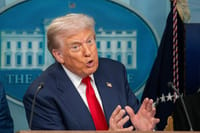
From Trump’s perspective, this is a significant achievement. He entered the crisis with one clear demand: Iran must not end his term with a nuclear weapon. If the agreement indeed removes or neutralizes Iran’s military nuclear option, then Trump can present it as a major victory, especially in the period before the election.
But the deeper question is not whether the deal is good in the medium term. It probably is.
The real question is what happens in the long term.
Because as long as the Islamic Republic remains in power, every concession it makes must be understood as tactical. The idea that the ayatollahs have suddenly, voluntarily, and sincerely abandoned their long-term strategic ambitions is simply not serious. This regime does not think in months. It thinks in decades.
If it survives this war, exits with its head above water, rebuilds its command structure, studies its mistakes, and restores its economy, then it will also begin planning for the next 40 or 50 years. The agreement may delay Iran. It may weaken Iran. It may buy time. But it does not end the ideological and strategic problem at the heart of the Iranian regime.
This is where Israel must be brutally realistic.
Israel may dislike the agreement. It may believe the moment should have been used to go further. It may even be right that the regime was weaker than it had been in years. But Israel does not have full control over the American decision. At most, it can monitor, warn, prepare, and acknowledge the part it played in bringing Iran to this point.
And that part was not small.
Israel began the war. Israeli pressure, military action, intelligence work, and years of strategic warning helped create the conditions in which Iran’s nuclear project became vulnerable. The Iranian people also played a major role. Their protests, their courage, and their rejection of the regime weakened the Islamic Republic from within long before American power entered the final stage.
But in the end, Trump was never truly committed to destroying the regime completely. That was an Israeli hope. It was not necessarily an American objective. Trump wanted a deal, leverage, and Iran without a bomb. He wanted the Strait of Hormuz reopened, oil markets stabilized, and a dramatic victory he could present to the American public. Regime change was never clearly the center of his strategy.
The Iranians understood this. They understood that Trump would not allow the regime to keep the weapon and that refusing a deal could endanger the regime itself. So they did what revolutionary regimes often do when trapped: they turned surrender into performance. They needed to appear as though they had not been forced to swallow their pride. Thus showing their allies and enemies that they had not collapsed. But the very fact that the agreement seems designed to save the regime proves the opposite: Tehran knew it was in danger.
That is why this agreement should be viewed with two emotions at once.
On the one hand, Trump deserves credit. If Iran is prevented from obtaining a nuclear weapon, that is a real achievement. If the regime was forced to retreat under pressure, that is a real achievement. If the United States used military and economic force to produce diplomatic results, that is a real achievement.
On the other hand, no one should be naive.
Iran will likely violate this agreement sooner or later, or at least test its limits. It will look for loopholes. It will rebuild networks. It will reorganize its proxies. It will study the American and Israeli response. It will try to discover what it can get away with next time. The deal may stop the bomb. It does not solve the regime.
That is the essential point.
For the medium term, Trump may have won. For the long term, the Iranian question remains open. The ayatollahs may have given up the weapon for now — but only because the alternative was losing the regime.
And in the Middle East, a regime that survives humiliation rarely forgets. It waits.