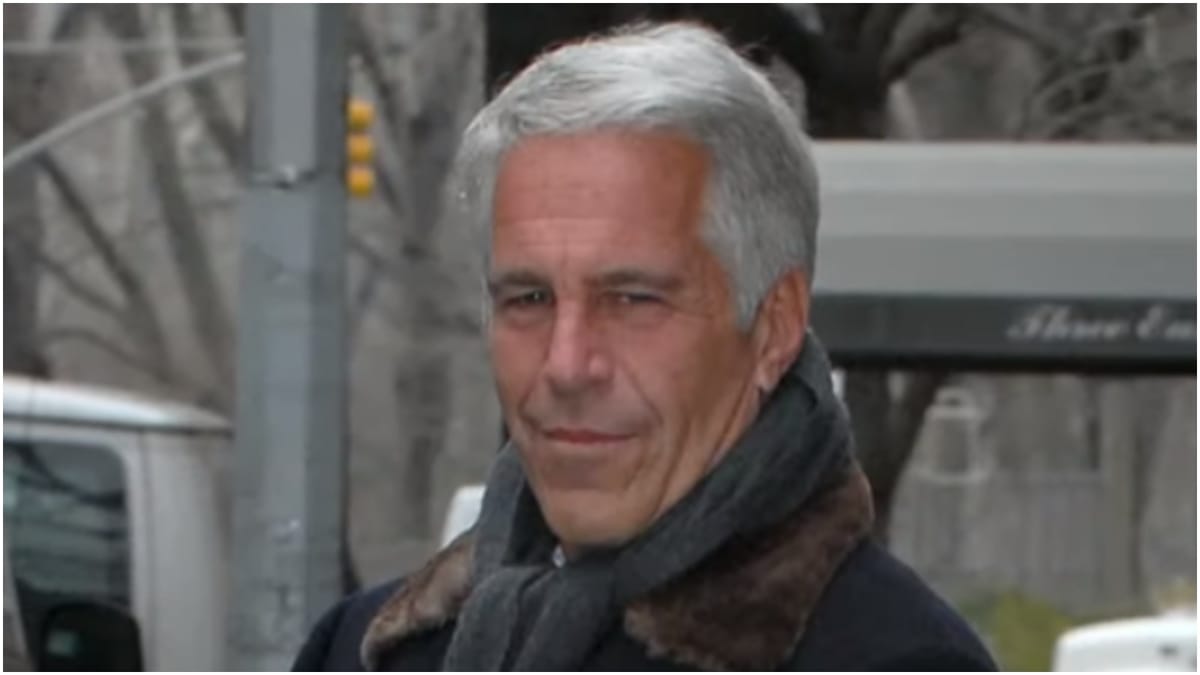
A forensic expert who spent a year reviewing Jeffrey Epstein's autopsy material has concluded that the financier was strangled by another person and did not take his own life, according to a New York Times investigation published on Monday.
Dr. Michael Freeman, a researcher who specializes in identifying errors in death investigations, examined documents and photographs that Epstein's brother gave him. Using 3D simulations and descriptions of how the body was positioned when it was found, Freeman concluded that strangulation by someone else is the most logical explanation for the findings.
Freeman said the injuries point to a violent struggle before death and do not match a self-inflicted hanging. A hanging would usually leave a uniform mark angled upward on the neck. Instead, he said, there was a deep, irregular injury that splits into the shape of the letter Y. He also cited scratches he suspects were made by fingernails, an abrasion at the base of the neck and fresh internal bleeding in a shoulder muscle.
The Times investigation also describes a series of failures in the original 2019 inquiry. It reports that the medical examiner was not allowed to inspect the cell and that no photograph was taken of the body while it was still hanging. According to the report, the fabric sent for testing was not the noose used in the hanging, and Epstein's fingernails were never tested for DNA.
Dr. Kristin Roman, who performed the official autopsy, and the New York City medical examiner's office reject Freeman's claims and stand by the ruling of suicide. They say the body showed no signs of a struggle. Outside experts who viewed the photographs said that although the neck mark is unusual, it does not rule out suicide.