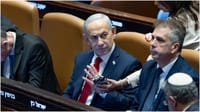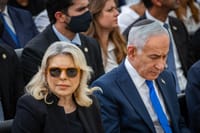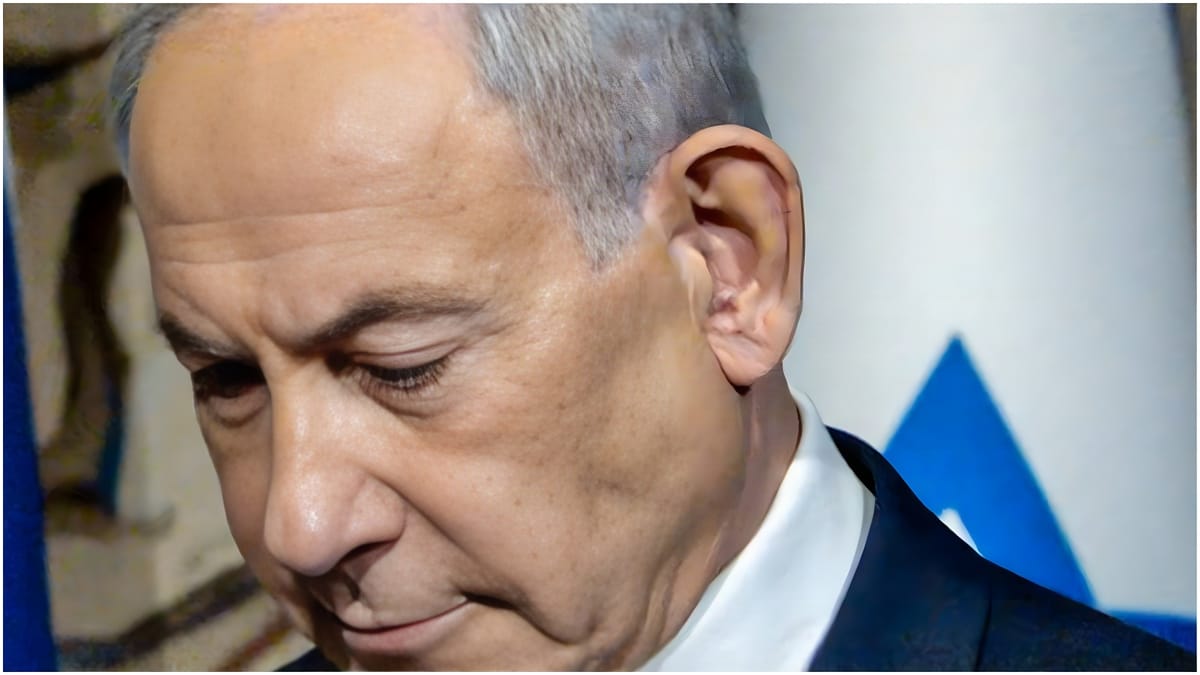
Prime Minister Benjamin Netanyahu said on Monday, November 16, that any government formed would regulate the status of Torah students in a law agreed with the chareidi parties. He also called for a national unity government that includes every party that sees Israel as the state of the Jewish people.
"A national unity government is the only government that can deal with the challenges before us," Netanyahu said in a political statement. "To do so, it must include all the parties that see the State of Israel as the state of the Jewish people."
Turning to the military draft law, he said: "In any government that is formed, we will go together with our chareidi partners and regulate the status of Torah students in a law agreed upon with them."
The statement came shortly after the Arrangements Committee of the 26th Knesset unanimously approved Yisrael Beytenu chairman Avigdor Liberman as chairman of the temporary Foreign Affairs and Defense Committee. Immediately after his appointment was approved, Liberman said he intended to take up the draft law without delay. He also summoned the heads of Israel's security agencies to appear before the committee.
"I want to place an emphasis on the issue of those who serve, the situation of IDF soldiers in compulsory service, the reserves and the career army," Liberman said. "Since we don't have a subcommittee on manpower, we will maintain continuity within the full committee. That is the central issue. As for the plans, I don't understand where the IDF's multi-year plan stands, and it must be at the center of the discussions."
He added: "I will ask to invite the chief of staff, the head of the Mossad, the head of the Shin Bet and also the police commissioner. There are excessively large gaps here between the police and the Shin Bet, gaps that are unreasonable and illogical. Also on the issue of foreign interference, mainly referring to the Prime Minister's Office, and the attempt to influence the elections."
Liberman also responded to committee members who criticized his position on the draft. "We will already be dealing with the draft law this afternoon, and it is a law that will have to pass three checkpoints," he said. "It will be the fairest law, one that will pass the chief of staff, the High Court of Justice and Rabbi Landau. It can only be a law that passes the army. It will not be conscription for everyone, but the fairest law. That is the formula."
At the same time, intensive talks are underway between representatives of the so-called "change bloc," the opposition camp seeking to replace Netanyahu, and the United Torah Judaism party. Senior figures in the chareidi party told Kikar HaShabbat that the talks are held daily and that preliminary understandings have been reached on a law that would prevent the arrest of yeshiva students. A senior Agudat Yisrael official involved in the talks with Liberman confirmed that "there are preliminary understandings on the arrests law before a government is formed, but the main thing is the law that will regulate the status of yeshiva students."
United Torah Judaism has set two core conditions for joining a future coalition. The first is a halt to the arrests before the government is sworn in. The second is a signed commitment to pass an agreed draft law before the budget is approved. To help the legislation withstand a High Court challenge, the party and the bloc are drawing up a broader legal framework. Under it, the proposed law would not address yeshiva students alone but would apply equally to all draft evaders.
Not everyone in the chareidi camp supports the move. In closed conversations, Shas chairman Aryeh Deri has reportedly issued a sharp warning against chareidi lawmakers enabling a government led by the change bloc. "United Torah Judaism has no guarantees that the draft law will pass," he said, pointing to the parliamentary and legal timetable as the main obstacle.