Understanding why apples turn brown is the first step to preventing it.
When you slice an apple, the inner flesh meets oxygen in the air. A natural enzyme in the fruit triggers what's called enzymatic browning. The apple hasn't spoiled, but aesthetically, especially for a holiday table, the discoloration is less than ideal.
That's where various preservation techniques come in, each attempting to slow the process.
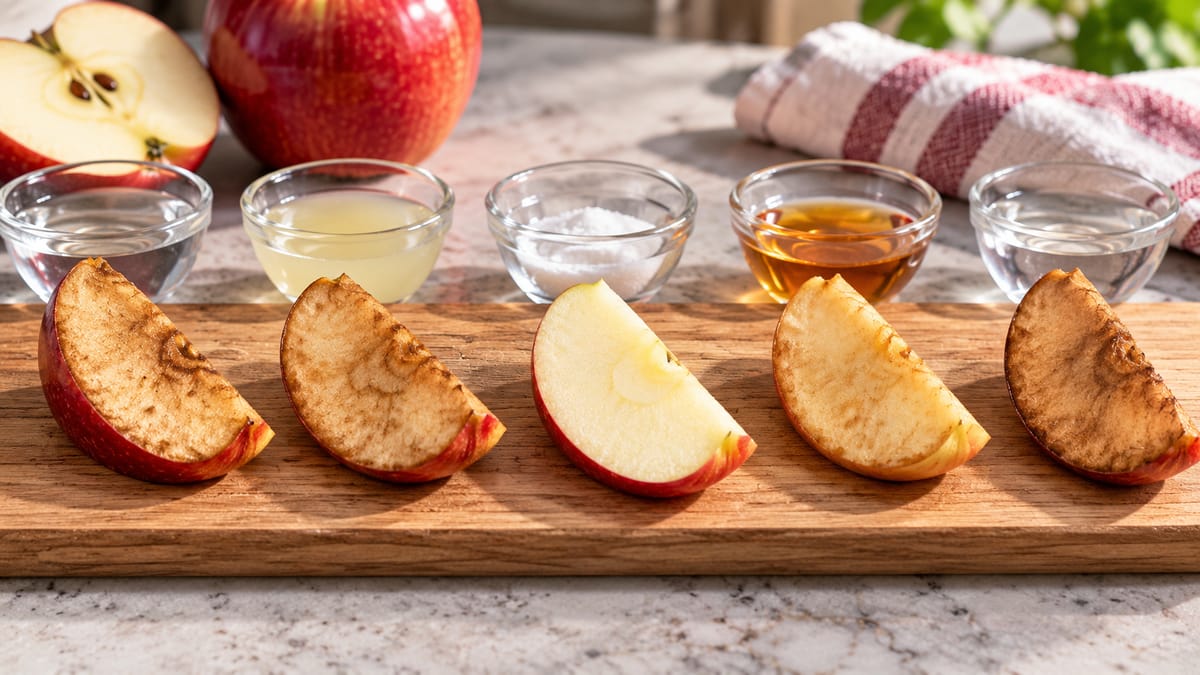
We tested five approaches, using one apple slice for each method to see which would maintain its appearance longest.
Method 1: No treatment
This was our control slice, cut and left exposed on a plate with no intervention.
Unsurprisingly, this slice began changing color fastest. The rate varies among apple varieties, but once the fruit is cut and exposed to air, browning begins immediately.
Method 2: Plain water
The simplest approach: submerging apple slices in a bowl of water.
And it does help.
Water temporarily reduces direct contact between the apple's surface and oxygen, slowing the browning. Various tests have found this method works well for short periods, but it's less effective if you need apples to stay pale for many hours.
If you're cutting apples shortly before a meal, this is a reasonable solution.
Method 3: Lemon juice
This is probably the trick most people know.
Lemon juice slows browning thanks to its acidity and antioxidant content. In tests, it successfully kept apples lighter compared to untreated slices.
But there's a drawback: use too much and the apple's flavor changes noticeably.
You can dilute lemon juice in water, soak the slices for a few minutes, then rinse lightly.
It works, but there's a better method.
Method 4: Honey water
This is naturally the most festive approach for the Jewish New Year.
Mix honey into water, soak apple slices for several minutes, then remove.
Honey can inhibit the browning process, and in several tests it performed well over time. The major advantage for Rosh Hashanah is obvious: if a slight sweet taste remains on the apple, it actually complements the holiday meal, where apples and honey are traditionally eaten together.
But even here, one method proved more consistently effective.
Method 5: Salt water—the surprising winner
Yes, salt.
In multiple culinary tests, this method came out on top: dissolve about half a teaspoon of salt in a cup of water, soak apple slices for approximately five minutes, then rinse them quickly under plain water.
The surprising result is that when you use a small amount and rinse after soaking, the apple shouldn't retain a salty taste.
In one well-known test, slices soaked in salt water showed no browning even after 12 hours at room temperature, and the tester noted they remained crisp with no salty flavor.
Many tests ranked salt water first among all methods examined.
So which method won?
If you need to choose one technique for preparing apples in advance, salt water is the most convincing winner.
Five minutes of soaking, a quick rinse, gentle drying, and transfer to a sealed container in the refrigerator.
For those who prefer to avoid salt, honey water also gives excellent results and is particularly appropriate for Rosh Hashanah.
And if you only need the apples in half an hour or an hour, even plain water can do the job.
The one thing you should avoid? Cutting apples hours ahead and leaving them exposed on a plate. Almost no variety will stay white and festive-looking for long under those conditions.