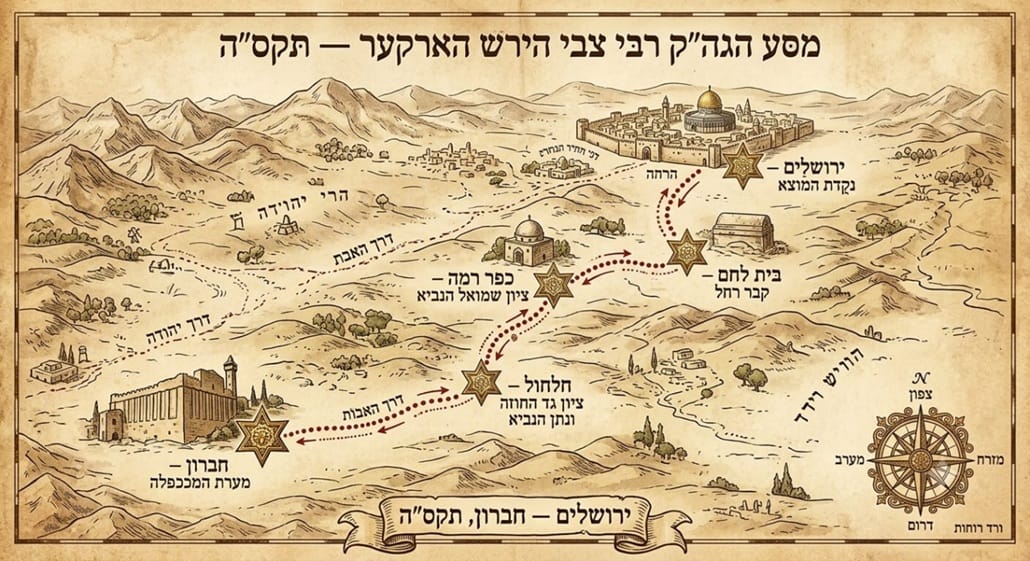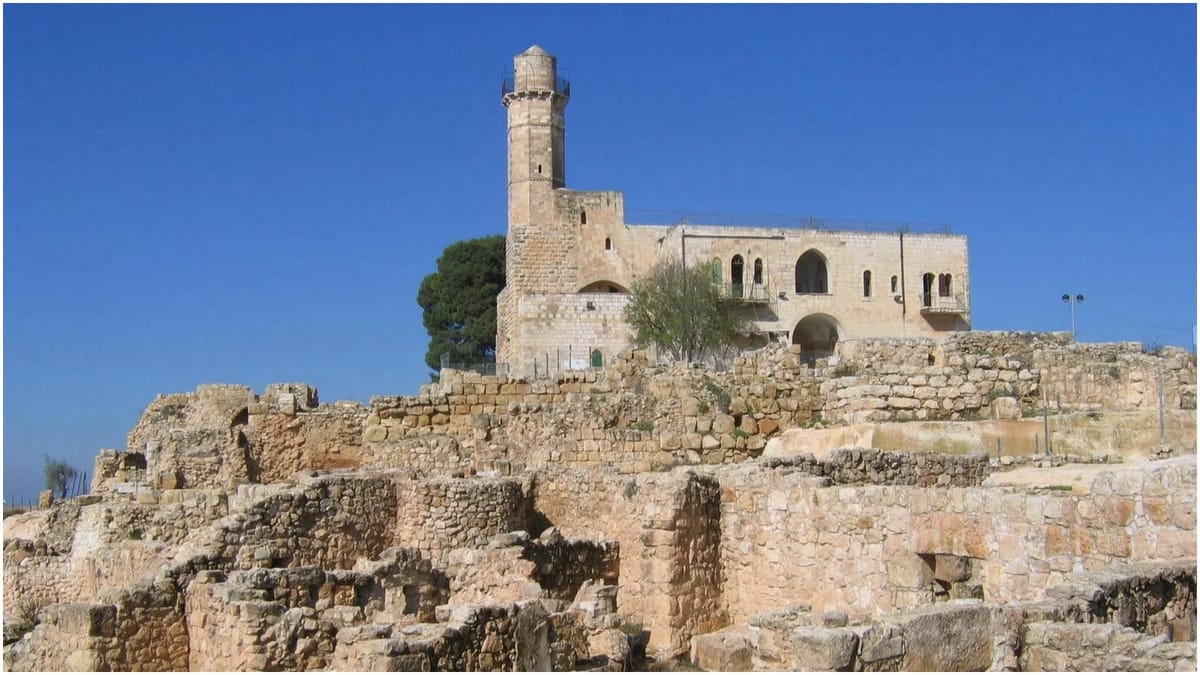
For hundreds of years, Jewish tradition has identified the tomb of the Prophet Samuel at a site called Nevi Samuel (Arabic for "Prophet Samuel"), located on a hilltop north of Jerusalem.
One of the most prominent early witnesses to this tradition was Rabbi Ovadia of Bartenura, who immigrated to the Land of Israel in 1488 and served as chief rabbi of Jerusalem.
In his letters, he wrote: "The grave of our master Samuel of Ramah is still today in Jewish hands, and people come to prostrate themselves there every year on the 28th of Iyar, the day of his death, from all the surrounding areas, and they light large torches upon it".
Yet not all rabbinic authorities accepted this identification. Two distinguished 19th-century Torah scholars who conducted systematic surveys of the Land of Israel, Rabbi Yosef Schwartz, author of "Tvu'ot HaAretz", and Rabbi Yitzchak Goldhar, author of "Admat Kodesh", both questioned whether Samuel was actually buried at Nevi Samuel.
The debate recently resurfaced when a Hasidic publication printed an article strongly defending the Nevi Samuel identification. According to reports, the article was prompted by a dispute between two Hasidic leaders, one of whom had publicly stated he would not visit the site on Samuel's yahrzeit because he "smelled impurity" there , meaning he doubted the tomb's authenticity, similar to how the Baba Sali refused to enter certain sites he believed were Muslim shrines rather than authentic Jewish holy places.
The article accused anyone questioning the Nevi Samuel location of being influenced by biblical criticism rather than authentic Jewish tradition. But now, a newly publicized letter from an 18th-century Hasidic master adds a surprising dimension to the debate.
Rabbi Yosef Schwartz (1805–1865) was born in a town between Bohemia and Bavaria and studied at the advanced yeshiva in Würzburg.
He immigrated to Jerusalem in 1833 and spent decades systematically exploring the entire Land of Israel. His groundbreaking work "Tvu'ot HaAretz" was translated into English and German, and the rabbinical court of the ultra-Orthodox Edah HaChareidis community relies on his halachic research to this day, even when it conflicts with the Chazon Ish. He died during an epidemic in Jerusalem and was buried on the Mount of Olives.
Rabbi Yitzchak Goldhar (1847–1925) was born in Slutsk, Russia, and immigrated to Israel in 1895, settling in Rosh Pina. He worked as a surveyor in the Galilee for Baron Rothschild while spending twenty years traveling throughout the Land of Israel to identify locations mentioned in the Bible, Talmud, and Midrash. His book "Admat Kodesh" received approbations from all the leading rabbis of the Land of Israel, including the Ridbaz, Rabbi Yosef Chaim Sonnenfeld, Rabbi Avraham Yitzchak Kook, and the Maharil Diskin. He was buried on the Mount of Olives.
Both these Torah scholars, who studied Scripture intensively, questioned the identification of Nevi Samuel as the Prophet Samuel's burial place.