"Certain Death": Haredi Protest Leaders Issue Dramatic Warning After Railway Track Chaos
Jerusalem Faction distributes urgent safety protocols ahead of mass demonstrations • Leaders disavow last week's rail blockade, warn protesters: 'Going on tracks means certain death' | Full emergency guidelines revealed (Haredim)

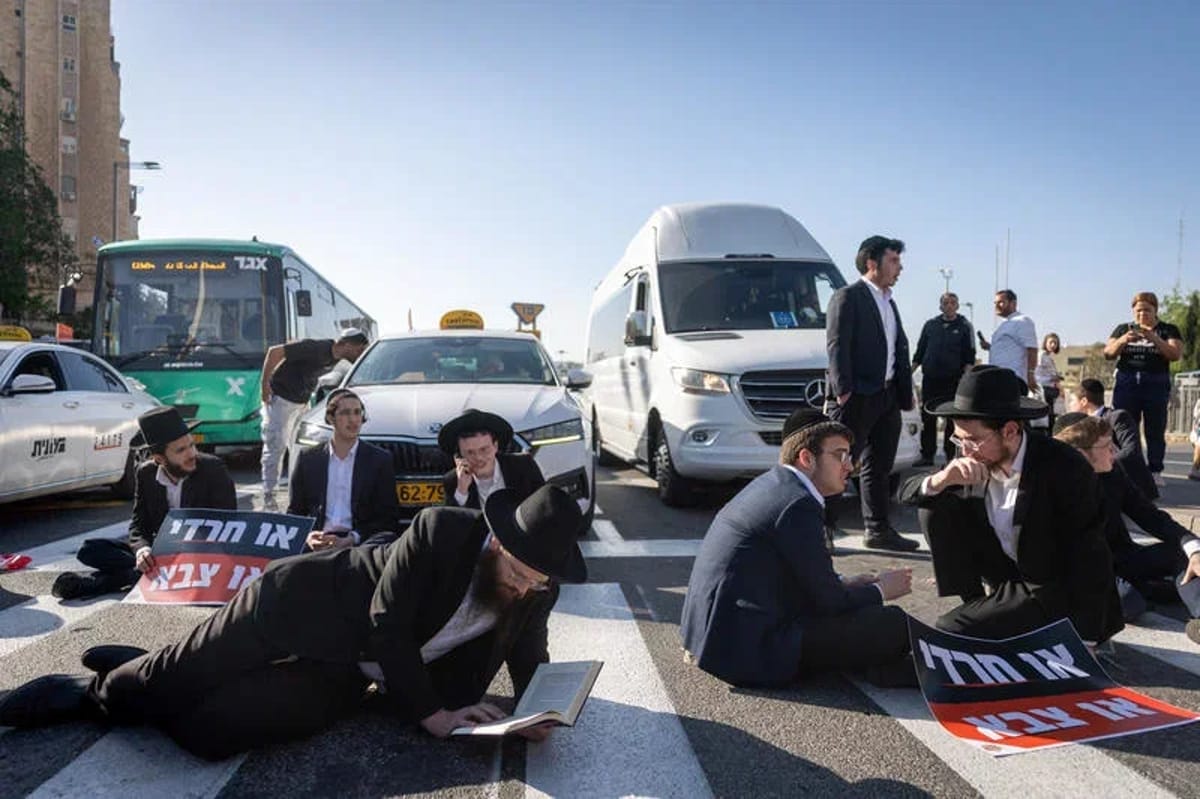
The hardline Jerusalem Faction has distributed extraordinary emergency protocols to protesters ahead of mass demonstrations scheduled for Thursday, including a stark warning that stepping onto railway tracks constitutes "certain death" — a dramatic attempt to distance the movement from last week's chaotic rail blockade near Ganot Junction.
The urgent guidelines, obtained exclusively by Kikar HaShabbat, reveal deep anxiety within the Peleg Yerushalmi leadership as they prepare for renewed protests following Wednesday's military trial of David Petrof, son of Yeshiva Maalot HaTorah head Rabbi Eliezer Petrof. The trial has become a flashpoint in the escalating confrontation between Israel's ultra-Orthodox community and military draft enforcement.
According to the leaked audio recording, protest coordinators issued an emphatic disavowal of the rail incident. "Anyone who thinks it's possible to block Israel Railways tracks should know this means certain death! Heaven forbid, do not go onto the tracks," the message stated in unequivocal terms. The warning marks a significant shift for a movement that has built its reputation on aggressive civil disobedience tactics.
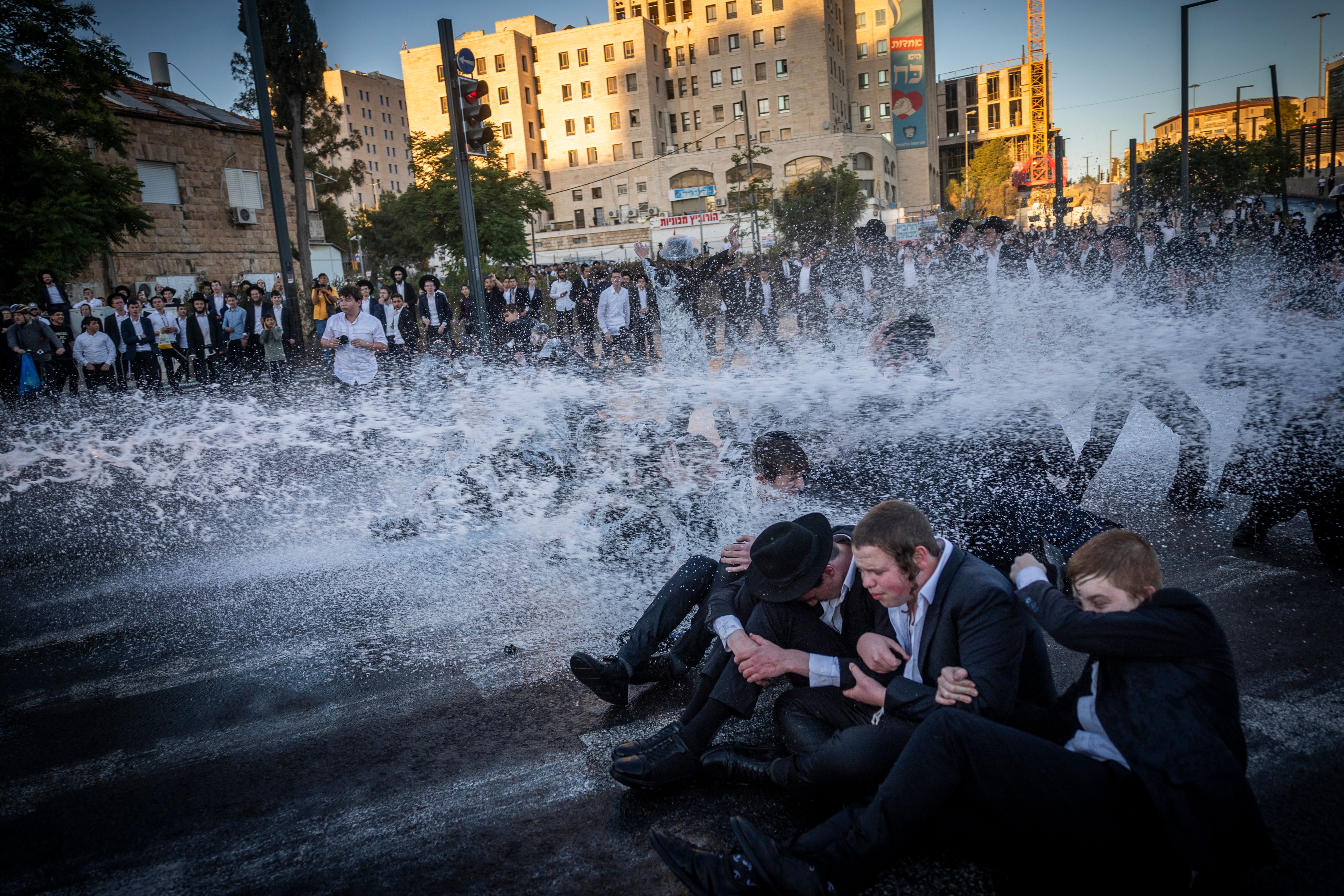
The emergency protocols extend beyond rail safety. Organizers instructed participants never to attend demonstrations alone, mandating group attendance for security purposes. Protesters were explicitly ordered to avoid any provocations toward police officers or civilians, and were urged to carry recording devices and cameras to document interactions with authorities.
"Our strength lies in our unity," the message concluded, demanding absolute obedience to committee directives only. The guidelines reflect an attempt to maintain operational control while preventing the kind of spontaneous escalation that has characterized recent protests, including the violent raid on Supreme Court Deputy President Noam Sohlberg's residence that drew widespread condemnation even from haredi political parties.
Operational Secrecy as Tactical Weapon
The Jerusalem Faction has refined protest tactics that repeatedly wrong-foot Israeli security forces. As police admitted last week, authorities often have no advance knowledge of demonstration locations, with hundreds of participants kept in the dark until the moment orders are issued. The strategy has enabled protesters to paralyze major highways before law enforcement can deploy adequate resources.

Thursday's planned demonstrations are set to erupt simultaneously at 5:00 p.m. across multiple locations, including major gatherings in the Tel Aviv area, another central location, and a large assembly of Sephardic Torah students in Jerusalem. The coordinated timing is designed to stretch police resources thin and maximize disruption.
The protests follow weeks of escalating tensions over military detention of yeshiva students who failed to report for induction. Recent demonstrations have included roadblocks on Route 4 near Bnei Brak, confrontations outside Military Prison 10, and gatherings at major intersections that have repeatedly brought traffic to a standstill.
Leadership Under Pressure
The emergency protocols signal growing pressure on Jerusalem Faction leadership to maintain control over increasingly volatile street protests. The movement has faced criticism from mainstream haredi politicians following incidents like the Sohlberg residence attack, which saw dozens of rioters smash windows and destroy property while the justice's family remained inside.
Police arrested 62 individuals in connection with that incident, though authorities later acknowledged they had received advance intelligence of planned demonstrations but failed to pinpoint the location — a recurring pattern that has enabled the faction's tactical successes while complicating efforts to prevent violence.
The Petrof trial Wednesday is expected to serve as a catalyst for the renewed protest wave. Military prosecutors are seeking significant penalties for desertion charges, a move the Jerusalem Faction frames as religious persecution warranting mass civil disobedience. Rabbi Azaryah Auerbach, a senior faction figure, has called for protests "with force and determination," describing the arrests as an assault on Torah study itself.
The faction's track record suggests operational discipline in planning, but recent incidents reveal how quickly street protests can spiral beyond leadership control. With police monitoring developments closely and the trial outcome pending, Thursday afternoon will test whether the movement can sustain its disruptive tactics while avoiding the kind of violence that threatens to undermine broader haredi political support.
Further updates to follow as demonstrations unfold.