Sephardic Torah Students Lead Massive Protest at Bar Ilan Junction: 'We're Not For Sale'
Thousands of Sephardic bnei Torah block major Jerusalem intersection • Protesters denounce targeted nighttime arrests: 'Military thinks we're the weak link' | Hasidic supporters arrive to show solidarity (Haredim)

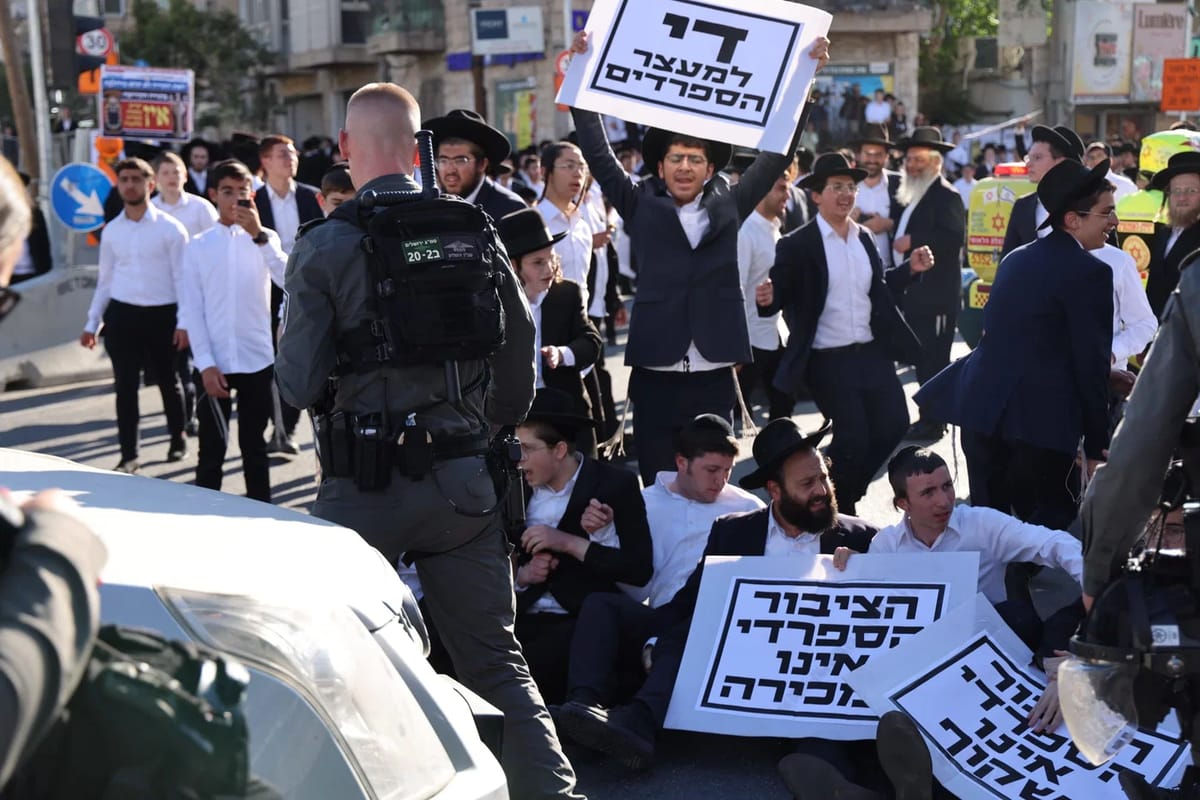
The wave of protests that swept across Israel Thursday in response to the conscription of yeshiva students reached a dramatic crescendo at Jerusalem's Bar Ilan Junction, where thousands of bnei Torah brought traffic to a standstill. This time, however, the demonstration carried a distinctive character: Sephardic Torah students took center stage, voicing deep frustration over what they describe as systematic targeting by military enforcement authorities.
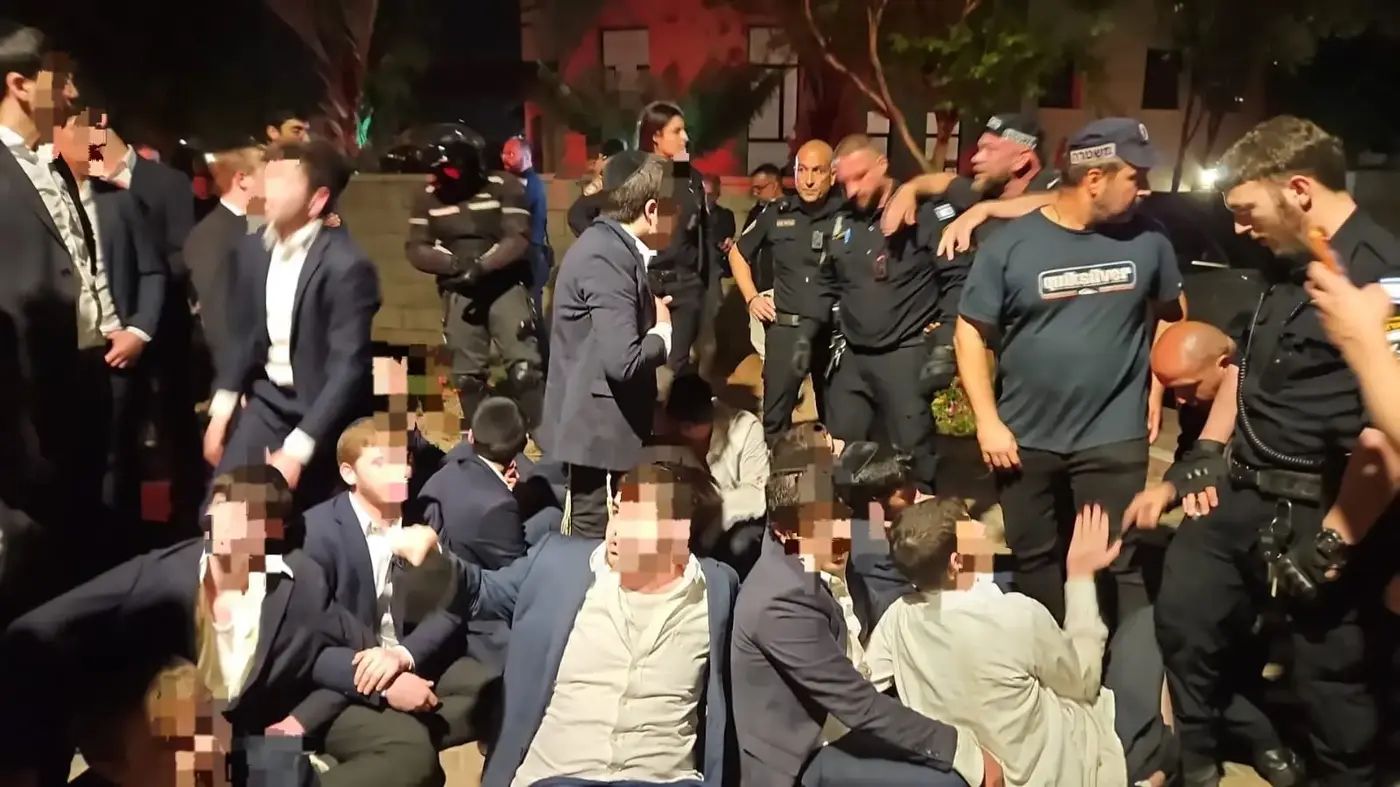
The massive gathering at the central Jerusalem intersection unfolded as part of coordinated protests called by Rabbi Tzvi Friedman and the rabbinical leadership of the Peleg Yerushalmi faction. While demonstrations erupted simultaneously in Tel Aviv and other central locations, the Bar Ilan protest stood out for the prominent participation of Sephardic yeshiva students, who carried signs declaring: "The Haredi public is not for sale" and "Stop arresting Sephardim."
"They Think We're the Weak Link"
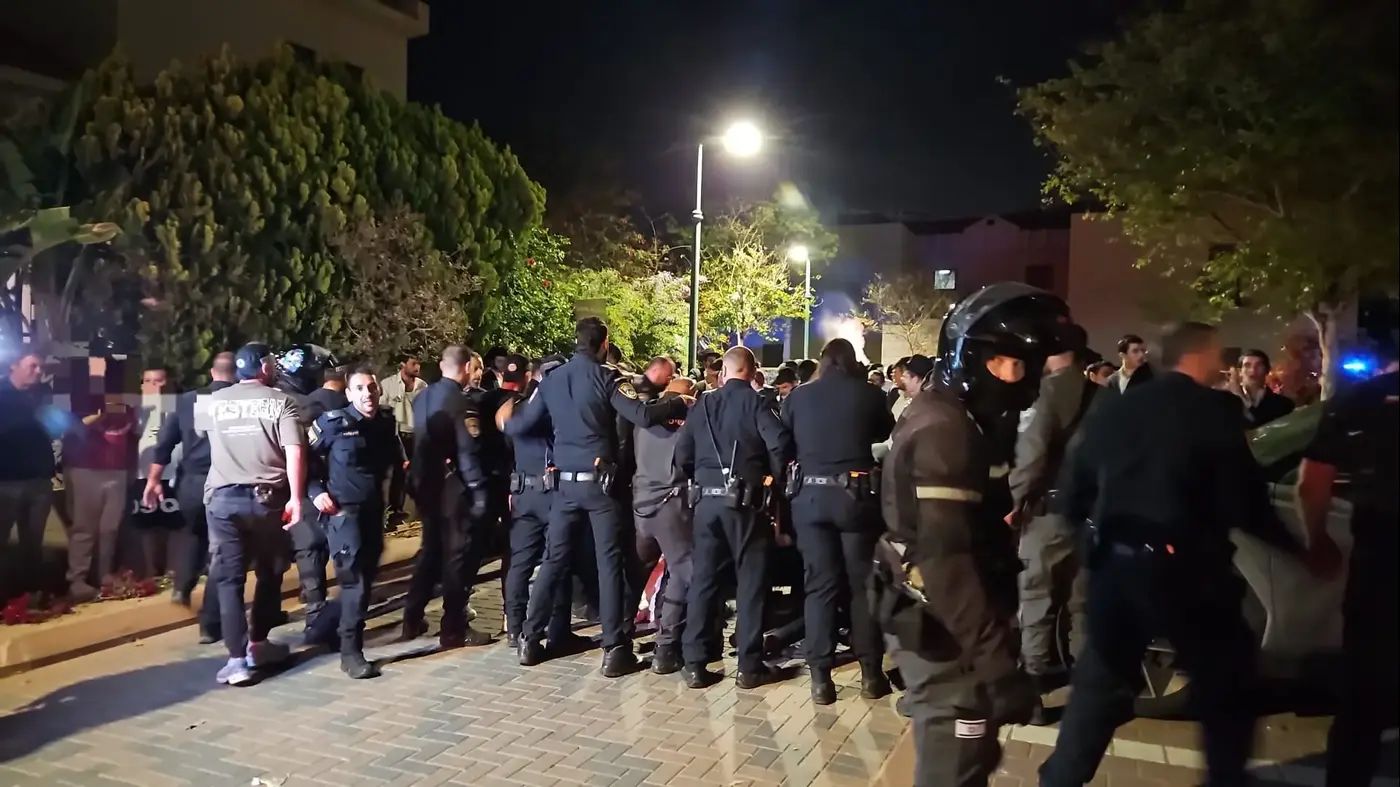
Behind the placards lies a profound sense of grievance within the Sephardic Torah community. Protesters asserted that the overwhelming majority of recent arrests of yeshiva students — particularly those conducted during nighttime raids — have disproportionately targeted Sephardic young men.
"Military leadership and enforcement authorities are focusing on us because they believe we're the vulnerable sector," one protester stated with evident pain. "They assume that because we sometimes lack the political machinery or organizational infrastructure of the Hasidic and Lithuanian communities, it's easier to arrest us. They're making a grave miscalculation. Sephardic bnei Torah will stand as a fortified wall."
The sentiment reflects broader tensions within the Haredi world regarding enforcement patterns and police conduct during the ongoing conscription crisis. Chief Police Rabbi Rami Berakhyahu recently addressed mounting concerns that yeshiva students might avoid seeking police assistance out of fear of arrest, revealing that Police Commissioner Danny Levi has ordered an urgent legal review to separate law enforcement functions from draft compliance operations.

Hasidic Solidarity Amid Sephardic Leadership
Despite the feelings of isolation expressed by some Sephardic protesters, the demonstration also provided moments of communal unity. Throughout the confrontation with police, numerous yeshiva students and avreichim with distinctly Hasidic appearance were observed at the scene, having traveled specifically to encourage the Sephardic demonstrators and stand shoulder to shoulder against what they view as a decree threatening the entire Torah world.
The show of solidarity comes as protest organizers have refined their tactical approach, maintaining operational secrecy about demonstration locations until the final moment. Police acknowledged Thursday afternoon that despite knowing protests were scheduled for 5:00 PM, they had no advance intelligence regarding specific locations — a strategic advantage that has repeatedly allowed protesters to establish roadblocks before security forces can respond.

Police Deploy Force to Clear Junction
Large contingents of police forces arrived at Bar Ilan Junction and issued warnings for protesters to vacate the roadways, cautioning that force would be employed if necessary. When demonstrators refused to disperse and continued their Torah study and protest songs on the blocked intersection, officers initiated dispersal operations using crowd control measures, including water cannons and mounted police units that pushed back the assembled masses.
The confrontation at Bar Ilan represents the latest escalation in a conflict that has seen increasingly aggressive tactics on both sides. Earlier incidents included protesters breaching the home of the Chief Military Police Officer while his family was present, prompting IDF Chief of Staff Eyal Zamir to declare such actions a "dangerous red line."
As the standoff continues, the Sephardic community's prominent role in Thursday's protests signals a broadening of resistance beyond traditional Peleg strongholds, with bnei Torah from diverse backgrounds uniting against what they perceive as an existential threat to the yeshiva world.