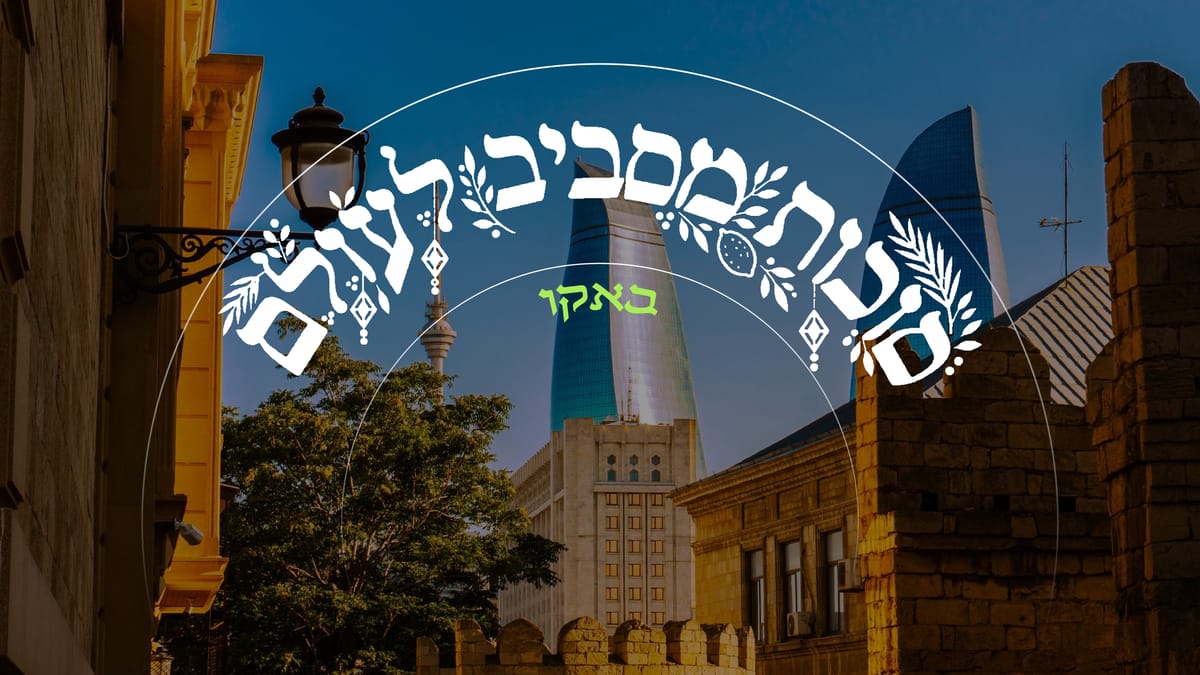
"We build sukkot in courtyards and walk freely with hats"
"The situation here is not just 'relatively' calm, it is simply calm and good," Rabbi Isayev said. "People here walk in the street with kippot on their heads, and some walk with hats and shtreimels, and there is no problem with it at all. These days people are building sukkot in the courtyards of their homes for the holiday."
The secret, he said, lies in the unique social fabric. "Azerbaijan is a country with a Muslim majority, but it is defined as a secular state. The warm and mutual relations between the Azerbaijani people and the Jewish people have been built over hundreds and thousands of years. The Jewish community is seen as an inseparable part of local society, as a patriotic asset that protects the interests of the state in the world. Out of this brotherhood, the deep strategic relations between Azerbaijan and Israel were also woven."
That partnership, Rabbi Isayev said, held firm even in the difficult period after October 7. "Azerbaijan did not distance itself from Israel, on the contrary. It continues to be the most important supplier of energy and oil to the State of Israel, and it shows firm support alongside Jerusalem."
The public campaign that saved the state alliance
During the conversation, the rabbi also touched on one of the most sensitive diplomatic storms of recent months: attempts by elements in Israel to advance recognition of the Armenian genocide, an issue considered explosive for the government and people of Baku.
"There was a certain disappointment, especially among the Jews of Azerbaijan," the rabbi said. "In Judaism we have a great mitzvah called hakarat hatov, gratitude. At a time when Israel does not have many true friends in the world, and especially a friend like Azerbaijan, it was strange to see a proposal that stems from internal political interests, when even the government of Armenia did not bother to thank anyone for it."
In response, the local Jewish community mobilised. "We launched a public campaign to prevent the move in the Knesset. Thanks to the chareidi representatives, including members of Shas and other factions like United Torah Judaism who understood the sensitivity and supported us, the matter was stopped. Serious damage to relations between the two countries was prevented, and they remain warm and strong."