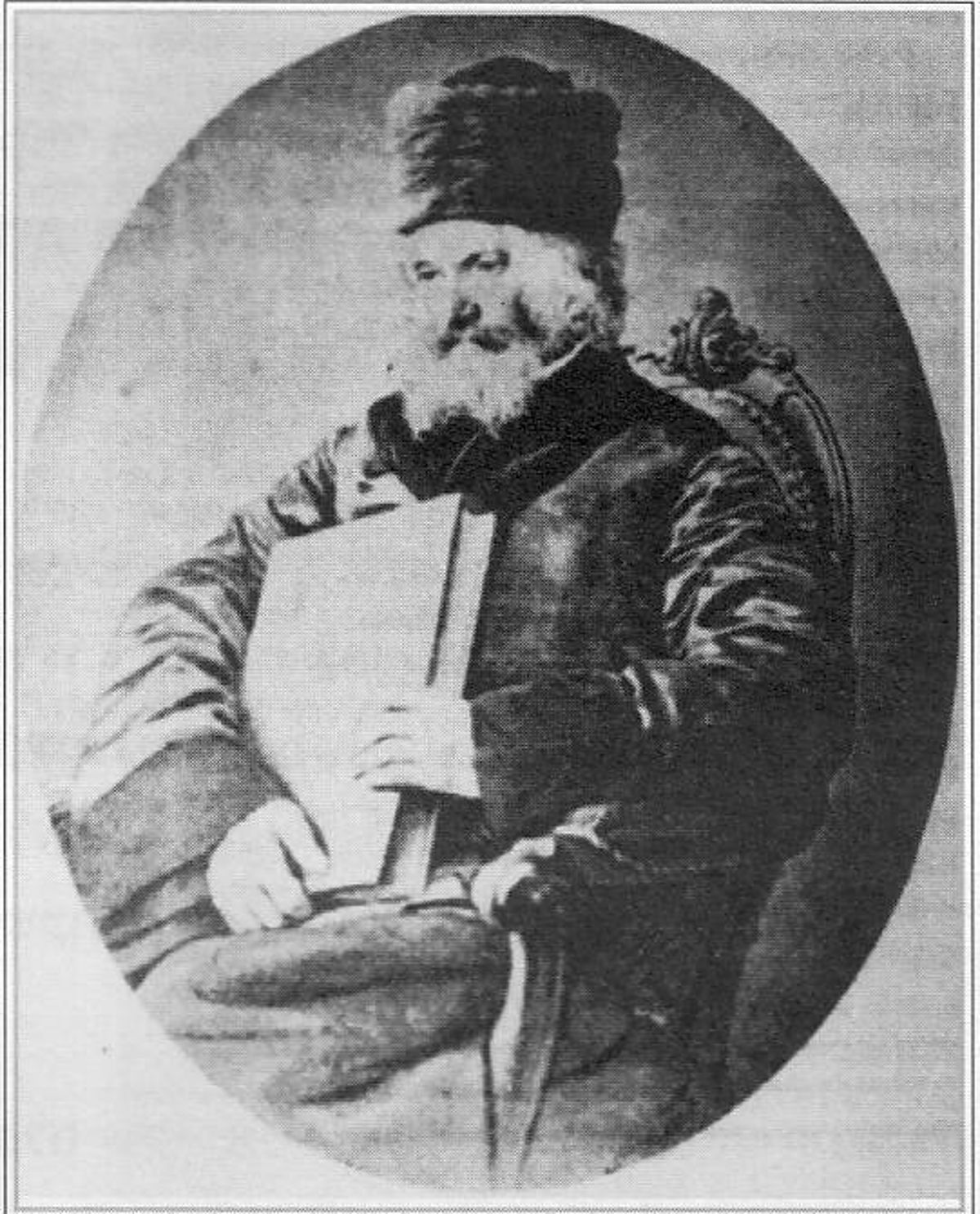
The Jewish world marked 160 years since the passing of Rabbi Yehuda Aszod, one of the great halachic authorities of 19th-century Hungary and the author of the responsa work Yehuda Yaaleh.
Rabbi Aszod, who served as rabbi of Dunaszerdahely, then known in Jewish sources as Serdahely, passed away on 23 Sivan 5626, shortly before dawn. According to accounts preserved by his family and students, he had been writing Torah novellae shortly before his death when he told his wife that “Hashem told me, rise up to Me.” A short time later, he died.
Born in 1794 in Aszod, Hungary, Rabbi Yehuda was orphaned at a young age. His mother, despite difficult financial circumstances, resolved that her son would be dedicated to Torah study. His abilities soon became known, and he was eventually brought under the guidance of Rabbi Yehoshua Falk Suditz-Bichler, who recognized his exceptional potential.
He later studied under Rabbi Mordechai Banet in Nikolsburg, where his brilliance quickly became apparent. Accounts from that period describe a young scholar with remarkable command of hundreds of pages of Gemara and the four sections of Shulchan Aruch. Rabbi Banet reportedly entrusted him with delivering shiurim to older students, an unusual sign of confidence in a young talmid.
Rabbi Aszod eventually married Rebbetzin Esther, daughter of Rabbi Meir Regner. In 1826, with the backing of leading rabbinic figures including Rabbi Mordechai Banet and the Chatam Sofer, he was appointed dayan in Serdahely. After serving in other rabbinic posts, he returned to Serdahely in 1854 as rabbi of the community, a position he held until his death.
His yeshiva became one of the leading Torah centers in Hungary, attracting around 150 students. The local community helped support the students, while the rebbetzin was known for hosting many of them at her own table, especially during the holidays.
Rabbi Aszod was also a leading figure in the struggle against Reform and Haskalah influence in Hungary. He signed public protests with other major rabbis of his generation and opposed institutions he believed would weaken traditional Jewish life.
His halachic legacy rests largely on Yehuda Yaaleh, which contains hundreds of responsa across all four sections of Shulchan Aruch. Questions were sent to him from across the Austro-Hungarian Empire, and his rulings remain part of the halachic literature studied today.
On the day after his passing, large crowds and many rabbis gathered in Serdahely for his funeral. He was buried in the old cemetery there, in what is now Dunajska Streda, Slovakia. His grave continues to draw visitors seeking to pray at the resting place of a major Torah authority whose influence has lasted well beyond his own generation.