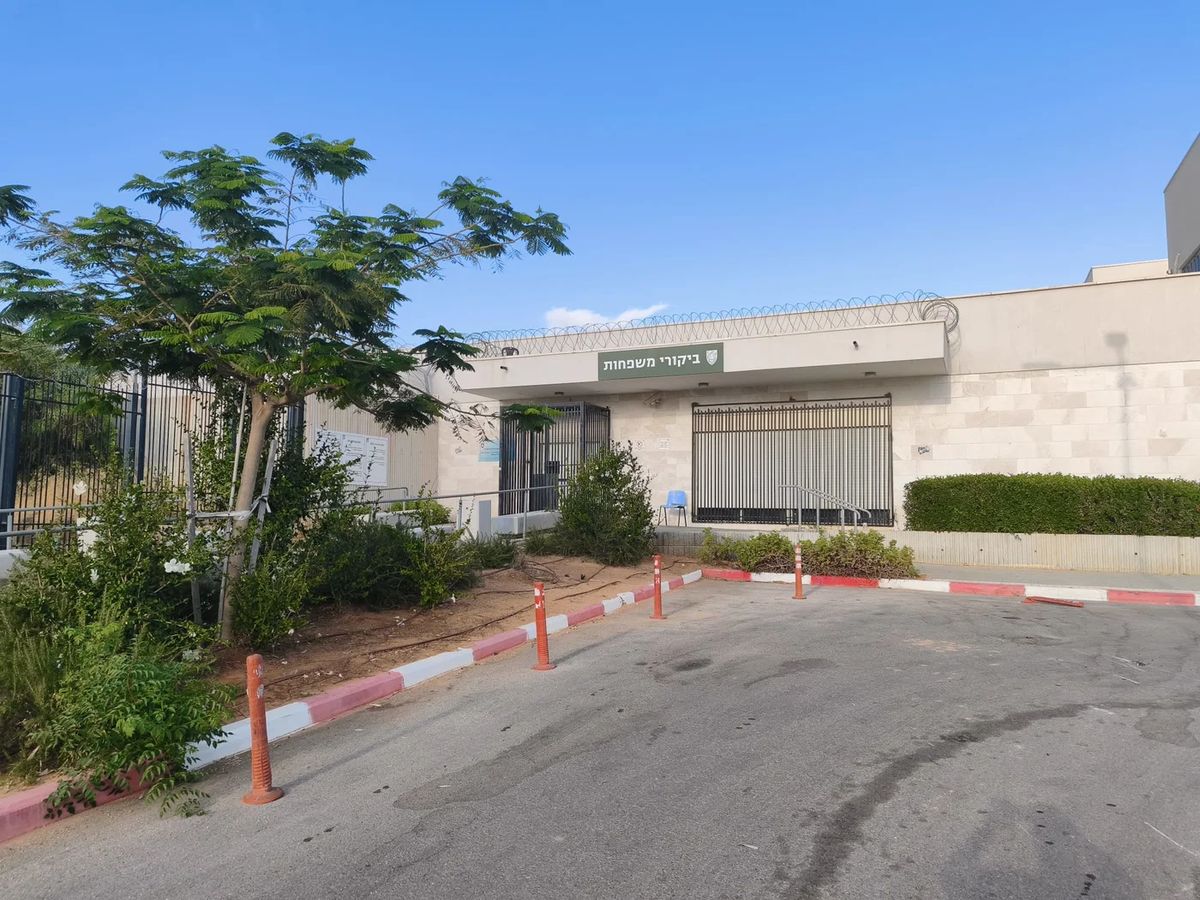
A 23-year-old Haredi yeshiva student and father of three young children was arrested and sentenced to 20 days in military prison last week after voluntarily appearing at an IDF recruitment office to sort out his draft status, according to a report by Kikar HaShabbat. He was transferred to Prison 10, the military facility that has held a growing number of ultra-Orthodox draft-age men in recent months.
Speaking to Kikar HaShabbat, the young man's mother-in-law made serious allegations about how he was treated during his military court hearing, saying the judge told him, "You'll have plenty of time to sit in prison. What do you want to do in the army?" She said he was first moved to a cell in the detention wing before being transferred to Prison 10.
According to the family, during his time in the detention wing he was required to stand for hours at a stretch with a heavy bag on his back, without being permitted to sit. The mother-in-law said the treatment he received was humiliating, and that the family believes it was influenced by his visibly Haredi appearance, including his sidelocks and yarmulke.
She said his wife had difficulty even recognizing her husband's voice during their first phone call after his arrest. "He just cried the entire call," she said.
The most difficult moment, she said, came when the couple's eldest daughter, age three, spoke to her father by phone. "She just kept asking him through her tears, 'Abba, do you love me? Abba, do you love me?'" the mother-in-law recounted. "She doesn't understand where her father suddenly disappeared to."
The young man left behind his wife alone with their three young children, the eldest just three years old. Family members describe a difficult reality since his arrest, both emotionally and financially.
"My daughter feels like a widow," the mother-in-law said. "Her whole world collapsed on her at once. She's alone with three small children, without a husband, without anyone to hold the household together. The children need their father at home." She said the family is trying to help as much as it can but is struggling to manage the situation alone, and is appealing for legal assistance in hopes of securing his early release.
Many Kikar HaShabbat readers, including apparent reservists and their families, pushed back hard on the framing, pointing out that hundreds of thousands of reserve soldiers have gone far longer than 20 days without seeing their own families.
Kikar HaShabbat said it had reached out to the IDF Spokesperson's Unit for comment and would publish its response once received.