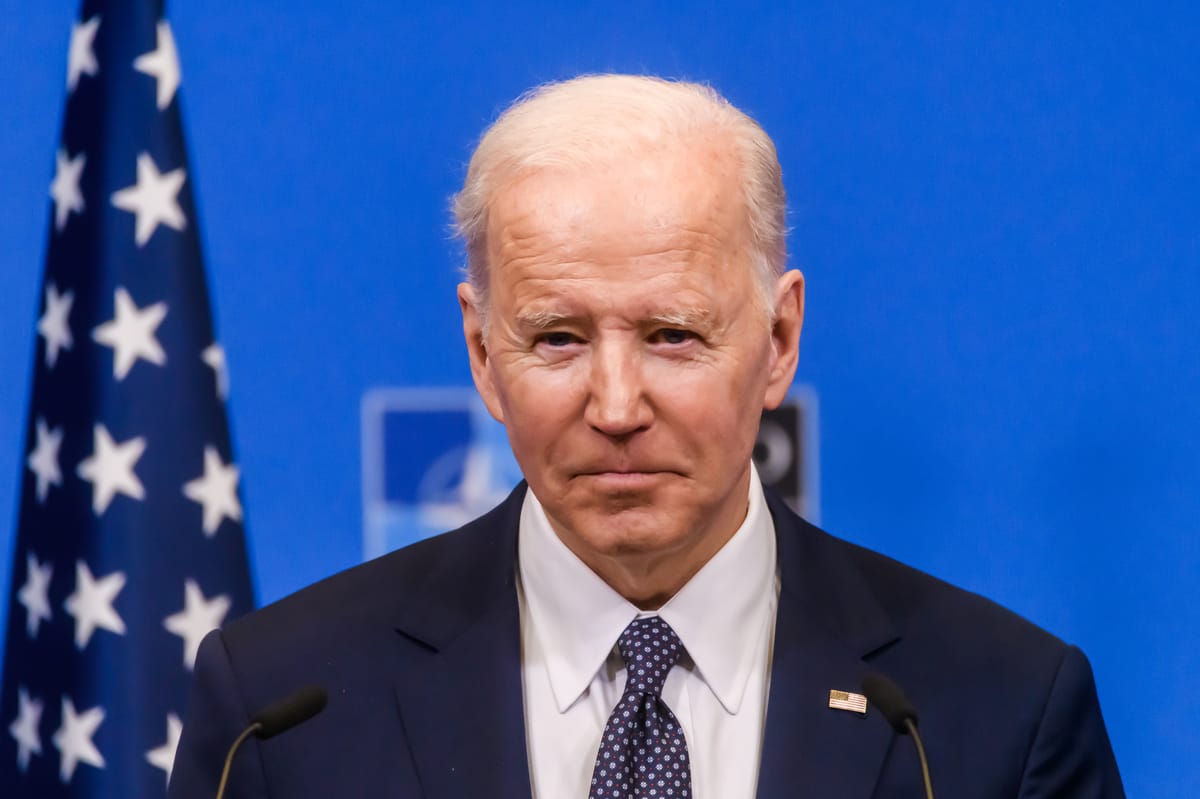
With former President Joe Biden's memoir expected this November, the small circle of aides who steered his response to the Gaza war appear to have decided to get ahead of the book's release. In an unusually candid New Yorker investigation, Biden's closest former advisers, including national security adviser Jake Sullivan, his deputy Jon Finer, Secretary of State Antony Blinken, Defense Secretary Lloyd Austin, and Kamala Harris's foreign policy adviser Philip Gordon, offer a rare and often angry look at the drama that played out between Washington and Jerusalem, and largely place the blame on Prime Minister Benjamin Netanyahu.
Sullivan does not mince words in the piece, saying plainly that the administration should have applied heavier pressure on Israel to change course. He describes how, inside the Oval Office, options to delay or condition arms shipments to Israel came up again and again, only for Biden to repeatedly put off the hard decisions. According to Sullivan, a decisive break with Israel was seriously considered twice, once ahead of the Rafah operation in spring 2024, and again that July, but each time the White House backed off out of concern for the hostages, Israel's security, and the prospects for a ceasefire deal. Sullivan said the president kept believing a hostage and ceasefire deal was just around the corner, which is why he kept deferring the decision.
It was Biden himself, according to the account, who resisted using American weapons as leverage. Despite later reports about his cognitive decline, aides describe him as deeply engaged on Gaza policy and supremely confident in his own read of Israel, at times bluntly overruling Blinken and Sullivan and raising his voice at them "like he was scolding children." One senior official said the president wanted to keep standing with Israel unless someone told him he couldn't, and nobody did. Sullivan conceded that, looking back with sober hindsight, it's easy to see the trap they had walked into.
A pattern of broken promises
That trap, the officials say, was fed repeatedly by the leadership in Jerusalem. Former Biden aides describe how Netanyahu and his close adviser Ron Dermer repeatedly promised the fighting would wrap up in "just two more weeks." According to the officials, the bluff became so transparent that Blinken snapped at Dermer in one call that he never wanted to hear the phrase again, prompting Dermer to respond dismissively that he'd start saying "fortnight" instead.
Finer, the former deputy national security adviser, put it even more bluntly, saying it's completely clear now, and was fairly clear then, that Israel simply wasn't being straight with them about its plans and timelines.
Shock over Rafah, and a warning from the Red Cross
When Blinken saw the scale of destruction and bombing in Gaza in the earliest weeks of the war, he reportedly turned to his own staff in alarm.. A senior State Department official recalled the internal shock at Israel's conduct, describing how the entire team was stunned by what they were seeing and kept asking themselves what was actually going on.
Officials say they were especially taken aback when Israel "flattened Rafah," and by the end of Biden's term, a document had been prepared for Blinken's signature that would have cut off American assistance to Israeli units allegedly involved in abuse of Palestinian detainees at Sde Teiman. Blinken never signed it, again believing a ceasefire was close and not wanting to jeopardize it. Ambassador Mike Herzog asked him to hold off on sanctions and promised an indictment would follow. In March 2026, charges against the five Force 100 soldiers tied to that scandal were dropped, a case Netanyahu had labeled a blood libel.
The investigation also describes a confidential letter sent to Biden in March 2024 by Mirjana Spoljaric, president of the International Committee of the Red Cross, warning that Israel's restrictions on visits to Palestinian detainees put it in the company of pariah states like North Korea and Eritrea, and cautioning against a moral defeat that future generations would not forgive. She reportedly urged Biden to delay arms shipments to Israel, warning they were likely being used for war crimes and to justify further death and destruction.
Defense Secretary Lloyd Austin, in closed-door conversations, compared Netanyahu to a gambler playing with the house's money, since he knew the United States would ultimately foot the bill. Austin reportedly pressed his Israeli counterparts that needless harm to civilians "creates more terrorists." Kamala Harris's adviser Philip Gordon said Biden told Netanyahu repeatedly to take the win and not drag the US into a wider war, but that the Israelis knew Washington would ultimately stand behind them regardless.
"Bibi played games with all of us"
Former officials now admit the administration effectively deceived itself, favoring legal hairsplitting over acknowledging violations of the laws of war. Even as intelligence reports and State Department officials concluded that Israel had likely used American weapons in violation of international law and had weaponized the blockade of humanitarian aid, administration lawyers produced a convoluted and evasive legal opinion that allowed the flow of American munitions to continue. One White House official described with evident frustration how Netanyahu repeatedly torpedoed hostage negotiations, saying flatly that Bibi played games with all of them.
Finer argued that the defining feature of the conflict was that, for both Hamas and Israel alike, harm to civilians wasn't incidental, it was part of the strategy itself, and said the United States should not tolerate wars where civilian harm is the objective, nor allow American weapons to serve that purpose.
The account also describes how national security adviser Amos Hochstein, who was born in Jerusalem, tried and failed to pin down a clear Israeli war aim from Netanyahu, later saying that in hindsight they never had a real chance, because Netanyahu wasn't talking to them, he was talking to his own political base. Biden, encouraged by Blinken and Sullivan, reportedly planned to go over Netanyahu's head with a direct address to the Israeli public, intended to argue that pursuing "total victory" would isolate Israel, harm innocent people, and fail to bring the hostages home.
Netanyahu and Dermer apparently caught wind of the plan and moved to head it off, telling the White House that Israel was seriously considering a hostage deal. Biden scrapped the speech and delivered a different one instead, urging Israel to accept the deal. According to American and Israeli sources cited in the investigation, Netanyahu then introduced new conditions he knew Hamas would reject, and Israel went on to kill Ismail Haniyeh and Mohammed Deif.
Not just Democrats anymore
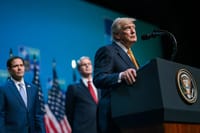
The frustration with Netanyahu isn't confined to Biden's team owning up to past mistakes. Similar friction is now surfacing inside the Republican Party as well, led most visibly by Vice President J.D. Vance. It began with a pointed warning at a White House press briefing, where Vance suggested Israel should think twice before criticizing the deal with Iran, saying that if he were in the Israeli cabinet, he might not attack America's only remaining powerful ally in the world. He went further in a widely discussed interview with podcaster Joe Rogan, arguing Israel was running a campaign to influence American public opinion, and echoing conspiracy theories linking sex offender Jeffrey Epstein to Israeli intelligence and the Mossad.
Those remarks have infuriated the party's Jewish conservative base, who see them as courting a dangerous antisemitic fringe. Republican Jewish Congressman Randy Fine of Florida called Vance's comments completely inappropriate and truly disgusting. Prominent conservative commentator Ben Shapiro told Fox News that Vance, as the administration's lead figure in dealing with Iran, had not served the president well in shaping what he called the soft deal.
That criticism has landed even as the White House and the president have publicly stood behind Vance, with Press Secretary Karoline Leavitt saying Trump agrees that Israel is trying to influence American public opinion. But for pro-Israel donors and activists in the party, the combination of conciliatory rhetoric toward Tehran, sharp jabs at Jerusalem, and a wink toward conspiracy theories is a red line. Eric Levine, a board member of the Republican Jewish Coalition and a major donor, said it's now hard to find any support for Vance within the Jewish community.
That rift is already reshaping the field ahead of the 2028 presidential race. Many MAGA loyalists have reportedly shifted their allegiance toward Vance's rival, Secretary of State Marco Rubio, seen as a consistent hawk and enthusiastic Israel supporter who has promised to dismantle the International Criminal Court over its arrest warrants against Netanyahu and has voiced open dissatisfaction with concessions to Iran.
Conservative figures including Shapiro have said they'd likely back Rubio over Vance in a future primary, and billionaire Ken Griffin has said the same. An informal straw poll of donors at Mar-a-Lago reportedly had Rubio beating Vance outright. Jewish conservatives are increasingly pinning their hopes on Rubio to deliver the kind of automatic, uncompromising backing for Israel that Biden's own former officials failed to provide.
A reckoning, seen from two sides
However this account reads in Washington, it lands differently in Jerusalem. From Israel's vantage point, the officials now expressing regret are the same ones who spent the war urging restraint against an enemy that used its own civilians as human shields, deliberately embedded fighters in hospitals and schools, and rejected repeated ceasefire and hostage-release offers. Netanyahu's government has consistently argued that the difficult choices it made were the ones necessary to bring soldiers and hostages home and to dismantle a terror organization committed to Israel's destruction, choices any democracy defending itself would recognize.
It's also worth noting that these are, by the aides' own admission, private frustrations that never stopped the Biden administration from standing by Israel when it mattered, mainly continuing arms transfers, backing Israel militarily against Iran and its proxies, and shielding it diplomatically at the UN. Whatever second-guessing is now emerging ahead of a memoir, the record shows an alliance that largely held. As attention shifts to a new administration and a new confrontation with Iran, that underlying US-Israel partnership, tested but intact, remains the throughline connecting both chapters.