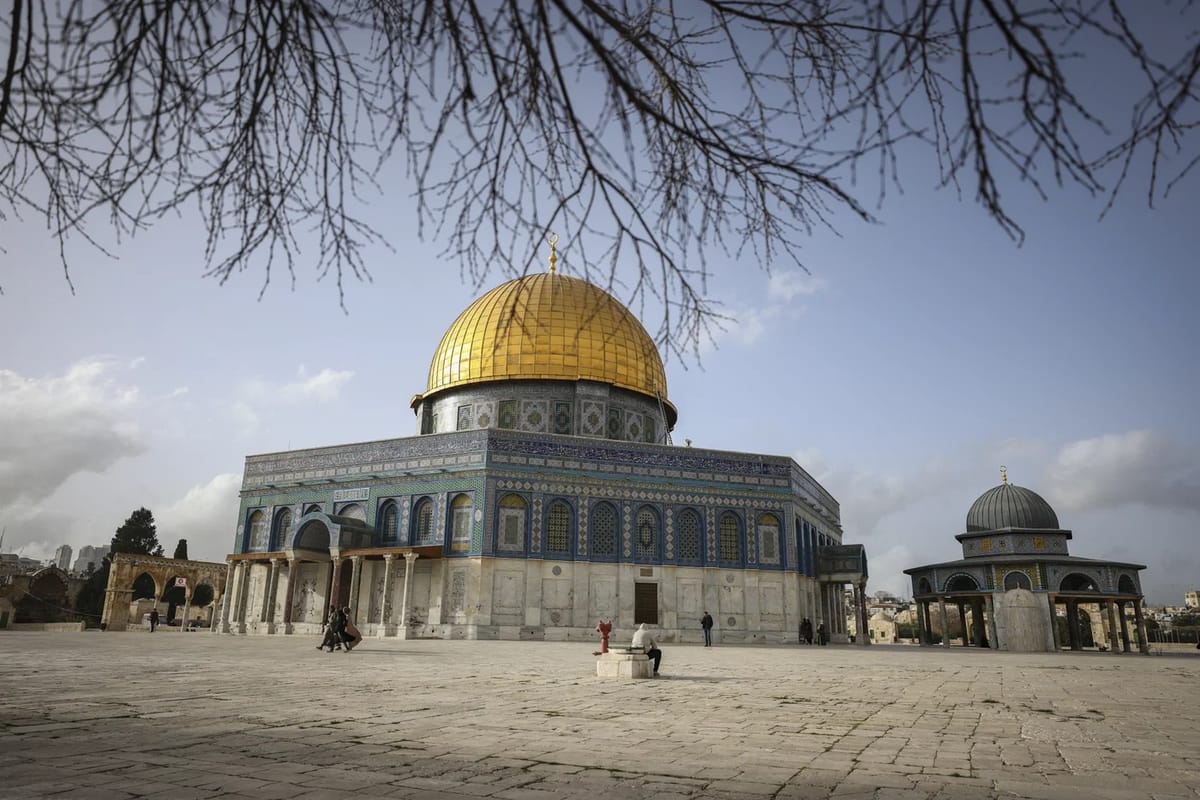
Ask almost anyone, a tour guide, a historian, an archaeologist, or a Torah scholar, where the Even HaShetiya, the Foundation Stone traditionally understood to be the spot from which the world was created, is located, and the answer comes back the same way every time: beneath the Dome of the Rock.
That consensus is more than a talking point. It shapes real behavior on the Temple Mount, where growing numbers of visitors, largely from the religious Zionist community but including some Haredim as well, rely on the assumed location of the ancient sanctuary to calculate where the Holy of Holies stood, where the courtyard walls once ran, and where they believe they may walk after ritual immersion.
A new book by Rabbi Barak Sharagai, titled "Noyo Shel Olam" and published by Tzuf, argues that this widely held assumption is mistaken. Sharagai's central claim is that the rock beneath the Dome of the Rock has no connection at all to the Foundation Stone described in rabbinic sources.
The book builds its case in part on a distinction in biblical and Mishnaic Hebrew between two words that are often treated as interchangeable in popular understanding: sela, meaning bedrock attached to the mountain itself, and even, meaning a discrete, movable stone. Sharagai traces this distinction through multiple tractates of the Mishnah, including Keilim, Para, and Sheviit, where the two terms carry different legal weight, particularly regarding susceptibility to ritual impurity. Bedrock does not receive impurity, he notes, while a placed stone does, and the Mishnah's precise language reflects that distinction throughout.
Applying this to the well known passage in tractate Yoma describing a stone in the Holy of Holies, three fingerbreadths above the ground, called the Shtiya, Sharagai argues that the text is describing a movable stone that was placed there during the era of the early prophets, not the bedrock of the mountain itself. He contends that this stone was destroyed along with the Temple and is not present today, drawing on the Rambam's Laws of the Chosen House, the Radak's commentary on the Book of Kings, and a passage in the Jerusalem Talmud describing a custom tied to the stone's destruction.
Sharagai says he reviewed the distinction with two leading halachic authorities, Rabbi Moshe Sternbuch and Rabbi Avigdor Nebenzahl, both of whom agreed that the difference between sela and even is significant to the question.
The book poses a follow up question its author intends to address next: how a claim this thoroughly contradicted by rabbinic sources became the default assumption in the first place.