Six months ago, the most important telephone in the Iran war sat in Islamabad. It was Pakistan that brokered the April ceasefire between Washington and Tehran, and Pakistan’s prime minister who announced in June that a final agreement was 24 hours from signature. The signature never came. This month, Pakistani forces began moving to Saudi Arabia under a defense pact whose unspoken target is Iran’s most loyal proxy. The mediator has become a combatant, and it is worth asking how that happened, because the answer says more about where the region is heading than any carrier deployment.
The short version is that Tehran overplayed its hand. Faced with a renewed American and Israeli campaign of military, economic and intelligence pressure, the Islamic Republic chose not to absorb the blows but to export them. The longer version requires looking at three capitals at once.
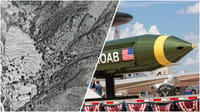
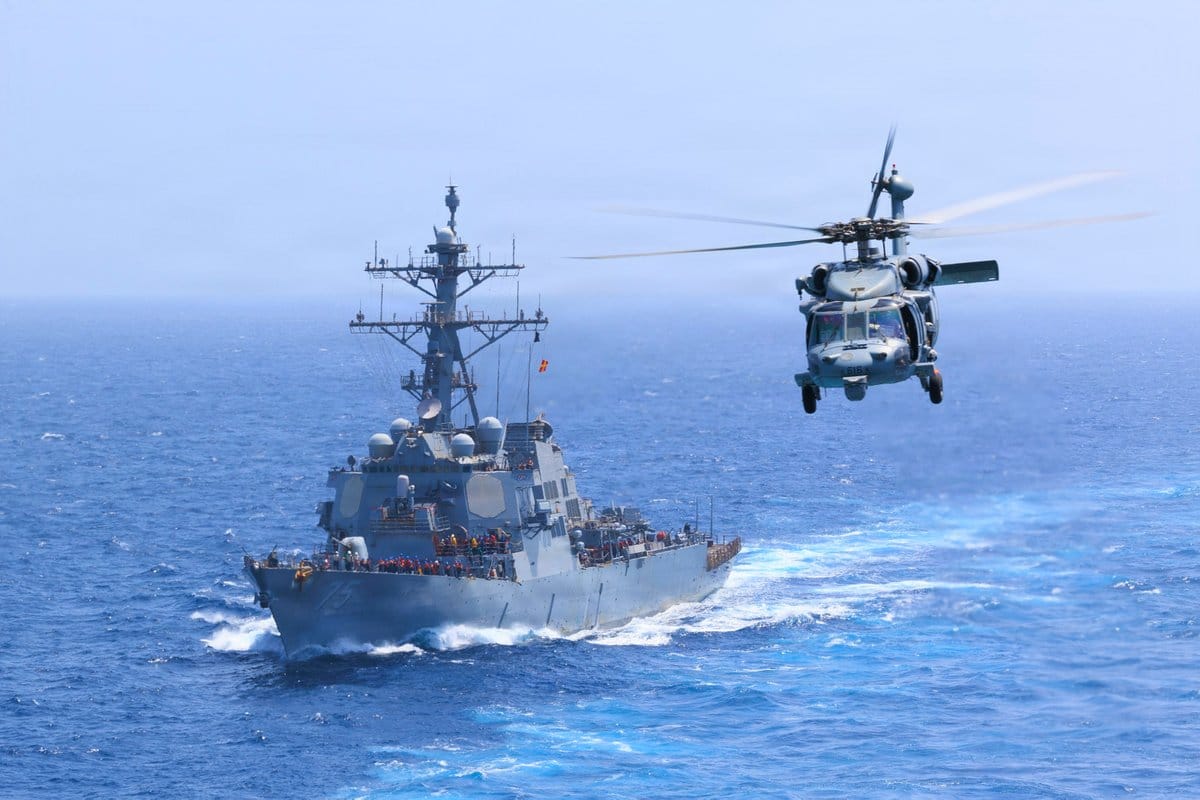
Begin in Washington, where the preparations are no longer discreet. The New York Times reported this week that the American and Israeli militaries have drawn up plans for a short, concentrated campaign of roughly three days against Iran’s nuclear facilities, energy infrastructure and missile arsenal, timed for after the November 3 midterms. By early November, three American carriers will be in the theater. On October 19, Defense Secretary Pete Hegseth flew unannounced to Ovda Air Base in the Negev, where American fighters and tankers are stationed, and met Prime Minister Benjamin Netanyahu. Asked about Iran on Wednesday, President Donald Trump said there were no negotiations and that something would happen “fairly soon.”
What has changed is not only the hardware but the doctrine behind it. Trump’s endorsement of Netanyahu on Sunday was framed less as a favor to an old ally than as a statement about what kind of partner America now requires. If Israel chose any other leader, he wrote, the United States would have to finish the job against Iran alone, and he was not inclined to do so. The subtext extended well beyond Jerusalem. Washington is done underwriting the region’s security on its own. It wants allies who carry weight, not allies who are carried.
Now turn to Tehran, which drew its own conclusions from the same facts. If the Americans and the Israelis intended to tighten the noose, the regime would make its neighbors pay for the rope. In early September, two Iranian sources told Reuters that Tehran had instructed the Houthis to strike Saudi Arabia, promised them fresh money and weapons, and dispatched Revolutionary Guards commanders to Yemen to coordinate. When Islamabad asked Iran to restrain its clients, the official reply was a familiar formula: Iran does not control the Houthis. The missiles and drones that followed struck Saudi oil infrastructure and, according to Riyadh, the holy cities of Mecca and Medina.
There is a particular kind of strategic miscalculation that consists of mistaking an adversary’s restraint for weakness. Iran had grown accustomed to a Saudi Arabia that preferred quiet accommodation to confrontation, a kingdom that had reopened relations with Tehran in 2023 and spent years trying to buy its way out of the Yemen quagmire. The attacks on Mecca and Medina ended that era. No Saudi ruler can absorb strikes on the holy cities and remain the custodian of them.
Which brings us to Riyadh. On August 7, Crown Prince Mohammed bin Salman, Turkish President Recep Tayyip Erdogan and Pakistani Prime Minister Shehbaz Sharif signed the Mecca Joint Defense Agreement, a mutual defense pact that joins NATO’s second-largest army, the Muslim world’s only nuclear power and the region’s wealthiest state. On October 5, after the Houthi escalation, the three activated it for the first time and announced a “rapid deployment” of forces to the kingdom. Simultaneously, Saudi-backed Yemeni government forces opened an offensive to recover territory the Houthis have held since they seized Sanaa in 2014.
The alliance is more formidable on paper than in practice, and the gap matters. Turkey’s government submitted the pact to parliament for ratification only this week, and Ankara speaks of air defense and electronic warfare assistance rather than troops. Pakistan insists its role is purely defensive and confined to Saudi soil, and its Information Ministry has dismissed reports of 30,000 to 40,000 new troops as speculation. Pakistani soldiers, it should be said, are not strangers to the kingdom. They have trained Saudi forces since 1967 and served there under formal arrangement since 1982. What is new is not their presence but its declared purpose.
That purpose has put Pakistan at the center of the board, and in the most exposed square on it. Tehran has made no secret of its sense of betrayal. Iranian lawmaker Ahmad Naderi wrote that Pakistan could no longer be considered a mediator but a “regional intervenor,” and media close to Iran’s Supreme National Security Council have recast the Mecca pact as an alliance against the people of Yemen.
Iran has not publicly threatened retaliation against Pakistan, but it does not need to. The levers are visible to anyone with a map. Pakistan’s western border with Afghanistan has become its most dangerous frontier. Relations with the Taliban, whom Pakistan’s own intelligence services once nurtured, have degenerated into cross-border fighting, and Islamabad accuses Kabul of sheltering the Pakistani Taliban, the TTP, whose attacks have bloodied the country for years. Tehran, meanwhile, has been cultivating Kabul with trade and diplomacy. Along Pakistan’s long southwestern border with Iran lies Balochistan, where separatist militants attack Pakistani and Chinese targets and could find in Iranian territory the kind of strategic depth Pakistan once sought in Afghanistan. Pakistan also has a large Shia minority for whom a war against the Zaydi Houthis would be a hard sell. Islamabad knows this terrain well. In 2015, when Riyadh last asked for help in Yemen, Pakistan’s parliament voted to stay out.
For Israel, all of this is welcome news, though it should not be mistaken for something it is not. Iran’s attempt to spread the pain has produced the opposite of what Tehran intended. Instead of a cowed Riyadh, it faces a kingdom that is arming, organizing and striking back, backed by two of the most populous and militarily capable states in the Muslim world. Every Revolutionary Guards officer sent to Yemen is an officer not defending Iranian airspace. Every Iranian rial spent on the Houthis is a rial not spent on reconstituting the nuclear program. The regime is fighting on more fronts with fewer resources, and its proxy network, once its great strategic asset, has become a source of new enemies.
But an anti-Iranian coalition is not a pro-Israeli one. Erdogan remains among Israel’s most hostile critics on the world stage. Pakistan does not recognize Israel. The Mecca pact mentions neither Israel nor the Abraham Accords, and Jerusalem has said nothing about it publicly. Washington’s vision of an integrated regional defense architecture, in which Israel and the moderate Arab states operate as a single front against Iran, is moving closer to reality only in the sense that the enemies are aligning. The friendships have yet to follow.
The coming fortnight will test whether pressure from every direction finally breaks Tehran’s resolve or merely accelerates the collision. Israelis vote on October 27. Americans vote a week later. After that, the political constraints in Washington fall away, and the region will learn whether the Islamic Republic, surrounded by a coalition of its own making, chooses to sign or to fight. The war that began in February as a confrontation between three states now runs from the Strait of Hormuz to the Red Sea to the Afghan frontier. Whichever choice Tehran makes, it will no longer be made in isolation.