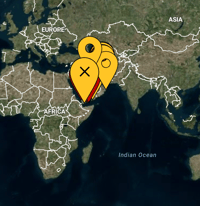
A major escalation has fractured years of relative calm along the Saudi-Yemeni border, pushing the regional standoff into a volatile new phase. Initial intelligence reports confirm that Abha International Airport, a vital travel and logistical hub in southwestern Saudi Arabia, was targeted by a multi-layered offensive involving explosive unmanned aerial vehicles and heavy rocketry.
The coordinated strike involved at least six ground-to-ground ballistic missiles launched from Houthi-controlled territory in northern Yemen. The assault selectively targeted the infrastructure of the civilian aviation facility, signaling an immediate end to the prolonged de-escalation period that had frozen active cross-border warfare between Riyadh and the rebel movement. Air defense sirens were activated across the border region as tracking systems logged multiple incoming high-velocity targets.
Local monitors report that the offensive utilized synchronized waves of one-way attack drones alongside the ballistic missile volley to overwhelm automated defensive batteries protecting the perimeter. The targeting of Abha represents a swift and direct implementation of previous warnings issued by Houthi military commands regarding the vulnerability of Saudi transport nodes if regional airspace agreements were compromised.
The timing of the cross-border operation directly links back to a severe military crisis earlier in the day at Sanaa International Airport. A controversial strike targeted the runways of the Yemeni capital's airport to block an unapproved Iranian Mahan Air flight carrying a returning rebel delegation. While the Saudi-backed internationally recognized government of Yemen claimed responsibility for the runway interdiction, Houthi officials immediately laid the ultimate blame on Riyadh and promised severe, unpunished retribution.
This dynamic counter-strike has raised immediate fears of a return to unrestricted regional warfare. Emergency protocols have been implemented around Saudi Arabia's southern installations as regional defense networks brace for potential follow-up actions, bringing an abrupt end to the diplomatic stabilization tracks that had successfully limited cross-border threats for years.