In the 79th minute, Lionel Messi produced a magnificent ball for defender Cristian Romero.
Goal.
Argentina were back in it.
There was hope.
Then, in the 84th minute, as the British commentators were discussing the possibility that this might be Messi’s final tango, Argentina put together a beautiful sequence near the 16 box area.
Messi sent the ball inside the box. A series of typically sharp Argentine touches followed Lautaro Martinez to make a lovely acrobatic side kick., intoJulián Álvarez that nudged it back toward Messi, who struck through the ball between two defenders and beyond the goalkeeper’s hands. The shot clipped the crossbar and went in.
2–2.
And then as Egypt regain momentum - came the third. Deep into stoppage time, Álvarez launched another counterattack. A wonderful diagonal ball found Lautaro Martínez, once again reviving the combination that had helped create Argentina’s second goal.
And then Martínez, usually a player associated with explosive speed and direct running, did something different. He paused near the edge of the penalty area, almost casually, before releasing a beautifully weighted diagonal pass toward Enzo Fernández. Fernández is hardly Argentina’s tallest player. It did not matter.
He met the ball with a powerful, precise header into the opposite corner.
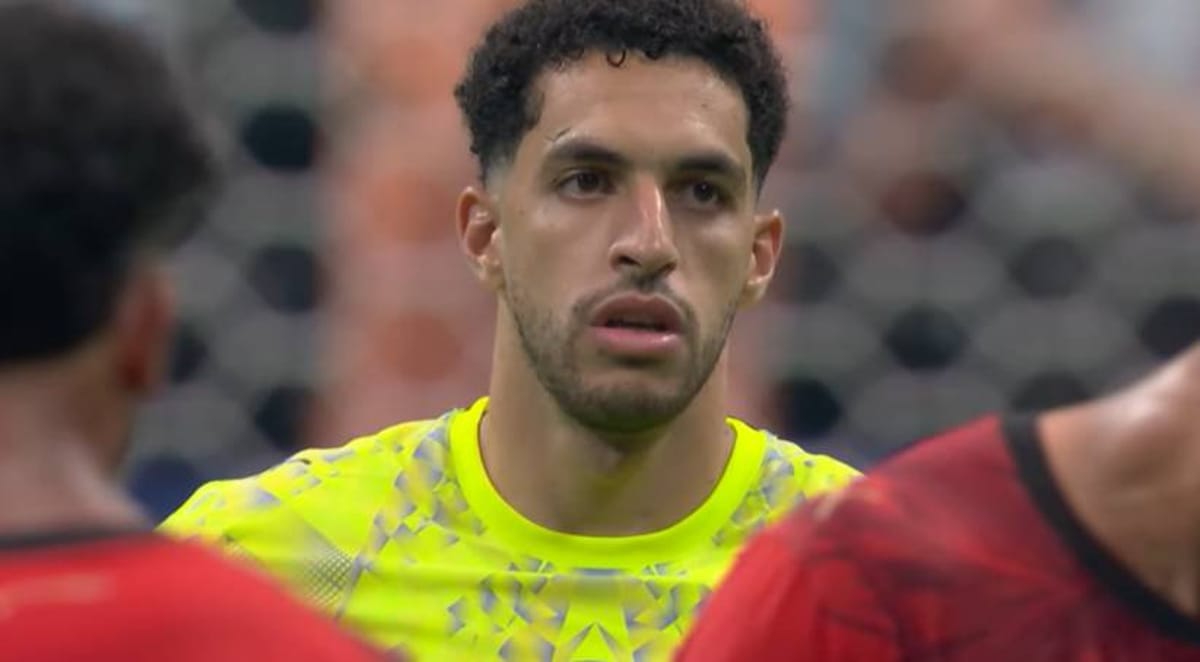
3–2 Argentina. The 92nd minute. Moments before that third goal, Mohamed Salah had lost the ball. After losing possession, there was slight contact from an Argentine player. Was it a foul? It is very difficult to say that it was. The contact was simply too light. But that was enough for the Egyptians to lose their minds.
They surrounded the referee. Members of the bench rushed toward the field. One member of the Egyptian staff was shown a red card. Then, after the final whistle, the Egyptian coach, himself an enthusiastic supporter of the Palestinian cause, began cursing FIFA officials and raging at the crowd before storming dramatically away from the field.
After the match, one Egyptian player, Zico, the same player whose goal had been disallowed in the 57th minute, declared that the tournament was fixed and that everything had been arranged for Argentina. The story would be funny if it were not so revealing. In the 78th minute, Zico and Egypt were roughly ten minutes away from knocking Argentina out of the tournament. Then, in the space of 14 minutes, they conceded three goals. For the third goal, they demanded a foul that would rarely be given: an extremely light contact that simply did not amount to a meaningful infringement.
And yet these are the same Egyptians complaining that Zico’s earlier disallowed goal had been wrongly taken away from them, even though he himself had harshly stepped on the Argentine player in the buildup. No one stepped on Mohamed Salah before Argentina’s third goal. The truth is that the refereeing was perfectly reasonable. Egypt simply collapsed. And this is precisely where the deeper cultural problem emerges. It is the problem of Arab honor: a mentality that too often makes it psychologically difficult to accept that one has made a mistake. Because once you have acted, once you have committed yourself, once you have declared yourself strong and righteous, admitting failure becomes almost unbearable. You were supposed to be good and right.
And therefore, if something was taken from you, if you lost, if events turned against you, then something else must be wrong.
The referee. FIFA. The conspiracy. The system. Anyone but you.
That mentality was visible in the behavior of Egypt’s players, coaches and professional staff. And, in a much more serious context, it is part of the reason there has been no lasting peace in the Middle East. To reach an honest accommodation with another side, you must first accept the possibility that you yourself were wrong. You must be capable of asking whether going to war was a mistake. Not merely whether a particular battle was poorly managed, but whether the entire decision was mistaken. You must be able to acknowledge weakness, recognize failure, correct errors and learn from defeat. Too often, Arab culture has struggled to do this. And so the blame is transferred elsewhere.
To Israel.
Sorry.
To FIFA.