Get our mobile app
Download on the App StoreGet it on Google Play

Israel Politics

Eisenkot: I Led Strike Without Netanyahu

At ynet conference, ex-IDF Chief of Staff Gadi Eisenkot reveals he couldn't reach Prime Minister for two hours during 2018 crisis and ordered major retaliatory strike independently. He also sharply rejects conspiracy theories surrounding October 7 intelligence failures.

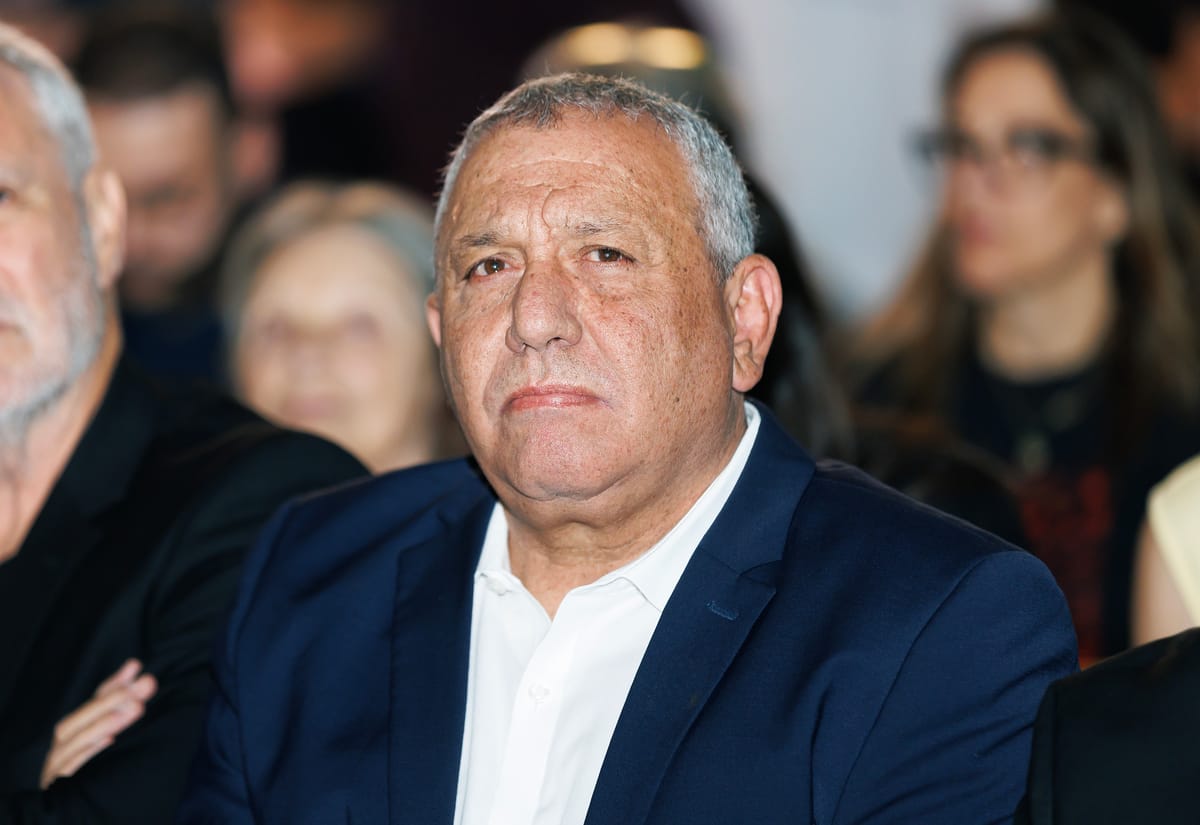
Gadi Eisenkot

Former IDF Chief of Staff Gadi Eisenkot disclosed dramatic details from January 10, 2018, when a Syrian anti-aircraft missile downed an Israeli F-16 fighter jet. Speaking at the "Time of Decision: Democracy and Society" conference organized by ynet, Yedioth Ahronoth, and the Israel Democracy Institute, Eisenkot, now chairman of the Yisrael party and a Knesset member, described making critical military decisions without Prime Minister Benjamin Netanyahu's input.

"I'm trying to update and consult with the Prime Minister, but I can't reach him for an hour, two hours," Eisenkot recounted. After the pilots parachuted safely into Israeli territory and the military secretary reported being unable to locate Netanyahu, Eisenkot said he made an independent decision: "I decide to carry out a very broad strike destroying Syrian anti-aircraft batteries and destroying Iranian targets." According to Eisenkot, Netanyahu only arrived at the Air Force command center three to four hours later and endorsed actions that had already been executed.


The revelations come amid intense political controversy surrounding the October 7 Hamas attack. Eisenkot sharply addressed conspiracy theories circulating in the Prime Minister's orbit that suggest the intelligence failure was something more sinister. "I heard him say yesterday that 'it's not betrayal, it's a failure.' It's much more than a failure, it's deep negligence that happened on his watch, and he thinks he can manipulate the thinking of Israeli citizens," the Yisrael chairman stated.

Eisenkot added that he knows officials in the Prime Minister's Office received intelligence reports and the full picture as early as 3:30 a.m. on October 7. His comments directly counter statements made by Sara Netanyahu in a Channel 14 interview, where she implied that opposition figure Yair Golan knew about the massacre before the Prime Ministerm claims that sparked fierce political backlash.

Responding to Netanyahu's personal attack on Channel 14, in which the Prime Minister claimed Eisenkot's election would mark "the beginning of the end of the State of Israel," the former military chief dismissed the rhetoric: "That's a hysterical, irresponsible statement. He knows as well as I do what strength has been built here over 80 years. Israel is very strong, the IDF is very strong." His words appeared aimed at reassuring the public amid the extreme rhetoric characterizing the current election campaign.

Regarding potential political cooperation with former Prime Minister Naftali Bennett, Eisenkot emphasized he's examining steps with one clear goal—to establish a sustainable government on the 28th of the month that can lead the country with unity and broad national consensus. His comments come as the Yisrael party has strengthened in polls and emerged as a major contender for the premiership.

Meanwhile, Defense Minister Israel Katz chose not to categorically dismiss conspiracy theories about October 7 during his own appearance at the ynet conference. When asked directly about Sara Netanyahu's insinuations regarding Golan, Katz avoided a clear answer, claiming he doesn't "consume media" and only addresses what he knows from official investigation materials.

The Defense Minister stated that senior Hamas officials coordinated closely with Hezbollah and Iran and defeated the Gaza Division according to the "Jericho Wall" plan, which he described as not having been reported to the political echelon. "From what I know in the material I've seen, the failure is deep enough to explain what happened there," Katz emphasized. Yet despite the careful phrasing, the Defense Minister repeatedly refused to rule out the possibility of betrayal—an evasion that left the audience and media with difficult questions.

In his first response to his wife Sara's interview, Prime Minister Netanyahu stated there was "no betrayal" on October 7. "Nonsense in disguise," he said, referring to the storm following Sara's remarks that hinted at prior knowledge held by Yair Golan about the massacre. According to Netanyahu, "I think there was a failure, a major failure, expressed in what happened during the night and morning before the attack, all the signs were there, and they decided because of miscalculation considerations, not to anger Hamas, not to wake me and not to attack preemptively."

"It's a failure, but not betrayal. It happens. Unfortunately it happened with terrible costs, but it's not betrayal and my wife didn't say there was betrayal either. It's just nonsense," Netanyahu concluded. His comments came after the Democrats party responded with sharp condemnation of Sara Netanyahu's statements and demanded an immediate apology.

Ready for more?

Join our newsletter to receive updates on new articles and exclusive content.

We respect your privacy and will never share your information.

Enjoyed this article?

Yes (19)
No (1)
Follow Us:

Unmissable content


Loading comments...

Also of Interest