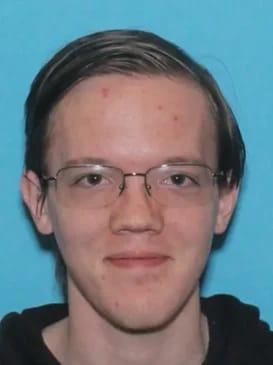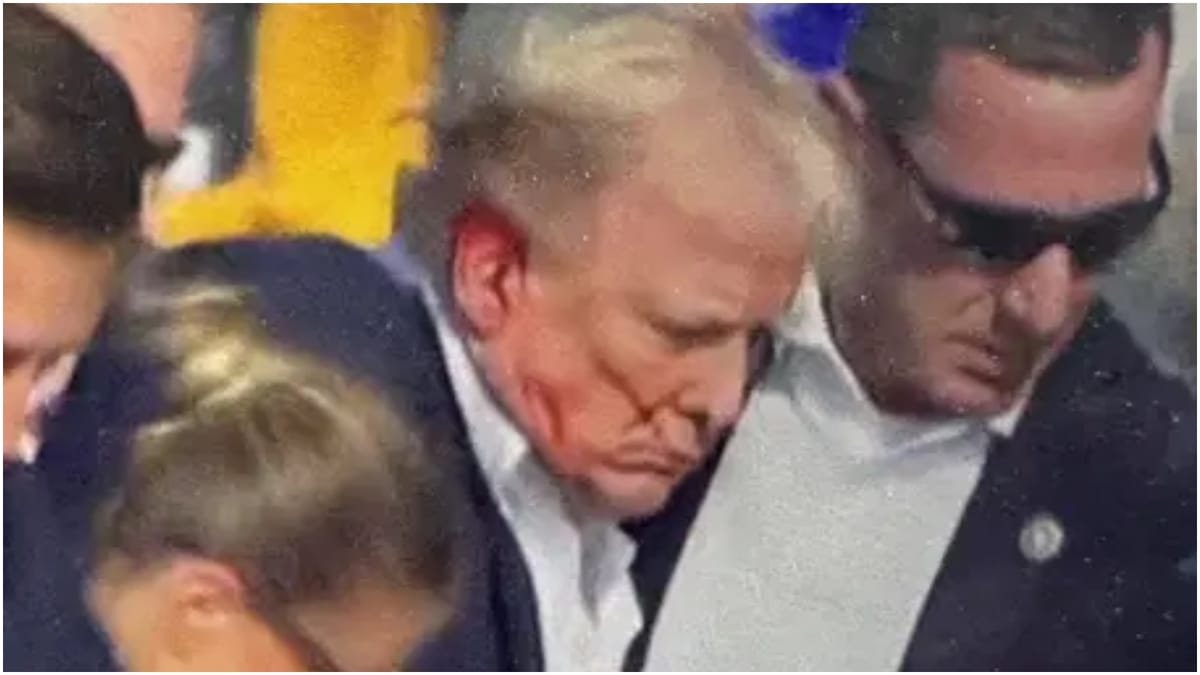
Newly released FBI documents reveal deeply unsettling details about Thomas Matthew Crooks, the 20-year-old who attempted to assassinate President Donald Trump during a campaign rally in Butler, Pennsylvania.
The findings, transmitted to the chairman of the Senate Judiciary Committee and obtained by the New York Post, sketch the portrait of a young man who was emotionally disconnected and utterly devoid of affect from the moment he entered the world, a characteristic that followed him throughout his brief life until he was killed by Secret Service snipers mere seconds after his bullet passed within a hair's breadth of the president's head.
According to the report, the would-be assassin's father, Matthew Crooks, shared a series of personal and disturbing testimonies with federal investigators about raising his son. The father told the FBI that Thomas was born on September 20, 2003, without uttering a single cry or sound — an extremely unusual phenomenon for a newborn — and from that silent birth onward, he remained a quiet and withdrawn individual.
The father admitted to FBI investigators that he never succeeded in building a genuine father-son relationship with Thomas. He described his son as someone who exhibited extreme restraint and cold composure, almost never laughed, and was a person whose thought process was nearly impossible to decipher. In one past incident, after Thomas dumped an entire container of fish food into his sister's aquarium following an argument, the father physically pushed him and shouted at him in an attempt to elicit some kind of emotional response, until the boy finally burst into tears, and this was the only time he showed any real emotions.
Thomas's difficulties became apparent early in his childhood. In elementary school he exhibited behavioral problems and required special attention, and in middle school his parents suspected he suffered from attention deficit disorder and worried about his association with a group of children they considered a negative influence. When he entered high school, he became even quieter and more withdrawn, and began suffering from pronounced communication difficulties with his teachers. His father noted that he would frequently catch him talking to himself aloud, a phenomenon that worsened over the years. The father expressed deep regret that his demanding work schedule prevented him from taking his son to social activities and clubs, which might have provided a moderating social framework for his isolated nature.
Alongside his profound social disconnection, Thomas demonstrated exceptionally high academic abilities and placed heavy pressure on himself out of fear he wouldn't be accepted to college. Without any prior preparation, he achieved a score of 1400 on the SAT, and later improved his score to a nearly perfect 1500. Despite this, he showed no genuine commitment to any professional path; at one point he expressed superficial interest in joining the military to work on nuclear submarines, but it remained an idea.