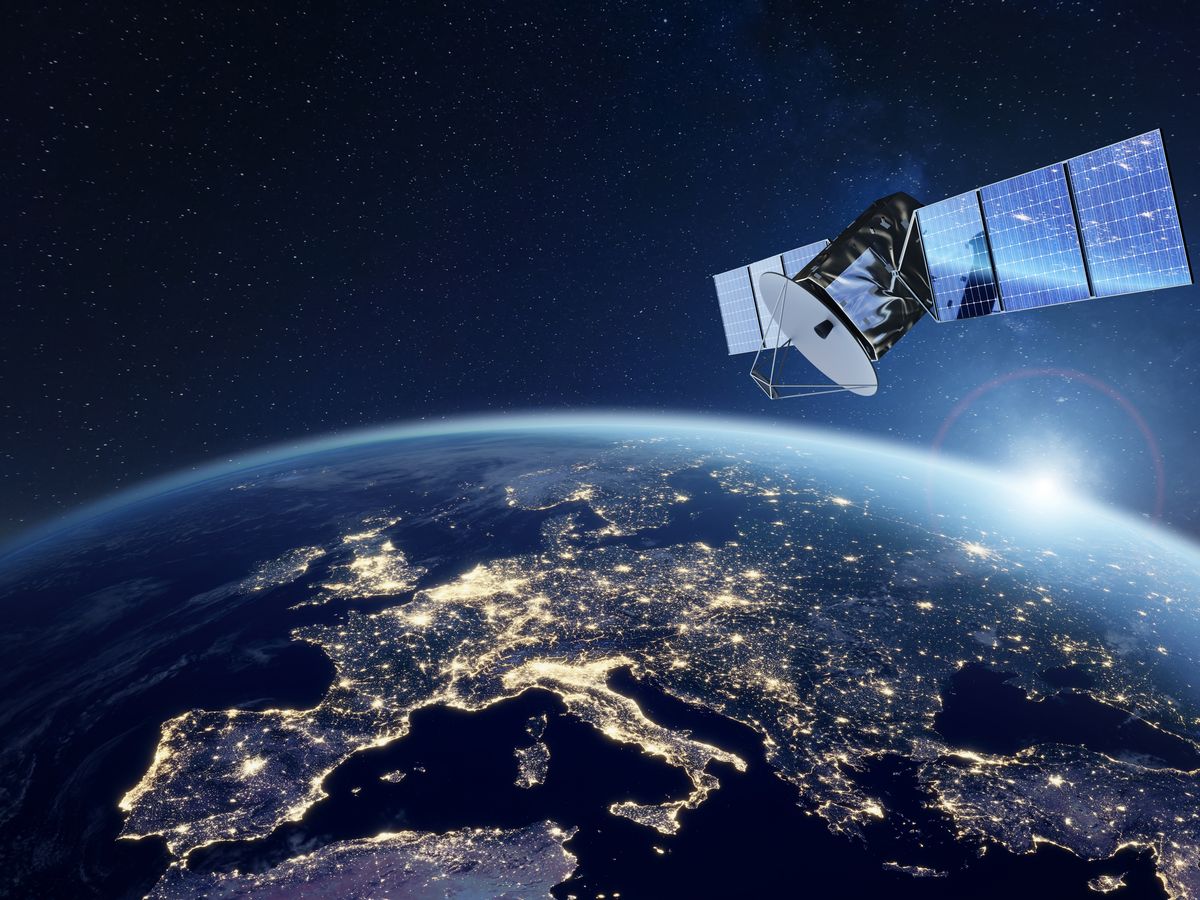
A Chinese military reconnaissance satellite launched six months ago has broken apart in orbit, scattering at least 43 trackable fragments across a band of space that other spacecraft use and where almost nothing falls back to Earth.
The US Space Force's 18th Space Defense Squadron catalogued the debris from Yaogan-50 (02) on September 4, according to orbital analyst Jonathan McDowell, formerly of the Harvard-Smithsonian Center for Astrophysics. The satellite launched on March 15 from the Taiyuan Satellite Launch Center aboard a Long March 6A rocket and reached its operational altitude of roughly 952 kilometres. It had been flying in a steeply retrograde orbit at an inclination of about 141 degrees, meaning it travelled against the direction of the Earth's rotation, an unusual choice that its predecessor Yaogan-50 (01) had also used two months earlier.
The cause is not known. Analysts have pointed to a propulsion failure, a battery failure or a collision with existing debris as the plausible explanations, and nothing has narrowed it further. China has made no public statement, although its own Spacemapper catalogue has logged four fragments, indicating Chinese sensors registered the event.
The fragments now sit between roughly 600 and 1,100 kilometres above the Earth. At those altitudes atmospheric drag is close to negligible, so orbital decay is measured in decades and in the upper part of that range considerably longer. Debris below about 600 kilometres typically re-enters within a few years. Above 1,000 kilometres it can remain for centuries. The pieces have stayed within the satellite's original inclination, which means they cross the paths of spacecraft operating in one of the more congested regions of low Earth orbit.
The scale of the problem behind this incident is well documented. The European Space Agency counts more than 660 explosions, collisions and fragmentation events over the history of spaceflight. Tracking networks currently follow around 54,000 objects larger than 10 centimetres, of which only about 9,300 are working spacecraft, alongside an estimated 1.2 million pieces between one and ten centimetres that are too small to catalogue but large enough to destroy a satellite at orbital velocity. The single worst contributor remains China's 2007 anti-satellite weapons test against the Fengyun-1C weather satellite. Nineteen years later, 2,318 pieces of it are still being tracked.
The Yaogan programme is officially described by Chinese authorities as a remote-sensing effort supporting land surveys, crop yield estimates and disaster management. Western analysts have long assessed it as a military reconnaissance constellation combining optical imaging, synthetic aperture radar and electronic intelligence payloads.
That assessment has taken on more weight over the past six months. American intelligence has increasingly focused on the role of Chinese space capability in Iranian targeting of US forces. The Wall Street Journal reported last week that Iran obtained high-resolution imagery of Muwaffaq Salti Air Base in Jordan from Chinese entities before and after the July missile strike there that killed three American soldiers. In May the Trump administration sanctioned three Chinese imaging firms, MizarVision, Earth Eye and Chang Guang, over imagery it said Iran could use for targeting. And in April the Financial Times reported that the IRGC Aerospace Force had purchased its own remote-sensing satellite from a Chinese company, which built and launched it before selling it to Tehran, with a second Chinese firm providing ground-station access.
None of that reporting concerns Yaogan-50 (02), and no evidence has emerged connecting this satellite to Iran or suggesting the breakup was anything other than a failure. Claims circulating online that the satellite was passing data to Tehran, or that it exploded, are not supported by any of the tracking data or the reporting.
What the incident does illustrate is a narrower point. As orbital reconnaissance becomes a live element of Middle Eastern conflicts, and as more states depend on it, the practical constraint is the same for everyone. A satellite that fails at 952 kilometres does not disappear. It becomes a hazard, in a band the failing state's rivals also need to use, for longer than anyone currently operating in space will be around to manage it.