Get our mobile app
Download on the App StoreGet it on Google Play

Middle East tension

Iran drills for nuclear strike on US threat

Revolutionary Guards distribute civil-defence guides as Washington signals strikes on deep Natanz facility may follow midterms

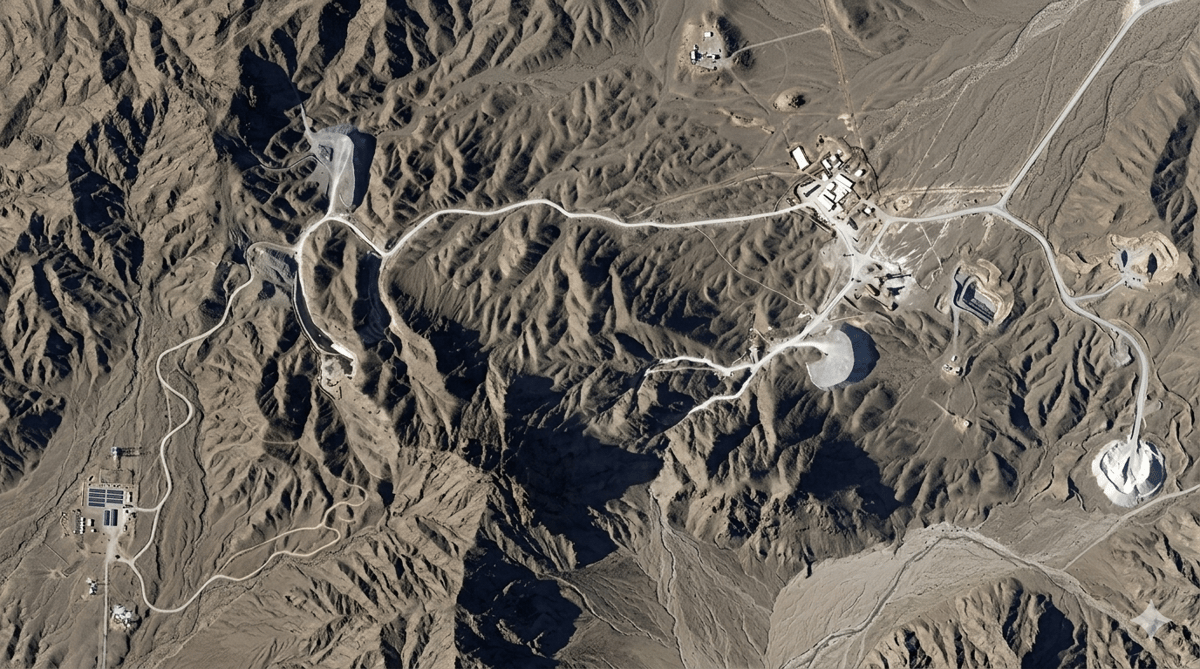
The secret site, illustration
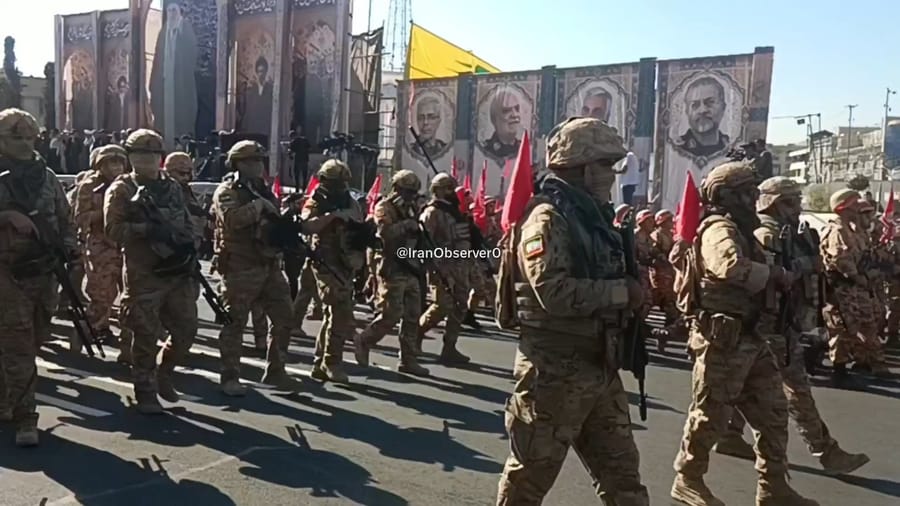
1,000 battalions, hundreds of thousands of volunteers: Iran moves to mass mobilisation
1,000 battalions, hundreds of thousands of volunteers: Iran moves to mass mobilisation (Photo: Arab networks)

In recent weeks, Iran has begun distributing civil defense guides instructing citizens how to protect themselves in the event of a nuclear strike. The instructions, carried by outlets linked to the Revolutionary Guards, are simple and stark: stay away from windows, take shelter in reinforced buildings and stay indoors.

At the center of the campaign is a single facility that has come to symbolize the rising tension between Washington and Tehran: Kuh-e Kolang Gaz La, known as “Pickaxe Mountain.” The fortified underground complex lies about two kilometers south of the Natanz uranium enrichment plant, and consists of a network of tunnels dug 100 to 145 meters deep into hard granite.

Western intelligence assessments say Iran has quietly moved advanced centrifuges and part of its stockpile of 60-per-cent-enriched uranium into the mountain, aiming to protect nuclear assets that survived earlier strikes. Satellite images published in the Wall Street Journal show massive earth berms piled around the strategic sites, designed to complicate air attacks.

Military experts assess that conventional bunker-busting bombs, including the American GBU-57, would struggle to destroy such a facility outright. They could block entrances and ventilation shafts, but not necessarily reach the deep core. That reality has led to public discussion in the West of more extreme options, including the use of the MOAB ("Mother of All Bombs") or, in media speculation, tactical nuclear weapons.

President Donald Trump has repeatedly threatened to strike the site "soon and hard", emphasising that the United States is tracking every movement there. At a campaign rally in Georgia, Trump declared that "we destroyed their uranium-enrichment capability" and that "they will never have a nuclear weapon". The president, however, made clear publicly that he does not intend to use nuclear arms.

Trump
Trump (Photo: The White House)

There is currently no verified intelligence pointing to an American decision to use nuclear weapons. The discussion of that possibility has arisen mainly from military analysis and media speculation. Iran, for its part, is exploiting the fear in two ways: psychological warfare — the civil-defence guides are meant to signal to the world, and especially to the American public, that a strike on Mountain Hammer could lead to nuclear escalation and regional catastrophe. The message is clear: do not come near.

At the same time, Tehran understands well that a heavy conventional strike on the facility is a real possibility. Distributing emergency guides heightens the sense of readiness among the population and reinforces the narrative of a regime under existential threat. The Revolutionary Guards have already warned openly: any strike on Mountain Hammer or any other point in Iran will be met with a full response.

According to a Wall Street Journal report, the United States has passed messages to Arab states in the Gulf telling them to prepare for the possibility of a short, intense military campaign against Iran following the American midterm elections. The report points to growing signs that Washington and Jerusalem are preparing another round of strikes.

Mountain Hammer has become the symbol of the current impasse. On one side, Iran continues to fortify and deepen the facility. On the other, the United States is signalling that it is not prepared to leave it unanswered. Between the public threats and the instructions to the Iranian public runs a thin line of tension, with each side trying to deter the other without crossing the red line.

For now, the nuclear-attack guides are mainly a psychological tool. But the very fact that Iran feels the need to prepare its citizens for such a scenario shows how high (and how tangible) the tension around Pickaxe Mountain has become.


Ready for more?

Join our newsletter to receive updates on new articles and exclusive content.

We respect your privacy and will never share your information.

Enjoyed this article?

Yes
No
Follow Us:

Unmissable content


Loading comments...

Also of Interest